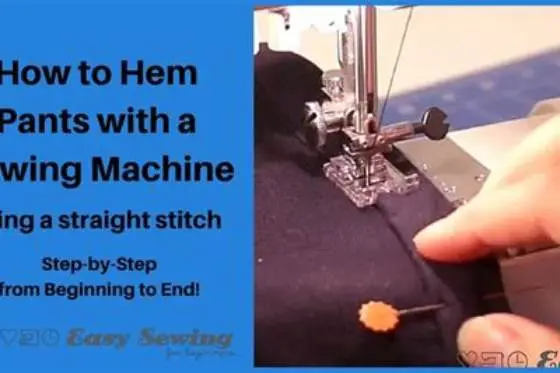
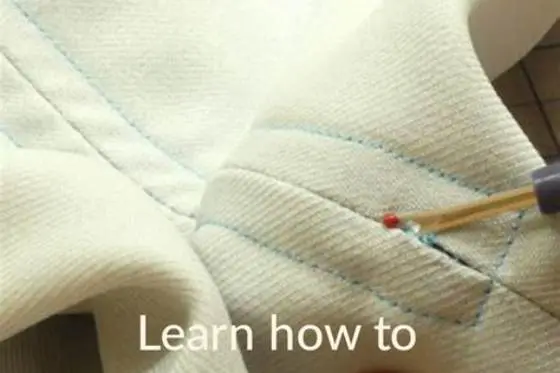
How to Hem Pants With a Sewing Machine: A Clean Finish
To hem pants with a sewing machine, measure the new length while wearing your usual shoes, fold the extra length up inside the leg, press the fold, then sew a blind hem at 2.5 to 3 mm stitch length for dress pants or a straight topstitch for jeans. Test the stitch on a scrap first.
On this page (9 sections)
- The short version
- Measure First: Shoes On, Pins In, Both Legs Even
- Needle, Thread and Stitch Length: Match Them to the Fabric
- How to Hem Pants With a Sewing Machine: The Blind Hem
- Jeans: Keep the Original Hem or Cut a Fresh One
- Thick seams: slow down and level the foot
- Dress Pants and Wide Legs: Pressing, Creases and Taper
- Fixes: Skipped Stitches, Puckers and a Hem That Shows
- Still wondering?
Part of our guide on how to sew a french seam
Key figures
- Blind hem length
- 2.5 to 3 mm stitch length
- Dress pants needle
- Universal 80/12
- Jeans needle
- Jeans 90/14 to 100/16
- Hem allowance
- 1.5 to 2 inches
- Thread weight
- 50 wt all-purpose thread
- Original hem limit
- Shorten by 2 inches or less
The short version
- Measure with your usual shoes on, and check both legs before you sew.
- A fresh needle matched to the fabric stops most skipped stitches.
- Dress pants take a blind hem at 2.5 to 3 mm; jeans take a straight topstitch.
- Press the fold before you sew, and press the finished hem again after.
- Keep the original hem on straight-leg jeans when you shorten them by 2 inches or less.
Measure First: Shoes On, Pins In, Both Legs Even
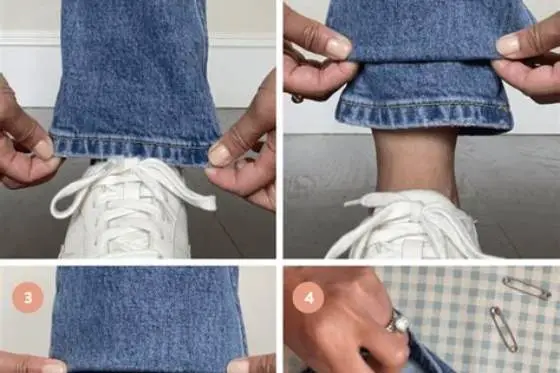
Put the pants on with the shoes you wear most with them. Stand straight on a hard floor and let a helper pin one leg. A mirror helps if you work alone. Mark the fold with pins or chalk at the front and back. The hem should just brush the top of the shoe. Work in good light so the chalk line stays clear. Check both legs before you cut or fold anything.
Take the pants off and lay them flat on a table. Measure from the marked line to the old hem on each leg. The two numbers should match. A small gap shows in the finished pair, so do not trust one leg alone. Smooth the legs flat and line up the side seams. A seam gauge sets the same fold depth all round the leg.
Fold the extra length up inside the leg and press the fold. A hot iron and a press cloth set the crease. Pressing now saves fiddling at the machine later. Leave the pins in until the fold holds its shape, then try the pants on once more before you sew. A hem that looks right flat can sit wrong on the body.
- Shoes: wear the pair you will wear most with these pants.
- Pins: place them at the front, back and both side seams.
- Chalk: mark the fold line so it survives the pressing.
Needle, Thread and Stitch Length: Match Them to the Fabric
A fresh needle is the cheapest fix in sewing, and hemming is the wrong time to sew with a dull one. Change the needle before you start. A blunt point pushes fabric instead of piercing it, and that shows as skipped stitches along the hem. Match the needle to the fabric, not to the machine. Check the table below for the size. We go through sewing machine threading steps step by step elsewhere on the site.
Use all-purpose 50 wt thread in a colour that matches the pants. Match the bobbin thread too, since the blind hem shows its straight stitches on the inside of the leg. A thread much heavier than the fabric leaves a ridge along the fold. Wind a full bobbin before you start so you do not run out halfway round a leg.
Stitch length follows fabric weight as well. Light dress fabric takes 2 to 2.5 mm. Medium cotton and wool take 2.5 to 3 mm, and heavy denim takes 3 to 3.5 mm. Shorter stitches pucker light fabric and add bulk at the seams. Longer stitches look loose and pull out sooner on a hem that flexes with every step.
| Fabric | Needle | Thread | Stitch length |
|---|---|---|---|
| Light dress fabric | Universal 70/10 | 50 wt | 2 to 2.5 mm |
| Medium cotton, wool | Universal 80/12 | 50 wt | 2.5 to 3 mm |
| Stretch knit pants | Stretch 75/11 | 50 wt | 2.5 to 3 mm |
| Denim jeans | Jeans 90/14 to 100/16 | 50 wt | 3 to 3.5 mm |

SINGER® 9-Piece Presser Feet Accessory Kit with Clear Durable Storage Case
When you fold and press the hem, the included Blind Hem foot guides the fabric so the sideways stitch catches just a thread or two, and all 9 feet fit most low-shank machines like Singer Heavy Duty models.
How to Hem Pants With a Sewing Machine: The Blind Hem
The blind hem is the standard finish for dress pants because it hides the stitching from the front. The machine sews straight stitches through the hem fold, then one sideways stitch catches a thread or two of the outer fabric. From the outside you see only tiny dots. That invisibility depends on the fold, not on luck. For the detail, see our notes on hemming pants with a machine.
Fit the blind hem foot and pick the blind hem stitch on your machine. The stitch icon shows several straight stitches followed by one sideways zigzag. If your machine has no blind hem stitch, a narrow zigzag at 1.5 to 2 mm width does the same job. Set the stitch length to 2.5 to 3 mm.
Sew slowly and let the foot guide do the work. Push the fold gently against the guide without stretching the fabric. Stop after a few inches, unfold the leg and look at the front. Dots that show mean the sideways stitch is biting too deep, so narrow the stitch width a little. No dots at all after a stretch means the stitch missed the fold, so widen it a touch.
- Fold the hem up to the marked length and press the fold flat.
- Fold the hem back under itself so about 0.5 cm shows past the fold.
- Fit the blind hem foot, pick the blind hem stitch and set 2.5 to 3 mm length.
- Run the fold against the foot guide, sewing slowly round the whole leg.
- Unfold the leg, press the hem and check the front for visible dots.
A hem that nobody notices is the goal, and the measuring and pressing decide it before the needle ever moves.
Jeans: Keep the Original Hem or Cut a Fresh One
Jeans deserve a different choice from dress pants, because the factory hem is part of the look. Its faded edge and gold topstitching cannot be copied at home. If you shorten straight-leg jeans by 2 inches or less, keep the original hem. Fold the extra length up inside the leg, stitch just above the old hem band, trim the excess and press the fold down. There is more on sew neat edges on any fabric in a separate guide.
Measure the amount to remove, then fold up half that amount inside the leg. Pin all round and stitch close to the original hem, just above its topstitching. Sew slowly over the side seams, where the fabric is thickest. Trim the folded excess to about 0.5 inch (1.3 cm) and finish the raw edge with a zigzag.
Cut a fresh hem when the jeans need more than 2 inches off, when the leg tapers sharply, or when the old hem is frayed. Cut about 1.25 inches (3 cm) below the new finished length. Fold the raw edge under by 0.5 inch, then fold again to the finished length and press. Topstitch with a straight stitch at 3 to 3.5 mm, using a jeans needle in 90/14 or 100/16. Gold or orange topstitch thread matches most jeans, and a heavier topstitch thread may need the needle tension raised a touch.
Flared legs will not keep an original hem, because the leg opening is wider than the knee. Fold the hem up and the widths will not match. Cut a fresh double-fold hem for flared jeans instead. Tapered legs can keep the original hem, but you may need to take in the inner leg seam a little where the widths differ. If that sounds like your situation, read up on how to sew zipper next.
Thick seams: slow down and level the foot
Denim side seams stack four or more layers under the foot, and the needle can deflect or skip there. Slow right down before the seam and turn the handwheel by hand over the thickest spot. A level foot sews straighter than a tilted one. If stitches skip only at the seams, fit a fresh jeans needle before you blame the machine.

Schmetz SCH4012 5 Piece Needle Chrome Denim
Swap in one of these 5 chrome-plated Schmetz jeans needles in size 100/16 before hemming denim, and the reinforced blade punches through layered hem seams without skipping.
Dress Pants and Wide Legs: Pressing, Creases and Taper
Pressing decides how dress pants look more than stitching does. Press the front crease before you hem, so the crease runs straight through the new hem. A crease pressed after hemming wanders at the fold. Use a press cloth on wool and dark fabric to stop shine.
Wide legs and tapered legs need different care at the fold. A wide leg folds evenly, since the width barely changes along the leg. A tapered leg narrows toward the ankle, so the folded hem is wider than the leg at the new length. Ease the extra width in with pins and press it flat before you sew.
Knit pants need a stretch stitch or a narrow zigzag instead of a straight stitch. A straight stitch on a knit hem snaps when the fabric stretches as you sit and walk. Use a stretch needle in 75/11 and a blind hem stitch made for knits if your machine has one. Keep the fabric relaxed under the foot.
Lined pants hide the hem inside the lining, so hem the outer fabric and the lining separately. Hem the lining about 0.5 inch (1.3 cm) shorter than the outer leg so it never peeks below the hem. Slip stitch the lining hem by hand if the machine cannot reach it neatly.
Fixes: Skipped Stitches, Puckers and a Hem That Shows
Skipped stitches along a hem almost always mean the needle, not the machine. Fit a fresh needle of the right size for the fabric and re-thread with the presser foot up. The foot-up position opens the tension discs, so the thread seats properly. Sew a test line on a scrap and watch the stitches form.
Puckers come from tension, stitch length or pressing, and each has its own sign. Tight puckers along the stitch line mean the top tension is high or the stitch is too short. Loosen the tension a notch and lengthen the stitch. A wavy hem on knit fabric means the fabric stretched under the foot, so sew slower and support the weight of the leg. For very thick denim stacks, a walking foot feeds the layers evenly, and lower foot pressure helps the fabric move without stretching.
A hem that falls down has the opposite fault: the sideways stitch missed the fold entirely. Widen the stitch a touch and check that the fold sits hard against the foot guide.
A hem that twists after washing was usually sewn with the grain off or the fold uneven. Check that the side seams line up and the fold depth matches all round the leg. Wash the pants before hemming when the fabric can shrink, since shrinkage after hemming shortens the leg further.
- Skipped stitches: new needle, re-thread with the foot up, test on a scrap.
- Puckers: loosen tension a notch, lengthen the stitch, press with steam.
- Visible dots: narrow the stitch width by 0.5 mm and test again.
- Hem falling down: widen the stitch width and hold the fold to the guide.
Still wondering?
What stitch length should I use to hem pants?
Use 2.5 to 3 mm for most dress pants and medium fabrics. Light fabric takes 2 to 2.5 mm, and heavy denim takes 3 to 3.5 mm. Test the length on a folded scrap first.
Do I need a blind hem foot to hem pants?
A blind hem foot makes the job far easier, since its guide holds the fold in place. Check the accessory box first. Without it you can still sew a blind hem, but keeping the fold steady takes more care.
Should I wash pants before hemming them?
Wash and dry them first when the fabric can shrink. Shrinkage after hemming shortens the leg and can pull the hem out of shape.
How do I hem pants that are too long by only half an inch?
Fold the small amount up inside the leg and sew a blind hem, keeping the same fold depth all round. A narrow allowance can slip, so pin closely and sew slowly. Do not cut the fabric for such a small change.
Can I hem pants on a sewing machine without cutting them?
Yes, when the amount to remove is small. Fold the extra length up inside the leg and stitch it in place, then trim the excess only if the bulk shows through. Keeping the fabric means the hem can be let down later.