How to read sewing machine needle sizes and what each number means
Pick needle size by blade diameter: 80/12 (EU 80 = 0.80 mm) for medium cotton with 50 wt thread, smaller like 70/10 for fine fabrics and larger like 90/14 to 100/16 for denim or canvas. The two numbers are the same size in EU and US systems. Match the smallest needle that still lets your thread pass cleanly.
On this page (8 sections)
- The short version
- Sewing machine needle sizes explained: what the two numbers on every packet mean
- Systems: difference between standard diameter and length sizes
- Common sizes: most common sewing machine needle sizes and their uses
- Pairing: how needle size relates to fabric and thread choices
- Choosing: how to pick the right needle for your next project without guessing
- Fixing: what happens when the needle size is wrong and how to check
- Still wondering?
Part of our guide on best online sewing classes for beginners
Key figures
- Needle numbers
- EU 60-110 / US 8-18 paired
- Most used at home
- 80/12 for medium cotton
- Fine fabrics
- 60/8 to 70/10
- Heavy fabrics
- 90/14 to 110/18
- Home system
- 130/705H flat shank
- Thread pairing
- 50 wt with 80/12
The short version
- The two numbers are one size in two systems: EU in 0.01 mm, US 8-18.
- Bigger number means thicker blade and larger eye, not a longer needle.
- Use the smallest needle that carries your thread without shredding or skipped stitches.
- Change the needle every 6-8 hours of sewing or at the start of a new project.
Sewing machine needle sizes explained: what the two numbers on every packet mean
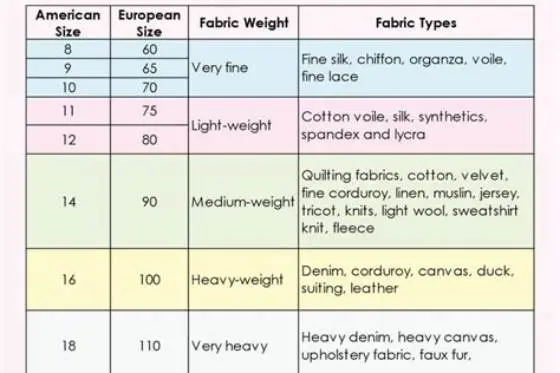
You read a needle as 80/12 and that tells you its blade diameter. The first number is European (EU 80 means 0.80 mm across the blade), the second is American (US 12 on the same scale). Bigger numbers mean a thicker blade and a larger eye, so the needle makes a bigger hole. That pairing is why you see two numbers together.
Think of the EU number as metric and exact, the US number as an old shop shorthand that stuck. A 60/8 is very fine at 0.60 mm, a 110/18 is heavy at 1.10 mm, and most home sewing lives between them. Your machine does not care which number you quote, it just needs the shank to fit. Home machines use the 130/705H system, a flat-sided shank that faces the back.
Check the packet before you open it and you will see both numbers plus a letter like H or HLx5. The letter tells you the point or system, the numbers tell you thickness. If you only remember one thing, remember this rule of thumb: match the smallest needle that still carries your thread without shredding. It leaves the smallest hole and the cleanest stitch. That choice is the next section's job.
Systems: difference between standard diameter and length sizes
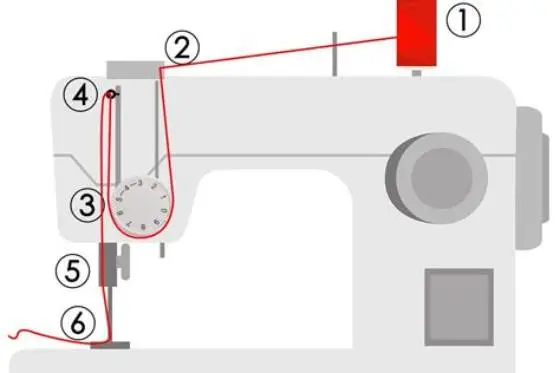
Needle size usually means diameter, not how long the needle is. When we say 80/12, we talk about thickness at the blade just above the eye, measured in hundredths of a millimetre. Length is separate. Almost every home needle measures about 1.5 inches (3.8 cm) from shank top to point, regardless of whether it is a 70 or a 100. For the detail, see our notes on threading top thread correctly.
The confusion comes because packets show two numbers and both look like sizes. The pair 80/12 is one size expressed in two systems, not a diameter plus a length. The EU system (EU 60 to EU 110) is metric and linear, the US system (US 8 to US 18) is an older retail scale that jumps unevenly. They describe the same needle.
Length does matter when you change machine families. A home 130/705H needle will not seat correctly in an industrial DBx1 or an overlocker that needs HLx5 or ELx705. The shank length and groove position change, so timing goes off and you get skipped stitches. Stick to 130/705H for any home sewing machine sold for home use in the US, UK, Canada or Australia, unless the manual names something else.
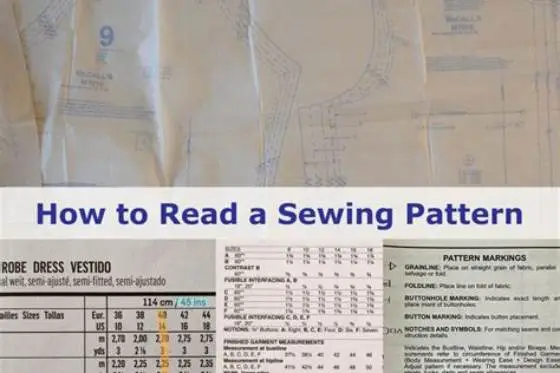
I would keep home needles and overlocker needles in separate boxes. They look alike. A quick check of the system code on the packet saves a frustrating hour of troubleshooting. If that sounds like your situation, read up on how to read a sewing pattern next.
- Diameter size: the 60-110 / 8-18 number, decides hole size and eye size.
- Length/system: the code like
130/705H, decides if the needle fits and times correctly. - Point type: letters like Universal, Microtex, Jersey, Jeans, decide how the tip enters the fabric.

SCHMETZ Universal Sewing Machine Needles
Gives you an assorted set of universal needles so you can match needle diameter to fabric and thread without guessing.
Common sizes: most common sewing machine needle sizes and their uses
Most home sewists use just four or five sizes for 90% of projects. Fine needles slip between delicate fibres without pushing them aside, heavy needles punch through dense weaves without deflecting. The middle of the range handles quilting cotton, poplin and stable knits, which is why 80/12 ships in most new machines. You feel the difference as soon as you change.
Start with the fabric weight, then confirm with thread. A 70/10 pairs with fine 60 wt or 50 wt thread, an 80/12 with standard 50 wt, a 90/14 with 40 wt or topstitch thread. If the thread looks tight in the eye or shreds, go up one size. If you see large holes or puckering, go down one.
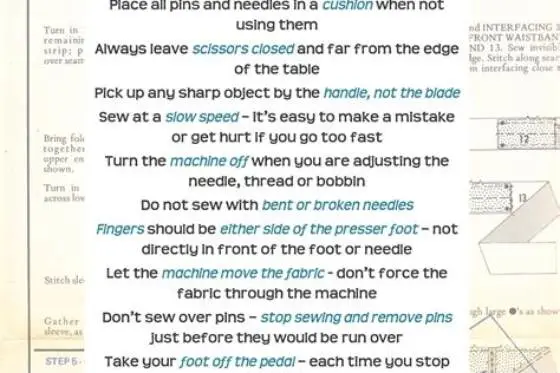
Keep a small stock of the core sizes so you can swap without a shop run. I would choose a mixed pack of 130/705H Universal in 70/10, 80/12 and 90/14 plus one pack of Jeans/Denim 90/14 and one Microtex 80/12 for tightly woven cotton. That covers cotton, knits, denim and coated fabrics without overbuying. For the detail, see our notes on sewing machine safety.
| Size EU/US | Best for | Thread to pair |
|---|---|---|
| 60/8 - 70/10 | Silk, voile, lawn, fine knits | 60 wt to 50 wt fine |
| 80/12 | Quilting cotton, poplin, linen, stable knits | 50 wt standard |
| 90/14 | Denim, twill, canvas, sweatshirt fleece | 40 wt to 50 wt |
| 100/16 - 110/18 | Heavy denim, canvas, upholstery, leather | 40 wt, heavy, topstitch |
A 70/10 needle makes a hole less than half the width of a 110/18, and that gap decides whether your fabric puckers or sings.
Pairing: how needle size relates to fabric and thread choices
Needle, fabric and thread work as a trio. The needle must be thick enough to carry the thread and open a channel, yet fine enough not to bruise the fabric. When those three match, the stitch forms cleanly and the feed moves evenly. When they do not, you get the classic hints.
For lightweight wovens like lawn or silk, a 70/10 with 50 wt or 60 wt thread glides without leaving visible holes. For medium wovens like quilting cotton at about 4-6 oz per square yard, 80/12 with 50 wt is the sweet spot. For dense or heavy wovens like denim at 10-12 oz, move to 90/14 or 100/16 and a slightly heavier 40 wt thread so the needle does not flex.
Knits add stretch to the equation. A Universal 80/12 works for stable interlock, but a stretch or jersey needle in the same 80/12 size has a rounded point and a deeper scarf that prevents skipped stitches on elastane. The diameter stays the same, the tip changes. If your knit skips even with correct size, switch point type before going larger.
Use the Needle & Thread Finder on this site when you want a quick check: pick your fabric and it suggests needle size, thread weight, stitch length and foot, so you can confirm the pairing before you cut.
- Too small: thread shreds, needle bends or breaks, skipped stitches on thick seams.
- Too large: visible holes, puckering, fabric damage, noisy penetration.
- Just right: thread flows, needle enters without pushing fabric into the plate, stitches look even.
Choosing: how to pick the right needle for your next project without guessing
Choosing feels tricky until you make it a habit. You match fabric weight first, then thread, then point type. That order keeps you from chasing tension dials when the real culprit is diameter. You can do this in under a minute at your cutting table.
Test on a scrap sandwich that copies the real project, including seams and interfacing. Sew 6 inches (15 cm) and look at both sides. Good pairing shows even stitches, no puckering and no popping sound as the needle enters. Keep that scrap. It tells you more than any chart.
If you sew many fabrics, keep notes on the packet. Write the fabric and thread you used and whether it worked. Next time you reach for that fabric, you already know the answer. That little record beats memory every time.
- Read the fabric: feel weight and stretch. Sheer or silky goes 60/8-70/10, quilting cotton 80/12, denim or canvas 90/14-100/16.
- Match the thread: fine
60 wtneeds 70/10, standard50 wtneeds 80/12, heavier40 wtneeds 90/14 or larger. - Pick the point: Universal for wovens, Microtex for tightly woven cotton, Jersey/Ballpoint for knits, Jeans for denim, Leather for leather and vinyl.
- Test on scrap: stitch, press, and inspect holes and tension. Adjust one size up or down based on what you see and hear.
- Universal 80/12: covers most cotton and blends, easy to stock
- Universal on knits: can skip, use Jersey/Stretch instead
Fixing: what happens when the needle size is wrong and how to check
Wrong size announces itself quickly. A needle that is too fine for the job flexes, hits the throat plate and snaps, or skips at thick seam intersections. A needle that is too heavy leaves permanent holes in fine cotton and makes a thud on entry. Thread shredding near the eye usually means the eye is too small for the thread you chose.
Fix cheapest first and check the result after each change. Put in a new needle in the correct EU/US size and system 130/705H, re-thread with the presser foot up so the thread seats in the tension discs, and clean lint from the bobbin area. Sew on scrap. If stitches even out and the shredding stops, you fixed it.
If problems persist after the needle swap, look at point type, then thread weight, then tension. A fresh Microtex 80/12 often cures puckering on tightly woven cotton, a Jersey 80/12 cures skipping on knits. When a new needle, correct size, correct point and re-threading do not help, or you see burrs, timing issues or fabric feeding unevenly, book a service check. Bent needle bars and timing are shop jobs.
Replace needles often. A good rule is a new needle at the start of each project or after about 6-8 hours of sewing. It costs cents and prevents most of the mystery problems that look like tension faults.
Still wondering?
Are EU and US needle sizes the same thing?
Yes, they describe the same needle. EU is metric diameter in hundredths of a millimetre (60 = 0.60 mm). US is an older 8-18 scale. A packet lists both as 80/12 so you can shop either way.
What size needle should I start with as a beginner?
Start with Universal 80/12 in the 130/705H system with 50 wt thread. It handles quilting cotton, poplin and most stable knits. Add 70/10 for fine fabrics and 90/14 for denim as you need them.
Does a larger number mean a longer needle?
No. Larger numbers mean a thicker blade and larger eye. Length is set by the system code, like 130/705H for home machines. All home needles are about 1.5 inches (3.8 cm) long.
Can I use a bigger needle to sew thicker thread?
Yes, go up one size so the thread passes freely through the eye and groove. If 50 wt works with 80/12, a 40 wt topstitch thread usually wants 90/14. If thread still shreds, try a Topstitch needle with a larger eye.
How do I know if my needle is worn out?
Listen and look. A dull needle pops on entry, pushes fabric into the plate, or leaves uneven stitches. Change it at the start of a new project or after 6-8 hours of sewing, sooner after heavy fabrics.