How to find straight grain and fix fabric cut off-grain
Straight grain in woven fabric is the warp direction running parallel to the selvedge. You find it by checking the selvedge, pulling a single thread, and comparing stretch along, across and on the bias. Keep pattern grainlines on that straight grain so pieces hang as planned, and gently steam and ease fabric back to square before you cut if it is off-grain.
On this page (7 sections)
- The short version
- Basics: what straight grain, cross grain and bias mean for woven fabric
- Finding grain: how to use selvedge, pulled thread and stretch tests
- Off-grain check: how to tell if fabric is off-grain and straighten it safely
- Consequences: why cutting off-grain makes seams twist and hems hang uneven
- Pattern alignment: how to line up grainline arrows with the selvedge
- Still wondering?
Part of our guide on best fabric for hot humid weather
Key figures
- Straight grain
- parallel to selvedge in wovens
- Cross grain
- perpendicular to selvedge
- Bias angle
- about 45 degrees
- Stretch test
- most stretch on bias, least on straight grain
- Visual check
- fold selvedge to selvedge, raw edges should meet flat
- Common issue
- side seams can spiral if cut off-grain
- Thread pull test
- single warp or weft thread shows direction
The short version
- Straight grain runs parallel to the selvedge in wovens, cross grain runs across it, bias sits at about 45 degrees.
- Check the selvedge, pull a single thread, and tug in three directions to confirm true grain.
- This grain advice is for woven fabrics; knits, bias-cut wovens and printed plaids need different handling.
- Off-grain cutting can make seams spiral and hems hang uneven after wear and washing.
- Prewash as you will wash the finished item, then steam, ease and let fabric cool flat before cutting.
Basics: what straight grain, cross grain and bias mean for woven fabric
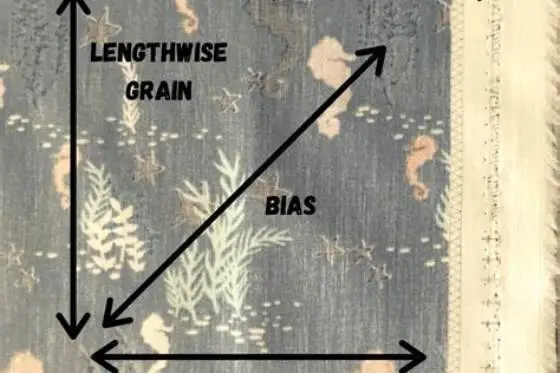
Straight grain in woven fabric comes from warp threads that run lengthwise, parallel to the selvedge. The selvedge is the tight, finished edge that will not fray. This direction has the least stretch and gives your project its stable length.
Cross grain comes from weft threads that run across the width, perpendicular to the selvedge. It usually has a little more give than straight grain, but the amount varies with fiber, weave and finish. A loose plain weave in cotton behaves differently from a tight twill in polyester, so you test your own cloth.
Bias sits at about 45 degrees between straight and cross grain. It cuts diagonally across the weave, so it stretches and drapes the most. Designers use bias on purpose for soft skirts or cowls because it flows. You would not place a stable seam on bias unless the pattern tells you to.
This whole grain system applies to woven fabrics with a clear warp and weft. Knits are loops, not woven threads, so they stretch in several directions and do not have a strict grainline. Bias-cut wovens and printed plaids also break the standard rule, so you follow the pattern layout or match the print instead of the selvedge. Before you commit to anything, it is worth looking at best fabric for swimsuits.
Finding grain: how to use selvedge, pulled thread and stretch tests
Start with the selvedge, the firm woven edge that runs the length of woven fabric. It shows straight grain direction because warp threads form it. If the selvedge ripples or pulls in, the fabric may be off-grain.
Pull a single thread gently near a cut edge to confirm direction. A thread that runs along the length is warp and marks straight grain, while a thread that runs across the width is weft and marks cross grain. Some finishes resist pulling, so you may need to clip and tease the thread free.
Try a gentle stretch test in three directions: along the selvedge, across it, and at a diagonal. Straight grain stretches least, cross grain gives a bit more, and bias stretches most. How much each direction gives depends on fiber, weave and finish, so compare the three pulls on your own fabric. We cover best fabric for beginner sewing projects in its own article.
Use at least two of these checks in more than one spot on your fabric. If results agree across the length, you have found true grain. If they disagree, the weave is skewed and you will want to straighten it before laying out pattern pieces.
- Selvedge edge shows warp direction and straight grain in wovens
- Pulled thread confirms warp versus weft when the edge is hard to read
- Stretch test compares least stretch on straight grain to most on bias
Off-grain check: how to tell if fabric is off-grain and straighten it safely
Off-grain woven fabric shows a weave that is not square, so the selvedge looks skewed and the cross threads do not meet the selvedge at a right angle. Even a small bow is magnified over long seams. Fold selvedge to selvedge and check if raw edges meet flat without rippling. If they wave or will not lie smooth, you still have skew to fix.
Do not force every fabric straight. If the print itself was applied off-grain at the mill, straightening the weave will leave the print crooked and you must choose which to prioritize. Coated, laminated or heavily finished fabrics can also resist easing and may bubble or crack. If threads snap back right away, stop and plan around the skew instead. Before you commit to anything, it is worth looking at fabric widths explained.
When the cloth will ease, work on a large flat surface with clean hands. Lightly steam for your fiber and ease the fabric a little at a time until warp and weft look square. How far it moves depends on fiber, weave and finish, so go slowly and re-check often.
Let fabric cool and dry completely while pinned or weighted flat before cutting. Re-steam if it springs back. For coated fabrics, prints that will not square, or cloth that keeps springing back, cut single layer, align the dominant print or stripe by eye, and allow extra seam allowance where needed. That's the trade-off.
- Fold selvedge to selvedge and see if raw edges meet flat without rippling or waves.
- Lay fabric flat, pin selvedges so warp and weft look square and use a right-angle ruler to check.
- Lightly steam for your fiber and ease fabric a little at a time until threads form right angles.
- Let fabric cool and dry completely while pinned or weighted flat; re-steam if it springs back.
- Re-check with the fold test and a ruler before you mark or cut.
Consequences: why cutting off-grain makes seams twist and hems hang uneven
When you cut woven fabric off straight grain, the warp and weft pull unevenly under tension. Even a few degrees off grain can cause a side seam to spiral toward the front after wear. Hang the garment for 24 hours and check hem level at several points to see if it has shifted.
Hems cut on a skewed grain often hang uneven and show ripples in skirts or pants. You may not see it right on the table, but it shows after the garment hangs or after washing. How much it twists depends on fiber, weave, finish and how the garment is sewn.
Quilting also suffers when blocks are cut off-grain and no longer match the fabric grid. Shapes can warp and seams can pucker after pressing. Press the block and measure both diagonals. If they differ noticeably the block is off-grain or out of square.
Shrinkage and stretch vary a lot, so do not rely on a fixed number. Fiber, weave, finish and your wash and dry method all change the result. Prewash fabric using the same method you will use for the finished item and measure blocks before and after so you know what your cloth will do.
Pattern alignment: how to line up grainline arrows with the selvedge
Pattern pieces have a grainline arrow that shows how to place them on woven fabric. That arrow should run parallel to the straight grain and to the selvedge. Correct placement helps the garment hang as designed.
Pin both ends of the grainline arrow and measure each end to the selvedge. Both measurements should be equal. If they are not, the piece is angled and the hem will swing. Adjust until the two distances match, then pin the rest of the piece.
Long pieces show errors more than small ones, so take extra care with skirts, dress fronts and pant legs. Short pieces like facings are more forgiving, but you still align them. Keep the arrow straight over its full length, not just at one end.
Some patterns include a bias grainline for drape. In that case the arrow is meant to sit at a diagonal to the selvedge. Follow the pattern instructions for those pieces and do not try to force them back to straight grain.
- Grainline arrow aligns with straight grain in wovens
- Equal distance from each end of arrow to selvedge means it is parallel
- Bias grainline is intentional; follow the layout when the pattern calls for it
Still wondering?
Can I sew a garment if the fabric is just slightly off-grain?
You can, but know the risk. Even slight skew in a woven can make a side seam drift after wear and washing. For loose, non-fitted projects the effect may not matter. For fitted garments, straighten first or hang the finished piece 24 hours and check the hem before hemming.
How does fabric type affect grain and cutting advice?
Wovens have clear warp, weft and bias with different stretch. Knits are loops and stretch in several directions, so you use stretch direction and rib alignment instead of a woven grainline. Bias-cut wovens and printed plaids need their own layout rules. Always follow the pattern notes for those fabrics.
Will washing fabric straighten out off-grain issues?
Washing usually will not fix off-grain wovens and can make skew worse depending on fiber, weave, finish and wash and dry heat. Straighten with steam and easing before cutting. Prewash using the same method you will use for the finished item so you see how your fabric behaves.
What tools help accurately find fabric grain at home?
Use the selvedge, a single pulled thread, and a gentle stretch test in three directions. A tailor's square or quilting ruler helps you check that warp and weft meet at right angles. A flat table and pins or weights hold fabric while it cools.
Is bias grain always a problem to avoid?
No. Bias is useful when the design wants drape and soft flow. Many patterns place skirts or cowls on the bias on purpose. Use bias when the pattern calls for it and keep those grainlines at the intended diagonal to the selvedge.