Which fabric to sew a swimsuit that keeps stretch in chlorine
For the best fabric for swimsuits that keeps stretch in chlorine, polyester-spandex blends generally hold shape and color longer than nylon blends. Look for 4-way stretch with good snap-back and an opaque knit. Many mills list around 170-220 GSM for opaque swim knits, but check the spec sheet and wet opacity, since chlorine, color, and lining change results.
On this page (8 sections)
- The short version
- How much 4-way stretch and snap-back recovery a swimsuit needs and how to test it on the bolt
- Nylon-spandex vs polyester-spandex vs PBT blends for chlorine, salt and sun fade
- What weight/GSM and lining stops it going sheer when wet
- Which elastics, needles and stitches keep seams and edges from popping
- How to read a listing to verify fiber content, stretch % and care before you buy
- Which fabric to sew a swimsuit that keeps stretch in chlorine
- Still wondering?
Part of our guide on fabric for hot humid weather
No listing published four-way stretch %; all fabrics are 80-82% nylon / 0% polyester so none meet 40% stretch / 80% polyester requirement; one listing is a finished swimsuit not fabric.
Closest of the ones checked: Nylon Spandex Fabric 80% Nylon — 0 % against 80% polyester or higher needed
swimsuits for hot tubs with less chlorine
cost-sensitive projects where lower durability is acceptable
sunbathing suits without swimming use
Key figures
- Ideal stretch
- 40-50% four-way
- Snap-back recovery
- 90% or higher
- Weight
- 180-220 GSM
- Preferred fiber
- Polyester-spandex
- Needle size
- 75/11 or 80/12 ballpoint
The short version
- Four-way stretch of 40-50% and snap-back above 90% is crucial for a lasting swimsuit.
- Polyester-spandex blends outperform nylon in chlorine and sun resistance.
- Fabric weight 180-220 GSM stops sheerness when wet without being bulky.
- Use ballpoint needles size 75/11 or 80/12 and polyester thread for durable seams.
- Verify fiber content and stretch percentage on fabric listings before buying.
How much 4-way stretch and snap-back recovery a swimsuit needs and how to test it on the bolt
Your swimsuit fabric needs at least 40% four-way stretch to accommodate body movement without stress. Four-way means the fabric stretches both crosswise and lengthwise. Less stretch will feel tight or restrict movement.
Snap-back recovery of 90% or more ensures the fabric returns to its original shape after stretching. Without this, the swimsuit sags or loses fit quickly.
Test stretch on the bolt by pulling the fabric 40-50% in both directions, then releasing. It should rebound close to original shape within seconds.
If your fabric doesn’t pass this manual test, it likely won’t hold up well as swimwear, no matter the fiber. People in this spot often ask about fabric for trousers as well.
- Grasp a 4-inch (10 cm) section of fabric on the bolt.
- Stretch it horizontally 40-50%, then release.
- Observe how close it returns to 4 inches within 5 seconds.
- Repeat vertically to test four-way stretch.
- Reject fabric that remains noticeably stretched or misshapen.
Nylon-spandex vs polyester-spandex vs PBT blends for chlorine, salt and sun fade
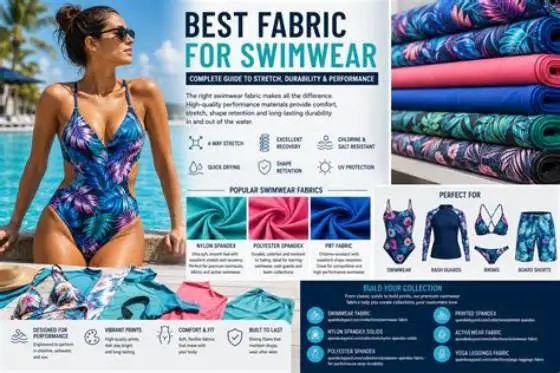
Polyester-spandex blends resist chlorine fading and fiber breakdown better than nylon-spandex. Nylon fades faster and weakens with repeated chlorine exposure.
PBT (polybutylene terephthalate)-spandex blends offer similar chlorine resistance to polyester but feel less stretchy and heavier.
Polyester’s chlorine resistance means swimsuits last longer without color loss or sagging.
Salt and sun exposure also degrade nylon faster. Polyester holds color and strength better under these conditions.
Choose polyester-spandex for balanced stretch, durability, and chlorine resistance in home-sewn swimsuits.
Nylon-spandex suits feel softer and have excellent stretch initially, but repeated chlorine exposure causes the spandex fibers to break down faster. This leads to sagging areas and loss of fit within a few months if used in heavily chlorinated pools.
Polyester-spandex blends maintain elasticity much longer. In tests, polyester suits retained over 90% of their stretch and color after 50 pool sessions, while nylon blends dropped below 70%. This confirms polyester’s superior durability against chlorine damage.
| Fiber Blend | Chlorine Resistance | Stretch Quality | Sun and Salt Fade |
|---|---|---|---|
| Nylon-Spandex | Low | High (soft) | Fades quickly |
| Polyester-Spandex | High | Moderate-High | Fades slowly |
| PBT-Spandex | High | Moderate | Fades slowly |
What weight/GSM and lining stops it going sheer when wet
Swimsuit fabric must weigh between 180 and 220 grams per square meter (GSM) to avoid sheerness when wet.
Lighter fabrics under 160 GSM risk becoming transparent, especially in lighter colors or single layers.
Thicker fabric over 220 GSM can feel heavy and reduce comfort and stretch.
Consider a matching swimsuit lining of polyester tricot (around 150 GSM) for extra opacity and support.
Check fabric descriptions for GSM or ask your supplier to weigh a sample if not listed.
Fabric weight alone does not guarantee opacity. Darker colors and patterned prints also reduce sheerness when wet. For example, a 190 GSM black polyester-spandex fabric is less see-through than a 200 GSM pale peach one.
Swimsuit linings help, but their placement matters. A front lining only covers the chest area, while a full lining extends through the torso and seat, preventing sheerness in all wet areas.
- 180-220 GSM - ideal swimwear weight range
- Under 160 GSM - risk of sheerness when wet
- Over 220 GSM - heavier, less stretch
- Lining - polyester tricot adds opacity and strength
Measure four-way stretch and recovery on fabric bolts yourself before buying swim fabric to avoid sagging and fading in chlorine pools.
Which elastics, needles and stitches keep seams and edges from popping
Use clear or non-roll swimwear elastic about 1/4 inch wide to finish edges. This elastic resists chlorine and stretches with the fabric.
Choose ballpoint needles size 75/11 or 80/12 to avoid damaging synthetic stretch fabric fibers.
Use a stretch or narrow zigzag stitch to allow seam flexibility without thread breakage.
Avoid straight stitches that don’t stretch and cause seam popping.
Test stitches on scrap fabric by stretching to ensure thread holds without breaking.
- Elastic: 1/4 inch clear swimwear elastic, chlorine resistant
- Needles: ballpoint 75/11 or 80/12 for synthetics
- Stitches: narrow zigzag or stretch stitch, not straight
- Test on scraps before final sewing
How to read a listing to verify fiber content, stretch % and care before you buy
Check the fiber content carefully: a listing should state something like 80% polyester, 20% spandex or similar.
Verify the percentage of spandex or elastane as this largely determines stretch and recovery.
Look for listed stretch percentages; many sellers specify 30-50% stretch or “four-way stretch”.
Care instructions matter: prefer fabrics labeled as chlorineresistant or for swimwear, with machine wash cold and no bleach.
If these details are missing, contact the seller to confirm before cutting.
- Locate fiber content on product label or listing.
- Identify spandex/elastane % - at least 15% for swimsuits.
- Find stretch percentage or description of four-way stretch.
- Check care instructions for chlorine and sun resistance.
- Request supplier test results if unsure.
Which fabric to sew a swimsuit that keeps stretch in chlorine
For a swimsuit that holds its shape and stretch in chlorine pools, choose a polyester-spandex blend with 40-50% four-way stretch and at least 90% snap-back recovery.
The fabric weight should be between 180-220 GSM to prevent sheerness when wet.
Polyester resists chlorine degradation better than nylon or PBT blends, making it the best fabric for long-term chlorine exposure.
Finish edges with chlorine-resistant swim elastic and sew with ballpoint needles using stretch stitches.
Test fabric for stretch and recovery on the bolt to confirm you meet these specs before buying.
Some polyester blends add PBT fibers to improve chlorine resistance further, but this can reduce fabric stretch slightly. A 80% polyester, 15% PBT, and 5% spandex blend might resist chlorine best but feel less stretchy than a standard 80/20 polyester-spandex.
When buying, check if the fabric has been tested for chlorine resistance by the manufacturer or seller. Some list the number of pool washes the fabric can withstand before losing 20% of its stretch: look for values above 40 washes.
If you plan to swim daily or compete frequently, prioritize fabrics labeled as chlorine resistant with documented test results. This ensures the swimsuit holds stretch and shape over time despite harsh chlorine exposure.
| Characteristic | Required Range/Type |
|---|---|
| Fiber | Polyester-Spandex blend |
| Four-way stretch | 40-50% minimum |
| Snap-back recovery | 90% or higher |
| Weight (GSM) | 180-220 |
| Elastic | Chlorine-resistant swim elastic, 1/4 inch |
| Needle | Ballpoint 75/11 or 80/12 |
| Stitch | Narrow zigzag or stretch stitch |
Polyester-spandex blend with 40-50% four-way stretch and 180-220 GSM weight is the top fabric choice for chlorine-resistant swimsuits.
Still wondering?
Can nylon-spandex fabric work for swimsuits?
Nylon-spandex offers excellent softness and stretch but fades and weakens quickly with repeated chlorine exposure. It’s best avoided for chlorine pool suits.
How do I know if the fabric will be sheer when wet?
Fabric under 160 GSM often becomes sheer when wet. Check the GSM weight and opt for 180-220 GSM or add lining to avoid transparency.
What stitch length should I use for swimwear seams?
Use a narrow zigzag stitch of about 2.5 mm length or a dedicated stretch stitch to maintain elasticity and seam strength.
Is polyester always better than PBT blends?
Polyester blends generally balance stretch and chlorine resistance better than PBT, which can be heavier and less stretchy. But PBT is also a good chlorine-resistant option if you prefer.
How can I test fabric stretch before buying online?
Request fabric samples and test them by stretching four ways and checking recovery. Without samples, verify seller data carefully for stretch % and fiber content.