Fabric won't feed even with feed dogs up: what to check
If fabric doesn't feed with feed dogs up, check if the feed dogs are truly raised and not worn, ensure stitch length isn't set to zero, adjust presser foot pressure, and clean lint under the throat plate. These steps fix most feeding issues without repair.
On this page (8 sections)
- The short version
- How to tell if feed dogs are lowered, disengaged or worn smooth
- Stitch length set to 0 and feed not moving
- Presser foot pressure and height that stops fabric advancing
- Lint, thread and plate checks that block feeding
- Why lightweight or stretch fabric gets eaten and how to stop it
- When it is a feed mechanism failure vs a setting
- Still wondering?
Part of our guide on stitches skipping on machine
Key figures
- Feed dogs height
- Up to 1/8 inch
- Stitch length range
- 0 to 5 mm
- Presser foot pressure
- Adjustable, check manual
- Lint buildup
- Visible under throat plate
- Needle size for stretch
- 75/11 or 80/12
The short version
- Feed dogs must be visibly raised and textured to grip fabric
- Stitch length set to zero disables feeding movement
- Incorrect presser foot pressure or height stops fabric advance
- Lint or thread under the throat plate blocks feed dogs
- Lightweight or stretch fabric may need special handling
How to tell if feed dogs are lowered, disengaged or worn smooth
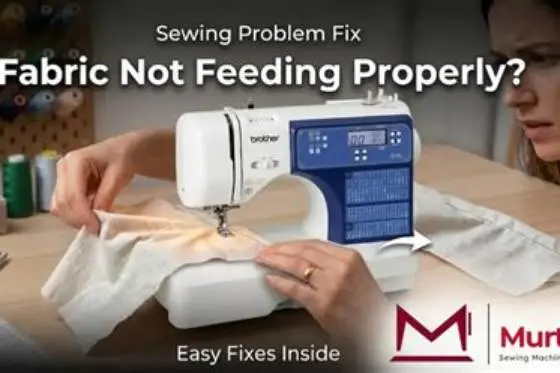
Feed dogs are the small, jagged metal teeth under the presser foot that pull the fabric through the machine as you sew. When you expect fabric movement but the fabric remains still, start by checking if the feed dogs are fully raised.
Look under the presser foot with the needle down and feed dogs up. They should stand about 1/8 inch (3 mm) above the throat plate and have a rough, tooth-like surface to grip fabric. If they are flush with the plate or look smooth, they may be lowered or worn.
Some machines have a lever or switch to lower the feed dogs for free-motion sewing or darning. Make sure that lever is in the up position. If your machine has no such lever, feed dogs that appear very low or worn smooth may need professional replacement.
Gently run your fingertip over the feed dogs to feel their texture. Smooth feed dogs won’t grip fabric enough to feed it. If your feed dogs are lowered or disengaged, the fabric won’t move even if the presser foot is down and the stitch length is set properly. We go through puckering seams sewing step by step elsewhere on the site.
Stitch length set to 0 and feed not moving
A stitch length dial or digital setting controls how far the fabric advances with each stitch. When this is set to 0 mm, the machine won’t move the fabric at all, resulting in fabric that stays still under the needle.
Check your stitch length setting. If it’s zero, increase it slightly: usually to about 1.5 to 2.5 mm for standard sewing. The exact range depends on your machine model; consult its manual if unsure.
An unintended zero stitch length can happen after changing stitch styles or when using features like a buttonhole stitch. Moving it away from zero should restore fabric feeding immediately. It helps to understand machine stitches uneven before going further.
If your stitch length is correct and fabric still does not feed, continue to check other factors such as feed dogs and presser foot pressure.
Some machines lock the stitch length dial when selecting certain decorative or utility stitches. If you suspect the dial is locked at zero, try switching to a straight stitch first, then adjust the length. This simple step often restores fabric feed.
If you use a computerized machine, the stitch length may be controlled through a touchscreen or buttons. Confirm the stitch length is not overridden by a memory setting or a stitch editing mode that forces zero length. Resetting to default stitch settings often fixes this issue. Before you commit to anything, it is worth looking at sewing light not working.

HONEYSEW 2PCS Plastic Lockstitch Industrial Sewing Machine Adjust Pressure
Gets fabric feeding again by letting you raise or lower presser-foot pressure on DDL-5550, DDL-8700, DDL-8500 and other single-needle lockstitch machines.
Presser foot pressure and height that stops fabric advancing
The presser foot holds fabric down against the feed dogs. If its pressure is too light, slippery or stretch fabrics may not feed evenly, slipping instead. Too much pressure flattens fabric and blocks feeding.
Most machines have an adjustable presser foot pressure dial or screw. If your fabric won’t feed, try increasing or decreasing this pressure by small increments and test.
Presser foot height also matters. If the foot just barely touches fabric, feeding is uneven or nonexistent. There should be enough clearance for the fabric to move freely but still be held firmly.
Some heavier fabrics or multiple layers require reduced pressure to avoid binding. Lightweight or stretchy fabrics often benefit from a lower pressure setting or a specialty foot like a walking foot.
Check the presser foot for damage or wear, such as bent edges or a loose attachment. A faulty foot can cause uneven pressure distribution and stop fabric feeding despite correct pressure settings.
Some fabrics require a different presser foot height or special feet with springs, like a roller foot, to feed properly. Adjusting height by a small fraction, about 1 mm, can make a difference for thick or textured fabrics.
Fabric won’t move even with feed dogs up? Check feed dog position, stitch length, presser foot pressure, and lint before assuming a mechanical fault.
Lint, thread and plate checks that block feeding
Lint, loose threads, or debris trapped under the throat plate or around the feed dogs can stop fabric from moving properly. These block the feed dogs’ teeth from gripping fabric.
Remove the throat plate by loosening its screw(s). Gently clean underneath with a small brush or compressed air. Avoid using liquids that can damage components.
Check for thread caught in the feed dog mechanism or bobbin area. Even a small nest blocks feed dogs. Re-thread the machine carefully.
Regular cleaning after every few hours of sewing prevents buildup. If feeding improves after cleaning, you’ve found the culprit.
Pay attention to lint buildup not only under the throat plate but also inside the bobbin case. A clogged bobbin case can cause the feed dogs to jam or move inconsistently, stopping fabric feed.
Check the feed dog teeth for tiny embedded fibers or thread pieces that reduce their grip. Gently scrape the feed dogs with a toothpick to dislodge stubborn debris, then clean again with a brush.
- Turn off and unplug your sewing machine.
- Remove the throat plate by unscrewing it carefully.
- Use a small brush or canned air to clean lint and thread from feed dogs and surrounding area.
- Reinstall the throat plate securely and re-thread the machine following the manual with presser foot up.
Why lightweight or stretch fabric gets eaten and how to stop it
Lightweight, slippery, or stretchy fabrics often feed unevenly or get caught by the feed dogs and needle, causing fabric to pucker, slip, or even ‘eat’ the fabric.
Using a standard presser foot and needle may cause damage or poor feeding. Switch to a walking foot that moves fabric layers evenly or a teflon foot that reduces friction.
Adjust presser foot pressure lower to avoid compressing and stretching fabric unevenly. Use a ballpoint or stretch needle (EU size 75/11 or 80/12) designed to slide between threads rather than pierce fibers.
You can also use a thin stabilizer or tissue paper under the fabric to help it feed smoothly. Remove it after sewing.
When it is a feed mechanism failure vs a setting
If all settings check out (feed dogs raised, stitch length above zero, presser foot pressure correct, and lint cleaned) but fabric still won't feed, the feed mechanism might be failing mechanically.
Signs include feed dogs moving erratically, not moving at all despite machine running, or uneven fabric movement.
Mechanical failure requires professional service. Attempting to fix internal feed dog linkages or gears without expertise can cause more damage.
Before calling a repair shop, test your machine thoroughly through the steps above. Record any unusual noises or machine behavior to report to the technician.
Still wondering?
How do I know if my feed dogs are worn out?
Worn feed dogs look smooth rather than tooth-like and may feel flat to the touch. If fabric consistently slips or doesn’t feed despite correct settings, wear is likely.
Can adjusting presser foot pressure fix feeding problems?
Yes, adjusting presser foot pressure can help. Too much or too little pressure causes feeding issues, especially with tricky fabrics. Test small pressure changes to find the balance.
Why does my sewing machine feed fabric unevenly?
Uneven feeding often comes from lint buildup, incorrect presser foot pressure, or using the wrong foot/needle for your fabric. Cleaning and switching to a walking foot helps.
Will changing the needle fix fabric feeding issues?
Sometimes. A bent or dull needle can cause feeding problems. Also, use the correct needle type and size for your fabric to avoid fabric damage and improve feed.
Is it normal for fabric to not move if stitch length is set to zero?
Yes. A stitch length of zero means the machine sews in place without moving fabric. Increase stitch length to allow fabric to feed.