How to Sew Chiffon Without Puckering: Fewer Waves, Flatter Seams
Sew chiffon without puckering by fitting a new fine Microtex needle. Thread fine 50 wt polyester, and stitch with a short stitch and slightly lower tension. Guide the fabric without pulling, and test every change on a scrap first.
On this page (8 sections)
- The short version
- Puckering: why chiffon gathers at the seam
- How to Sew Chiffon Without Puckering: the five-minute setup
- Cutting: keep chiffon on grain before you sew
- Stabilizer: tissue paper and wash-away backing that stop the feed
- Seams: French seams and hems that lie flat
- Troubleshooting: when the seam still puckers
- Still wondering?
Part of our guide on cotton vs linen shirt
Key figures
- Needle
- Microtex 60/8 or 70/10
- Thread
- Fine 50 wt polyester
- Stitch length
- Short stitch, test first
- Seam finish
- French seams
- Pressing
- Low heat, press cloth
The short version
- Fit a new fine Microtex needle before every chiffon project.
- Start with a short stitch and test on a scrap before touching the garment.
- Support the seam so both layers feed at the same speed.
- Finish seams French style so raw edges stay hidden and cannot fray.
- Press with low heat and a cloth, never drag the iron across chiffon.
Puckering: why chiffon gathers at the seam
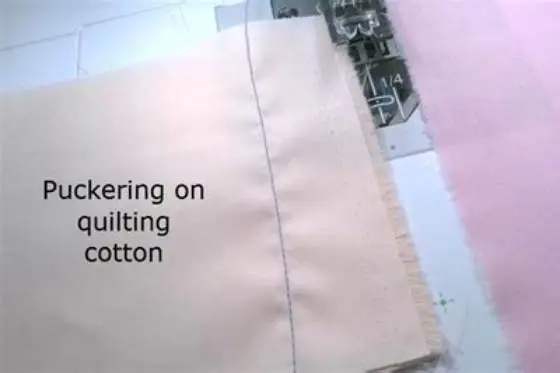
Chiffon puckers when the stitch pulls more fabric into the seam than the cloth can give back. Its weave is fine and loose, so each stitch hole sits close to the next one. Thick needles push the yarns apart instead of slipping between them. Heavy thread adds bulk the fabric cannot hide. That bulk shows. Tension that suits cotton drags chiffon into tiny waves. Once you see the cause, the fix stops feeling like guesswork.
Feed dogs play a part too. They grip the bottom layer and move it under the foot while the top layer slides on smooth metal. Chiffon has almost no grip of its own, so the two layers travel at different speeds. That top layer ends up longer than the bottom one, and the seam ripples to take up the slack. Tissue paper under the seam gives the feed dogs something to hold.
Sewing quickly raises the chance of puckering, since the fabric moves before the stitch fully forms. Sew slowly during test seams, at a pace where you can watch the feed dogs move. Go slowly. Let the feed dogs do the moving. Your hands guide the cloth and keep it flat, but they never pull it. Puckers that appear while you sew rarely press out later, so stop at the first sign of trouble. Change one thing, test it on a scrap, and watch the seam lie flat.
How to Sew Chiffon Without Puckering: the five-minute setup
Start with the cheapest fixes, in this order, before you touch a dial. Put in a brand new needle, because even a slightly blunt point snags chiffon and drags the weave. Re-thread the machine with the presser foot up, so the thread seats properly between the tension discs. Wind a fresh bobbin with the same fine thread you use on top, and brush lint from the hook area. These four steps cost nothing. They cure a surprising share of puckers. We go through how to sew velvet without slipping step by step elsewhere on the site.
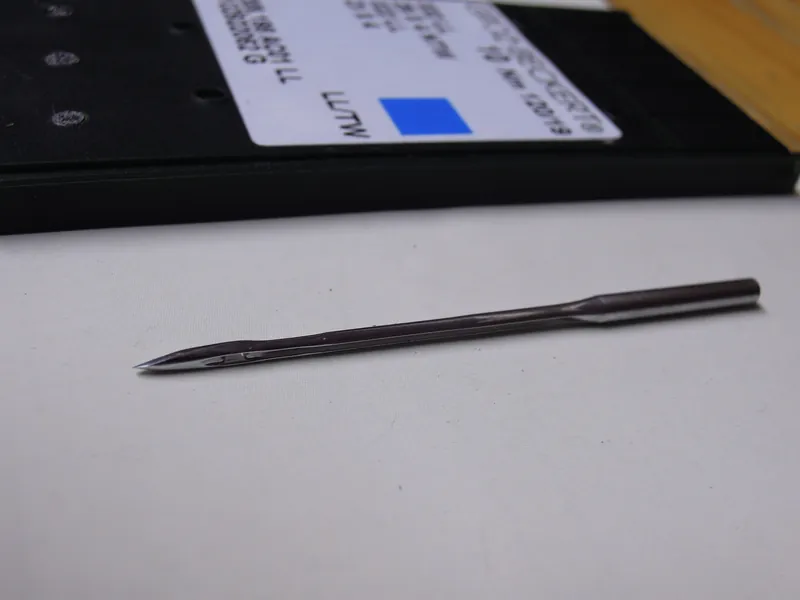
Schmetz lists chiffon under Universal or Microtex 60/8 to 70/10 on its needle chart, and the Microtex point suits this fabric best. Its very slim, sharp point slips between fine yarns instead of pushing them aside. Use 60/8 for silk chiffon and the sheerest synthetics, and 70/10 for ordinary polyester chiffon. Fit a new one at the start of the project, not halfway through it. Last week's cotton needle carries a burr you cannot see. Chiffon will show it.
Fine 50 wt polyester thread adds little bulk to the seam, and the same thread top and bottom keeps the stitch balanced. Thick cotton thread is too heavy here and pulls the seam into waves. Set the stitch length near 2.0 mm to start. Then test shorter and longer settings on a scrap. Most chiffon settles between 1.5 mm and 2.5 mm. Lower the upper tension one step, sew a test seam, and repeat one step at a time until the seam lies flat. Flat stitches on the scrap mean the setup is right. The Sewing Machine Doctor tool on this site points to the same checks when a seam still misbehaves.

SCHMETZ Microtex Sharp Sewing Machine Needles
Pierces chiffon cleanly with a Microtex sharp point in Size 60/8 (Size 60) so the needle cuts threads instead of pushing the weave.
Cutting: keep chiffon on grain before you sew
Puckering often starts on the cutting table, not at the machine. Chiffon slides across a smooth surface and creeps off grain while you cut. A seam sewn on the bias behaves differently from one sewn straight. Lay the fabric on tissue paper or a cutting mat with some grip, and smooth it flat without stretching it. Cut one layer at a time and flip the pattern piece for the second side. Sharp rotary cutters with a fresh blade drag the fabric less than tired scissors. If that sounds like your situation, read up on adjusting feed and stabilizers next.
Pins leave holes in chiffon. They let the layers slip as you move them. Pattern weights hold the fabric still without piercing it, and fine silk pins work where a weight cannot reach. Mark with chalk or a washable marker, and test it on a scrap first, since some marks refuse to wash out of silk. Staystitch curved and bias edges soon after cutting so they hold their shape. Neckline edges that stretch before you sew them will never sit flat afterwards.
Hang the cut pieces overnight if the fabric looks creased instead of ironing them straight away. Steam from a hot shower loosens most wrinkles without pressing a shine into the cloth. Check the grain before you sew by tugging a single thread across the width and following the line it leaves. Off-grain pieces pull the finished garment sideways, and no stitch setting fixes that. Cutting takes longer than sewing here. It pays off in every seam.
Chiffon does not pucker because you sewed badly. It puckers because the machine settings fight the fabric.
Stabilizer: tissue paper and wash-away backing that stop the feed
Tissue paper is the simplest stabilizer for chiffon, and it costs almost nothing. Lay a strip under the seam line so the feed dogs grip the paper instead of the slippery cloth. Sew straight through both layers, then tear the paper away gently from each side of the stitching. Paper holds the two layers together. They feed at the same speed. The seam comes out flat. There is more on polyester shrinkage after washing in a separate guide.
Wash-away stabilizer suits seams that need more support than tissue gives. Cut a strip slightly wider than the seam allowance and lay it under the fabric. Sandwich the chiffon between two strips for very fine silk. Stitch as usual, then rinse the seam in cool water and let it dry flat. Nothing stays in the garment, so the drape does not change. Test the rinse on a scrap first, since some dyes bleed when they meet water. Dissolved stabilizer leaves no stiffness behind.
Begin every seam on a scrap or a strip of tissue so the machine never swallows the first stitches. Hold both thread tails behind the foot as the needle goes down, then sew slowly for the first inch. Straight stitch plates help here too, since their small hole gives the fabric nowhere to dive. Leave long thread tails at the end of the seam and knot them by hand instead of backstitching, which piles bulk into the chiffon. These small habits matter more than any single setting.
- Slide tissue paper under the seam line, wider than the seam allowance.
- Pin or baste the layers through the paper so nothing shifts.
- Go slowly over the paper, holding the thread tails at the start.
- Tear the paper away gently from both sides of the stitching.
- Press the seam flat with low heat and a press cloth.

Sulky - 486-12 9-Yard Solvy Water Soluble stabilizer, 12" x 9.5 yd, White
"dissolves in water" is stated in the bullets (water-soluble stabilizer).
Seams: French seams and hems that lie flat
French seams suit chiffon better than any other finish, because they hide the raw edge inside a second fold. Stitch the seam with wrong sides together and a narrow allowance, then trim the edge close to the stitching. Turn the piece, press the fold flat, and sew a second line that traps the first edge inside. Raw edges never show through the sheer fabric. They cannot fray in the wash. Two passes take longer, but they save the garment from looking homemade.
Keep the first pass narrow, about 5 mm, and trim the allowance to 2 to 3 mm before the second pass. Wide first passes leave a bulky ridge that shows through sheer cloth. Press the fold with a cool iron and a press cloth, and never slide the iron sideways across chiffon. Narrow rolled hems suit edges that need no seam at all, such as a scarf or a sleeve edge. Stitch the hem close to the fold, trim the excess, then fold and stitch once more.
Skip backstitching at the ends of chiffon seams. The extra stitches pile thread into one spot and pucker the fabric right where the eye lands first. Leave tails of about 3 in (8 cm), pull them to one side, and knot them by hand. One tiny drop of fray check on the knot holds it without showing. Hem with the same care: test the finish on a scrap before the real edge.
Troubleshooting: when the seam still puckers
Work through the causes one at a time when a test seam still puckers. Change only one setting between tests, or you will never know which change fixed it. Puckering along the whole length points to tension or stitch length. Waves at the start of a seam point to the fabric diving into the needle plate. One bad spot points to a snag, a thick place, or a pin hole that pulled the weave. Write down the setting that worked.
Pressing can rescue a slightly wavy seam. It cannot fix a bad one. Use a cool iron, a press cloth, and short lifts of the iron rather than long slides. Steam helps polyester chiffon relax, while silk chiffon wants a dry iron and a light touch. Press the seam open over a rolled towel so the ridge does not print through to the right side. If the pucker survives a careful press, unpick the seam and sew it again with the corrected setting.
Some faults belong to a service shop, not to your settings. Skipped stitches on every fabric, a needle that hits the plate, or a grinding noise mean the timing or a part has gone wrong. Stop sewing and book a service rather than forcing the machine through chiffon. Regular servicing helps keep the feed and timing correct. Follow your machine maker's service recommendations. Flat seams come from a machine in good order as much as from good settings.
| What you see | Likely cause | Try first |
|---|---|---|
| Puckers along the whole seam | Tension too high or stitch too long | Lower tension a step, shorten to 2.0 mm |
| Puckers at the start only | Fabric dives into the plate | Start on tissue paper or a scrap |
| Puckers in one spot | Snag or thick spot in the weave | Change the needle, re-sew that stretch |
Still wondering?
Can I sew chiffon with a regular universal needle?
Yes, when it is new and fine: a 60/8 or 70/10 universal works on polyester chiffon. A Microtex point pierces silk chiffon more cleanly, so switch to it when you see pulled threads or tiny holes. Test both on a scrap first.
What stitch length stops chiffon puckering?
Start at 2.0 mm and test 1.5 mm and 2.5 mm on scraps from the same fabric. Short stitches hold delicate cloth, while longer ones suit heavier chiffon. The right length is the one that leaves the seam flat on both sides.
Do I have to use tissue paper every time?
No. It earns its place on slippery or very fine chiffon, and on the first inches of any seam. Stable polyester chiffon often sews flat without it once the needle and tension are right. Keep paper handy and reach for it when the seam starts to wave.