Cotton vs Linen Shirt: Which Keeps You Cooler in Summer?
For a cotton vs linen shirt in hot weather, linen wins on cooling and cotton wins on looking crisp. Linen lets air through, dries fast and tends to show creases relatively quickly during wear. Cotton stays smooth for hours, feels soft at once and costs less. Pick linen for heat, cotton for a sharp look.
On this page (9 sections)
Part of our guide on best fabric for hot humid weather

| Product | linen content (%) | Verdict | |
|---|---|---|---|
| Amazon Essentials Men's Regular-Fit Short-Sleeve Linen Shirt Amazon Essentials | No linen% or cotton% published on the listing | Not published | View on Amazon |
| Amazon Essentials Men's Regular-Fit Long Sleeve Linen Blend Shirt Amazon Essentials | No linen% or cotton% published on the listing | Not published | View on Amazon |
| Cubavera Men's Embroidered Panel Short Sleeve Linen Blend Shirt Cubavera | No linen% or cotton% published on the listing | Not published | View on Amazon |
| ROUWELL Light Green Mens Linen Shirt Short Sleeve Casual Wrinkle Free ROUWELL | No linen% or cotton% published on the listing | Not published | View on Amazon |
| COOFANDY Men's Summer Beach Cotton Linen Short Sleeve Shirt Business COOFANDY | No linen% or cotton% published on the listing | Not published | View on Amazon |
Key figures
- Cooler in heat
- Linen
- Stays smoother
- Cotton
- Soft from day one
- Cotton
- Softens with washing
- Linen
- Wash temperature
- Cool to warm
- Linen to aim for
- 55% or more
The short version
- Linen cools best in heat and humidity; cotton looks crisper for longer.
- Linen creases early in the day; cotton poplin holds a smooth line.
- Linen softens with every wash and outlasts cotton; cotton feels soft at once.
- Wash both cool and air dry; hot water and a hot dryer shrink linen most.
- A 55% linen blend keeps most of the cooling with half the wrinkles.
Cotton vs linen shirt: the short answer
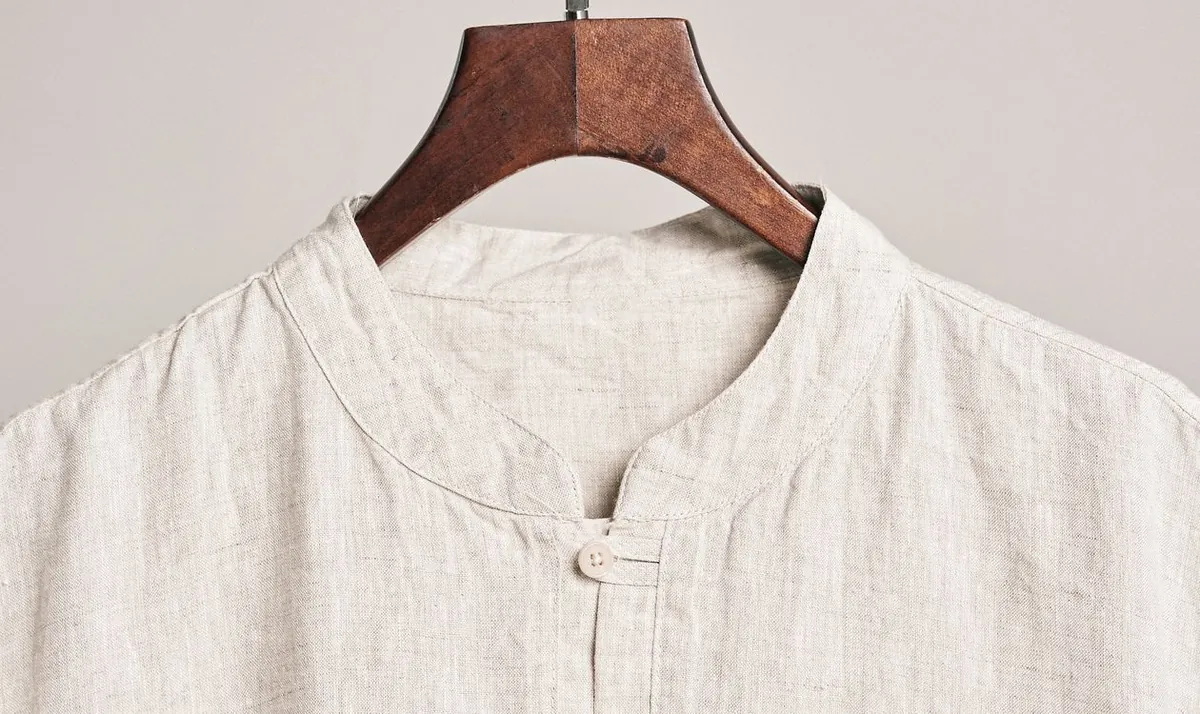
The two fabrics split the honours, and that split decides almost every part of this comparison. Linen is woven from flax, and its open weave suits hot days. Cotton is woven tighter, so it holds a smooth line for hours but traps more heat. Neither fabric is better in every way.
Wear linen when the weather is hot and humid and nobody minds a relaxed look. Holidays, beach towns, garden parties and long afternoons outside are linen days. Wear cotton when you need to look sharp for hours: office days, weddings, interviews and dinners. A cotton poplin shirt stays smooth from morning to evening, while a linen shirt starts to crease before lunch. If you want both, a linen-cotton blend splits the difference, with most of the cooling and half the wrinkles.
This page compares the two fabrics on the things that matter when you wear a shirt: cooling, sweat, wrinkles, softness, strength, care and cost. It ends with three shirts to buy, one pure linen, one blend and one dressier blend, so you can match the shirt to your summer. The shortlist is men's shirts, and the same styles come in women's cuts. Start with the heat, since that is where linen earns its place.
Heat and sweat: how each shirt handles a hot day
Linen cools better than cotton in hot weather, and the reason sits in the fibre. Flax fibres give a crisper, more open fabric hand than cotton, which helps airflow. The weave is loose, so air moves through a linen shirt and carries heat away from your skin. Cotton fibres pack tighter, and a cotton poplin shirt holds a layer of warm air against your body. On a still, humid day, that difference is the gap between comfortable and sticky. In a breeze, both feel fine. It helps to understand choosing between linen and cotton before going further.
Sweat is where linen pulls further ahead. Linen soaks up moisture fast and lets it go fast, so a damp linen shirt dries while you are still wearing it. Cotton soaks up moisture too, but it holds onto it, and a damp cotton shirt clings to your back and underarms. That cling is what makes a cotton shirt feel heavy on a hot day. A linen shirt feels light even when it is damp, since the moisture leaves the cloth instead of sitting in it.
Weave matters as much as fibre. A lightweight cotton lawn or voile breathes almost as well as linen, while a heavy linen canvas feels warm and stiff. Check the weave before you buy. Hold the shirt up to the light: if you can see light through it, air will pass through it too. Thin, loose weaves win in heat whatever the fibre. That test takes five seconds in a shop and tells you more than the label does.
| In hot weather | Linen | Cotton |
|---|---|---|
| Airflow | Excellent, loose weave | Good, varies by weave |
| Sweat | Absorbs fast, dries fast | Absorbs well, dries slowly |
| Feel when damp | Light, dries on the body | Heavy, clings to skin |
| Best weather | Hot and humid | Mild to warm |

Amazon Essentials Men's Regular-Fit Short-Sleeve Linen Shirt
- Is adult product False
- Size Large
Wrinkles: the price linen charges
Linen wrinkles, and there is no way around it. Flax fibres are stiff and lack the spring cotton has, so a crease made by sitting or folding stays put instead of easing out. A linen shirt shows its first creases early in the day, at the elbows, across the back and around the waistband. The shirt looks lived in by evening, which suits a holiday but not a boardroom. Cotton poplin holds its shape for hours, and a cotton shirt hung overnight often looks smooth again by morning. The other half of this decision is dryer's role in polyester shrinkage.
The wrinkles are not a flaw in the cloth. They are the same stiffness that makes linen strong and cool, so you cannot have one without the other. People who love linen call the creases character, and people who hate ironing call them a reason to buy cotton. Both are right, and the choice is about how much you mind. If a creased shirt would bother you all day, linen will bother you all day.
Blends soften the trade. A shirt with just over half linen keeps most of the cooling. It creases far less than pure linen, since the cotton fibres spring back and pull the cloth smooth. A steamer helps too: hang the shirt, hold the steamer a few inches away, and work from the top down. Steam relaxes linen without pressing it flat, and it takes a minute. An iron works as well, but it presses the creases in if you linger, so keep it moving and use steam.
Linen wins the summer, cotton wins the mirror, and the blend tries to win both.
Softness and strength: how each shirt ages
Linen starts stiff and gets better. A new linen shirt feels firm and a little rough against the skin, and the first wash softens it a touch. Each wash after that softens it more, until a well-worn linen shirt feels like the most comfortable thing you own. Cotton starts soft and stays soft, which is why a cotton shirt feels good the first time you put it on. That first impression is real, but it says nothing about year three.
Linen is the stronger fibre, and it gets stronger when wet, which is rare among natural fibres. A good linen shirt can last for years of regular washing without thinning, while cotton thins at the elbows, collar and cuffs after many washes. The weak points of a cotton shirt are the places that rub: the collar edge, the cuff fold and the elbows. Linen wears at those points too, but it takes far longer to show. If you buy one shirt to wear every summer for years, linen repays the higher cost.
Softness has a catch for linen. The same long fibres that make it strong can feel scratchy on sensitive skin, and a cheap linen shirt with short, coarse fibres stays scratchy. Feel the cloth before you buy, and wash it once before you judge it. A good linen shirt softens fast, and a bad one tells you so in the first wash. Cotton has no such test: if it feels soft in the shop, it will feel soft at home.
Care, shrinkage and cost: the weekly reality
Care is where cotton wins back the ground it loses in heat. Most everyday cotton shirts tolerate cool-to-warm machine washes, and many handle low tumble-dry settings; always check the label. Linen wants the same cool wash, but it dries best on the line, and a hot dryer is its enemy. Hot washing and high-heat tumble drying commonly cause visible shrinkage in linen; how much varies by fabric and finish. Cotton shrinks too, usually by a few percent on the first hot wash, but it settles after that. Wash both cool and dry both low, and neither will surprise you.
Linen garments commonly carry a higher price than comparable cotton items, due to fibre and processing costs. Flax is harder to grow, spin and weave than cotton, and good linen carries that cost into the shirt. The extra money buys years of wear and cooler summers, so it pays back if you wear the shirt often. If the shirt will sit in a drawer most of the year, cotton gives you the same look for less money.
Sewists should prewash both fabrics before cutting, and linen first. Even linen sold as pre-shrunk can lose a little length on its first home wash. Wash the cloth the way you will wash the shirt, then press it before you cut. Use a sharp 80/12 or 90/14 needle for medium-weight linen, and cotton or linen thread. Use a slightly longer stitch length than for lightweight cotton, and test on a scrap. Many sewists use around 10 to 14 stitches per inch, depending on weight. Finish the seams well, and the shirt will outlast the cotton one you made last year.
Which shirt to buy: three picks for three summers
The pick is a 100% linen shirt in a regular fit, short sleeves, for the hottest days. It clears the linen bar completely, so it cools and dries as well as linen can. Its honest drawback is the wrinkles: it creases early in the day, and it needs a steamer or an iron after every wash. Buy it for holidays, beach days and long hot afternoons. It is the shirt this page is about, and the cheapest way to feel what linen does.
The runner-up is a linen-cotton blend, a little over half linen, for readers who want the cooling without the creases. It keeps most of the airflow and dries fast, but the cotton in it springs back, so the shirt looks smoother for longer. Its drawback is the compromise: it never cools quite like pure linen, and it never looks quite as crisp as pure cotton. Buy it for everyday summer wear, office days without a jacket, and travel, where a shirt that packs without creasing matters.
The upgrade is a dressier linen blend, close to two-thirds linen, with a structured collar and a smarter cut. It costs more than the pick. It earns it at smart summer evenings, weddings and dinners where a plain linen shirt would look too casual. Its drawback is the same as the pick's, softened: it still creases, just less, and it still wants a steamer. Skip all three if you need a crisp shirt for a formal office, or if you hate ironing. Skip them in cold weather too, since linen feels chilly when the temperature drops.
- Pick: pure linen for the hottest days, prioritise cooling over wrinkle-resistance.
- Runner-up: 55% linen blend, for cooling with fewer wrinkles.
- Upgrade: 64% linen blend, for smart summer evenings.
Buy linen for heat, cotton for a crisp look, and a blend when you want both.
Still wondering?
Is linen really cooler than cotton?
Yes, in hot and humid weather. Linen's loose weave lets air through, and it dries fast when you sweat, so it feels cooler on the skin. In mild weather the difference is small, and a lightweight cotton shirt feels just as good.
Why does linen wrinkle so much?
Flax fibres are stiff and lack the spring cotton has, so a crease stays put instead of easing out. The wrinkles are part of the cloth, not a fault in it, and a steamer smooths them in a minute.
Can I wear linen to the office?
Yes, if the office is relaxed about dress. A linen shirt in a plain colour with a structured collar passes in most modern offices. For a formal office, or a day of meetings, cotton poplin holds a crisper line.
Does a cotton-linen blend breathe like pure linen?
Almost. A blend with just over half linen keeps most of the airflow and dries nearly as fast, with far fewer wrinkles. Below half linen, cotton sets the behaviour, and the shirt feels more like cotton.