Does Polyester Shrink When Washed and Dried? The Heat Answer
Does polyester shrink when washed and dried? Barely. A cold or warm wash with a low-heat dryer changes pure polyester so little you cannot see it on a garment. Sustained high heat is the only real cause, and a hot dryer or a hot iron is where the small shrinkage people notice comes from.
On this page (8 sections)
- The short version
- Does polyester shrink when washed and dried: the short answer
- Why polyester holds its size: a heat-set plastic fibre
- The dryer or the washer: where shrinkage really happens
- Polyester blends: the other fibre calls the shots
- Wash and dry polyester so it keeps its size: the steps
- Before you cut: prewash polyester and test a swatch
- Still wondering?
Part of our guide on linen vs cotton shirt
Key figures
- Normal wash shrinkage
- Minimal
- Hot wash, high dry
- Some loss
- Poly-cotton blend
- Shrinks like cotton
- Dryer on high
- Can approach softening range
- Iron setting
- One dot, synthetic
The short version
- Pure polyester barely shrinks in a normal wash.
- Heat causes the shrinkage, not water. Your dryer on high is the risk.
- Blends shrink like their other fibre.
- Wash cold or warm, dry low or air dry, iron on the synthetic setting.
Does polyester shrink when washed and dried: the short answer
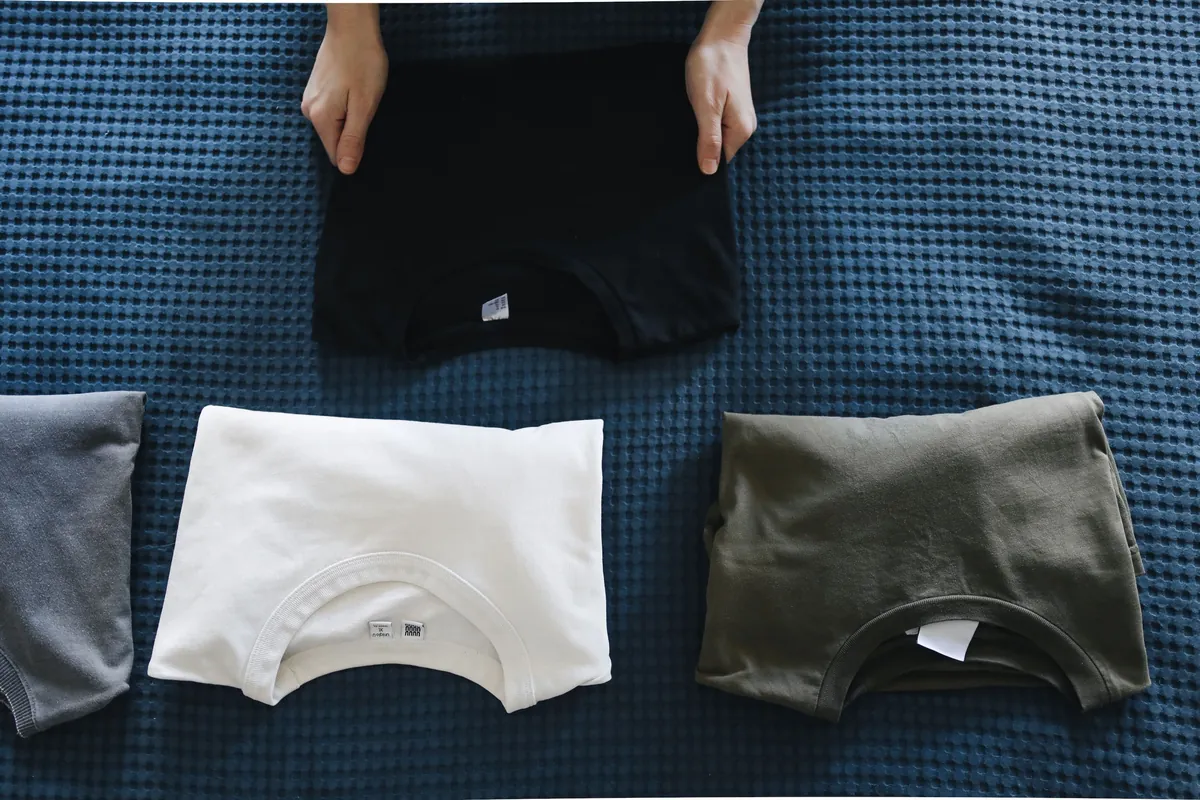
If a shirt comes out of a normal wash a little shorter, it usually did not shrink in the washer. Water on its own does almost nothing to this fibre. Polyester is a plastic fibre. The mill heat-sets it at a temperature far above anything your laundry room reaches, so it holds its size wash after wash. Shrinkage people blame on washing almost always comes from heat in the dryer, or from the other fibre in a blend.
The short version is simple. A normal wash and a low-heat dry leave pure polyester practically unchanged. On a finished shirt, the change is too small to see without a ruler. Hot washes plus high-heat drying can take a little size off, and a scorched iron can do worse. So the honest answer is yes, it can shrink, but only when heat gets close to the temperature the mill used to set it.
Your care label is the first thing to read, before any guide. Labels are tested on that exact garment, with its dye, its trim and its weave. Typically, care labels advising 'tumble dry low' indicate the maker found high heat risky for that garment, its trims or its finish. One that says do not tumble dry means the trim or the print cannot take it, even if the fibre could. Trust the label over a general rule.
Why polyester holds its size: a heat-set plastic fibre
Polyester starts life as PET, the same plastic used for drink bottles. Workers spin it into fibre, weave or knit it, then heat-set the finished cloth under tension at a high temperature. That heat locks the molecules into the size the cloth was made at. Once set, the fibre keeps that size until new heat comes close to the setting temperature. No washing machine ever gets there. Your hottest tap water sits far below it. It helps to understand cotton and linen comparison before going further.
One line matters: the softening point. Technical sources put the polyester softening range substantially higher than domestic laundry temperatures, so a normal wash never gets near it. Below that range the fibre chains stay frozen in place, so the cloth cannot shorten. Above it the chains gain room to move, and the cloth can relax toward a shorter state. Some household dryers on high can reach temperatures that approach that range, and a long hot cycle is where the risk sits.
Heat does more than shrink polyester. Push it further and the surface turns shiny, a fault called glazing, and the fibres can pucker or melt at the edges. That damage is permanent. Hot irons frequently cause glazing or melting on polyester. Finishes, coatings and bonded seams can fail at lower temperatures than the fibre itself. A garment with a waterproof coating or glued seams needs cooler care than plain cloth.

Polecasa Mesh Laundry Bags 3 Pack,1 Large
Keeps polyester delicates from snagging, tangling and stretching in the washer and dryer using fine mesh and an auto-lock zipper (set of 3 sizes: large, medium, small).
The dryer or the washer: where shrinkage really happens
Water loosens nothing in polyester, and agitation on a gentle cycle cannot shorten a heat-set fibre. What the washer can do is tangle a loose garment, stretch a knit out of shape, or snag a delicate weave on a zipper. Those are shape problems, not shrinkage. Mesh laundry bags stop most of them. Your dryer adds the one ingredient polyester cannot ignore: sustained heat in tumbling hot air. It helps to understand using rit dye on fabric before going further.
On high, the dryer holds the garment against a hot drum wall. Hot air passes through it, and the heat builds over a full cycle. Ten minutes on high does little. Full hours on high, cycle after cycle, take a little length off. Heat shrinkage is uneven, too. Hems can tighten while the body stays put, and sleeves can shorten more than the torso. That unevenness is the sign heat did it, since water shrinkage would be even all over.
This fix is boring and it works. Dry polyester on low, or take it out while it is still slightly damp and hang it to finish. If you must use the dryer, pull the garment out early. If you want to know how hot your dryer runs, a laundry thermometer tucked into a load on high tells you in one cycle. Cool irons with a press cloth handle the wrinkles, and a steamer held a few inches away works too. Keep the hottest settings for cotton and linen, where the fibre can take them.
| Care choice | What happens to polyester |
|---|---|
| Cold or warm wash, air dry | No measurable change |
| Warm wash, low-heat dry | Minimal, invisible |
| Hot wash, high-heat dry, repeated | Some loss, uneven |
| Iron on the cotton setting | Glazing and shrinkage, permanent |
The label on the garment knows more than any guide, and the swatch test proves it.
Polyester blends: the other fibre calls the shots
Most polyester you sew or wear is not pure. It is blended with cotton, rayon, wool or spandex, and the blend shrinks the way its weakest fibre shrinks. Polyester-cotton shirts can lose some length in a hot wash plus a high-heat dry. Cotton shrinks more on its own, so the blend sits between the two fibres. Cotton in the blend relaxes in hot water and tightens as it dries, and the polyester cannot hold it open. So a garment labelled polyester can still shrink.
Spandex blends need a different warning. Spandex loses its stretch when it gets hot, and the damage shows up as a garment that bags out instead of shrinking. Wash activewear and swimwear cold, and never put them in a hot dryer. Rayon blends shrink more than cotton blends. Wool blends can felt, which locks the shrinkage in as a mat. Read the blend on the label, then wash for the fibre that needs the gentlest care.
Blends also explain why two polyester shirts behave differently in the same load. One is pure polyester and comes out unchanged. The other is a poly-cotton blend and comes out a little shorter. Care is the same for both: cold or warm water, low heat, and air drying when you can. Once a blend has shrunk from heat, you can sometimes ease it back. Soak it in cool water and gently stretch it to size while damp. Recovery is partial at best.
Wash and dry polyester so it keeps its size: the steps
This routine takes no extra time, and it keeps polyester garments at the size you bought them. It works for pure polyester and for blends, and it protects prints and trims too. Start with the label, since a garment with a heat-sensitive print or a bonded seam needs gentler care than plain cloth.
Mesh bags earn their place here because the washer's real damage to polyester is mechanical, not thermal. Mesh bags keep a blouse from wrapping around a zipper. It stops a knit stretching under its own weight, and a print rubbing against rough seams. Look for a fine-mesh bag with a zipper that stays shut. Pick a size that lets the garment move a little inside it. Stuffed-tight bags clean badly, so use one garment per bag.
Skip the fabric softener on polyester. It coats the fibres and makes the cloth hold odours, and it does nothing for shrinkage. Mild liquid detergent at the dose on the bottle cleans polyester well. If a garment smells after washing, the cause is usually a wash too cool to shift body oils. Warm washes with a longer cycle fix it without touching the dryer dial.
- Turn the garment inside out and bag it. Put delicate pieces in a mesh laundry bag, zip it shut, and close any zippers or hooks first.
- Wash cold or warm on gentle. Use a mild detergent, skip the fabric softener, and choose the gentle or permanent press cycle.
- Dry low or hang it up. Tumble dry low for a short cycle, or hang the garment to air dry while it is still damp.
- Iron cool with a press cloth. Set the iron to the synthetic setting, one dot, and press through a cloth, never straight onto the cloth.
Before you cut: prewash polyester and test a swatch
Sewists prewash fabric for a reason, and polyester is no exception. Cloth may not shrink, but the sizing and finishes the mill applied can wash out. Its hand changes once it has been through water. Cut from unwashed polyester, a blouse can feel stiff in the shop and soft after the first wash. Fit can shift a little as the finish leaves. Prewash the way you will wash the finished garment, then press and cut. That way the garment you make is the garment you will wear.
Swatch tests take ten minutes and answer the shrinkage question for your exact cloth. Cut a square 4 inches on a side, mark the corners with a pen, and measure it. Wash and dry it exactly as you plan to treat the garment, then measure again. If the square is still 4 inches, the cloth will not shrink in wear. If it lost an eighth of an inch, allow for it in the pattern, or change the care routine.
Mixed fibres deserve the swatch test most. Poly-cotton poplin can lose a little length on the first wash and then settle, while polyester crepe may not move at all. Knits, microfibre and textured cloths do not all behave the same, so test your own cloth rather than trusting a general rule. Test before you cut. One rule of thumb covers it. Cloth that moves in the swatch test will move in the garment. Measure once and sew with the answer in hand.
Still wondering?
Can you shrink polyester on purpose?
Not reliably. Hot water and a high-heat dryer take a little size off at most. Results are uneven, with a real risk of glazing or melting the cloth. Buy the smaller size instead, or take the garment to a tailor for a clean alteration.
Does polyester shrink in cold water?
Cold water cannot shrink pure polyester. It sits far below the temperature where the fibre softens. Cold washes followed by high-heat dries can still take a little off, so keep the dryer low too.
Why did my polyester shirt shrink if polyester does not shrink?
A blend, a hot dryer, or a hot iron are the likeliest reasons. Check the label for cotton, rayon or spandex. Blends shrink the way their other fibre shrinks, and a hot dryer is the usual cause.
Does polyester shrink every time you wash it?
No. Polyester does not keep shrinking wash after wash the way cotton can. Once the small heat-set relaxation has happened, the size holds, as long as you keep the heat down.