How Much Yarn for a Crochet Beanie? Yardage by Size and Weight
A commonly cited guideline puts an adult crochet beanie at roughly 150 to 250 yards of worsted-weight yarn, so a single ball usually finishes it. Treat that as a starting point and confirm it with a swatch or the yardage printed on your pattern.
On this page (8 sections)
- The short version
- How much yarn for a crochet beanie: the short answer
- Yardage by yarn weight: fingering to super bulky
- Size: baby, child, teen and adult beanies
- Stitch pattern and extras: the quiet yardage eaters
- How to work out your own number: the swatch maths
- Buying: skeins, dye lots and the spare ball rule
- Still wondering?
Part of our guide on easier crochet or knitting
Key figures
- Adult, worsted
- 150-250 yards
- Adult, super bulky
- about 100-150 yards
- Adult, fingering
- about 300-350 yards
- Child beanie
- 80-120 yards
- Baby beanie
- 50-100 yards
- Pom-pom extra
- 10-30 yards
- Adult head size
- 22 in around
The short version
- An adult beanie in worsted yarn takes roughly 150 to 250 yards.
- Count yards on the label, not grams: two 100 g balls can hold very different lengths.
- Textured stitches, a folded brim and a pom-pom all add yardage, so budget for them.
- Buy one extra ball from the same dye lot when the pattern is close to a full skein.
How much yarn for a crochet beanie: the short answer
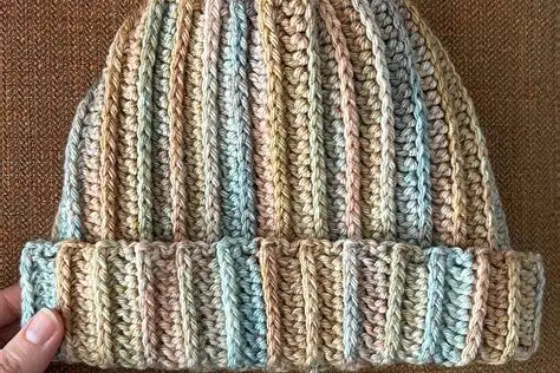
A standard adult beanie in worsted-weight yarn takes 150 to 250 yards. Most plain patterns fall inside that range. Plain stitches and a short brim land near the bottom. Slouchy fits and textured stitches land near the top.
Yarn weight moves the number more than anything else. Fine yarn makes many more stitches to cover the same head, so it needs more length. Thick yarn covers ground fast, so it needs less. The same beanie that takes 200 yards of worsted can take 350 yards of fingering or barely 110 yards of super bulky.
Child beanies take roughly half the yarn of an adult one, and a baby hat takes less than half again. Head size grows slowly after childhood, so the jump from a teen to an adult hat is small. The big jumps come from fit and stitch, not from head size alone.
Stitch pattern is the quiet third factor. Puff stitches pull up several loops in one spot, and each loop drinks yarn. Cables and bobbles do the same. Plain and puff-stitch beanies can differ by 50 yards or more from the same skein. If your pattern uses a yarn eater, add a margin before you start. For the detail, see our notes on yarn weights uk vs us.
Yardage by yarn weight: fingering to super bulky
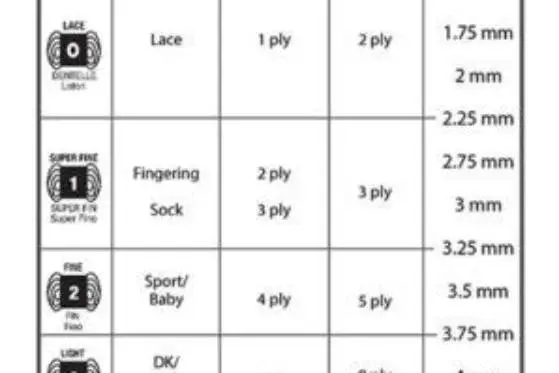
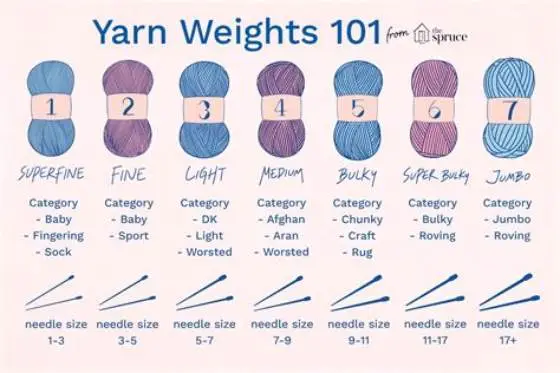
Yarn weight is the Craft Yarn Council scale from 0 (lace) to 7 (jumbo), printed as a small skein icon on most ball bands. The number tells you how thick the strand is. Thinner strands need more stitches to cover a head, so they need more yards. Thicker strands cover the same area with fewer stitches, so they need fewer yards.
Worsted weight, category 4, is the baseline most beanie patterns are written for. Adult hats in worsted take 150 to 250 yards, and a 100 g skein of standard acrylic worsted holds about 170 to 185 yards. These ranges assume a standard adult hat about 22 in around and 7 to 8 in tall, worked in single or double crochet. A second skein is cheap insurance when the pattern sits near the top of the range.
Go finer and the yardage climbs fast. A rough guideline often used is 300 or more yards for fingering-weight adult hats, but check your pattern and swatch. The stitches are small and there are so many of them. DK sits between the two at roughly 250 to 300 yards. Both make a lighter hat with neat stitch definition. People in this spot often ask about bulky yarn needle sizes as well.
Go thicker and the numbers drop. Bulky-weight beanies take roughly 110 to 180 yards, and super bulky ones take about 100 to 150 yards, often a single ball. Bulky hats work up in an evening and feel warm, but the fabric is stiff and the stitches are bold. Pick the weight for the hat you want, not for the yardage.
| Yarn weight | CYC category | Yards for an adult beanie |
|---|---|---|
| Fingering | 1 | 300-350 |
| DK | 3 | 250-300 |
| Worsted | 4 | 150-250 |
| Bulky | 5 | 110-180 |
| Super bulky | 6 | 100-150 |

Lion Brand Yarn Basic Stitch Anti-Pilling Knitting Yarn
Gives you a single worsted skein that covers most adult beanies with 185 yd of yarn per 100 g skein.
Size: baby, child, teen and adult beanies
Head size sets the floor for yardage. Baby beanies for the first year take roughly 50 to 100 yards of worsted as a guideline. Depending on skein yardage and pattern, a single 100 g worsted skein may yield two or more infant hats. Child beanies take about 80 to 120 yards.
Teen and adult sizes sit close together. A standard adult beanie takes 150 to 200 yards in worsted, and a teen hat takes only a little less. Average adult heads measure about 22 in (56 cm) around. Most patterns build in negative ease, so the finished hat measures 1 to 2 in (2.5 to 5 cm) smaller than the head. Crochet fabric stretches, so the hat grips without squeezing.
Height matters as much as width. Standard adult beanies stand about 7 to 8 in (18 to 20 cm) tall from crown to brim. Every extra inch of length adds a full round of stitches. Slouchy beanies add 2 to 3 in (5 to 8 cm) of height, so they take 200 to 250 yards instead of 150 to 200. Measure the head you are making for, and add length only on purpose.
Folded brims are the other hidden cost. Turning the brim up doubles the fabric for those first few inches. Deep ribbed brims can add 20 to 30 yards on their own. Patterns written for a single-layer brim will run short if you fold them, so read the finished measurements first.
| Size | Head around | Yards, worsted |
|---|---|---|
| Baby, 0-12 months | 14-18 in | 50-100 |
| Child | 18-20 in | 80-120 |
| Teen / adult, standard | 21-23 in | 150-200 |
| Adult, slouchy | 22-24 in | 200-250 |
One skein usually does it, but the wrong weight or a puff stitch can leave you ten yards short at the crown.
Stitch pattern and extras: the quiet yardage eaters
Plain stitches are thrifty. Single crochet and double crochet lay the yarn flat, and a beanie in either one lands at the low end of its weight range. Half double crochet sits in the middle. These are the stitches to choose when you have exactly one skein and no shop nearby.
Textured stitches eat yarn. Puff stitches, bobbles and cables pull extra loops into every stitch. Puff-stitch beanies in worsted can take 200 to 225 yards where plain ones take 150 to 190. When the pattern photo shows deep texture, treat the top of the range as your starting point.
Extras add up in small bites. Pom-poms take yarn of their own: a small neat one may use around 10 yards, while a very large fluffy one can use substantially more. Stripes and colourwork waste a little yarn at every colour change, and carrying yarn up the inside of the hat adds a hidden strand. Folded brims can add 20 to 30 yards. Add them together and a plain 180-yard hat becomes a 240-yard hat.
Fibre plays a part too. Cotton yarn is heavier than acrylic at the same weight. One hundred grams of cotton holds fewer yards than 100 g of acrylic, and wool varies by breed and spin. The yardage stays the same, but the ball count changes. Work out how many balls that means from the yardage on your own label.
- Puff and bobble stitches: budget the top of the range, around 200 to 225 yards in worsted.
- Folded or ribbed brim: add 20 to 30 yards to a plain pattern.
- Pom-pom: small ones may use around 10 yards while very large fluffy ones can use substantially more; wind and measure from leftovers when possible.
- Stripes and colourwork: allow a little extra for colour changes and carried yarn.
How to work out your own number: the swatch maths
A pattern gives you an estimate, but a swatch gives you your number. Crochet tension varies from person to person. Ten minutes with a swatch removes the guesswork.
Start by weighing your ball on a kitchen scale and writing the weight down. Crochet a 4 in (10 cm) square in the pattern stitch, then weigh the square or weigh the ball again. The difference is the yarn your swatch used. Divide the hat area by the swatch area and multiply, and you have the yardage your tension needs. As an example, a 4 in square that uses 10 g from a 185-yard skein costs about 18 yards. A standard adult hat needs roughly twelve such squares.
No scale handy? Mark the yarn a yard from the ball, crochet until you reach the mark, and count the stitches you made. Work out how many stitches the whole hat needs from the pattern, then divide by the stitches per yard. It is rough, but it beats guessing from the label alone.
Add a margin at the end, whatever method you used. Ten percent covers a tighter-than-usual round and a miscounted stripe, and a pom-pom needs its own allowance on top. Round up to the next whole ball when the maths lands close to a skein boundary. Leftover yarn never goes to waste, but a half-finished hat always does.
- Weigh the full ball on a kitchen scale and note the grams.
- Crochet a 4 in (10 cm) square in the pattern stitch and hook.
- Weigh the ball again, or weigh the square, to find the yarn the swatch used.
- Scale the swatch up to the hat size and add 10 percent for safety.
Buying: skeins, dye lots and the spare ball rule
Start with the yards printed on the label. The label shows both yards and grams, and the yards are the number that decides how many balls you need. Worsted acrylic at 100 g usually holds 170 to 185 yards, while cotton DK at the same weight can hold 230 yards. Two balls that weigh the same can differ by a whole hat. Divide the yardage you need by the yardage on the band, and round up.
Dye lots matter when a hat needs two balls. Yarn is dyed in batches, and two batches can differ just enough to show as a stripe across the crown. Check the dye lot number printed on the band and buy both balls from the same lot.
Buy one spare ball when the maths is close. If your beanie needs 190 yards and the skein holds 185, you are already short. Spare balls from the same dye lot cost little and save a half-finished hat.
Leftover yarn is not waste. The tail from a beanie makes a pom-pom, a headband or a pair of fingerless mitts. Single skeins often stretch to a hat plus a small extra. Store the leftover with its band.
Still wondering?
How much yarn do I need for a crochet beanie in worsted weight?
An adult beanie takes 150 to 250 yards of worsted-weight yarn. A plain pattern with a short brim lands near 150 yards, while a slouchy fit or a textured stitch lands near 250. One standard 100 g skein holds 170 to 185 yards, which covers most plain adult beanies.
Can I crochet an adult beanie with one skein of yarn?
Yes, for most plain patterns in worsted, bulky or super bulky yarn. One 100 g skein of worsted holds about 170 to 185 yards, which covers a standard adult beanie. Fingering and DK beanies usually need more than one skein.
How much yarn does a baby beanie take?
A baby beanie for the first year takes roughly 50 to 100 yards of worsted yarn as a guideline. A single 100 g worsted skein may yield two or more infant hats, depending on the stitch. A child beanie takes about 80 to 120 yards, so one skein still covers it.
Does crochet use more yarn than knitting for the same hat?
Yes, crochet often uses more yarn than knitting for the same dimensions. The difference varies by stitch and tension, so test with a swatch before you buy. That is one reason a crochet beanie needs more yarn than a knitted hat of the same size.
How much extra yarn should I allow for a pom-pom?
A small, neat pom-pom may use around 10 yards, while a big fluffy one can use substantially more. Wind it from a leftover ball when you can, so it never eats into the hat itself.