Bulky yarn needle size: start at 5.5 mm, then swatch
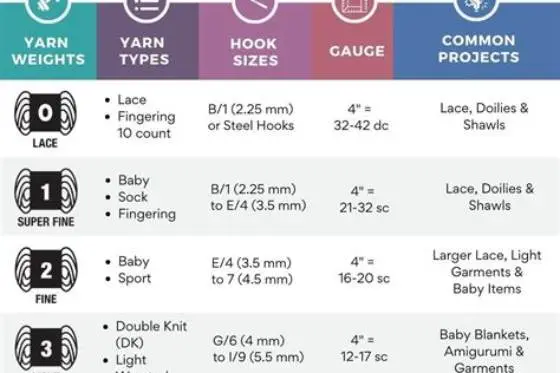
Use 5.5 mm to 8 mm needles (US 9 to 11) for bulky yarn. The Craft Yarn Council Standard Yarn Weight System lists that range for category 5. Your ball band gauge square gives the tested stitch count for your exact yarn.
On this page (9 sections)
- The short version
- What Size Knitting Needles for Bulky Yarn: Start at 5.5 mm
- Super Bulky Yarn: Needles From 8 mm Upward
- Reading the Gauge Square: The Number on the Label
- The Swatch Check: Knit, Measure, Then Change Size
- Tight and Loose Knitters: Start One Size Off the Label
- How Worsted Yarn Differs From Bulky Yarn
- Circular Needles for Bulky Projects: Pick the Cable Length
- Still wondering?
Part of our guide on serger for knits
Key figures
- Bulky needles
- 5.5-8 mm (US 9-11)
- Bulky gauge
- 12-15 sts per 4 in
- Super bulky needles
- 8-12.75 mm (US 11-17)
- Super bulky gauge
- 7-11 sts per 4 in
- Worsted needles
- 4.5-5.5 mm (US 7-9)
- Gauge square
- Stitches per 4 in (10 cm)
The short version
- Check the number in the skein symbol first: 5 is bulky, 6 is super bulky, 4 is worsted.
- Read the stitch count in the gauge square, then knit a swatch on the suggested needle.
- Tight knitters start one size up from the label; loose knitters start one size down.
- Match cable length to the project so the cast-on sits without crowding.
What Size Knitting Needles for Bulky Yarn: Start at 5.5 mm
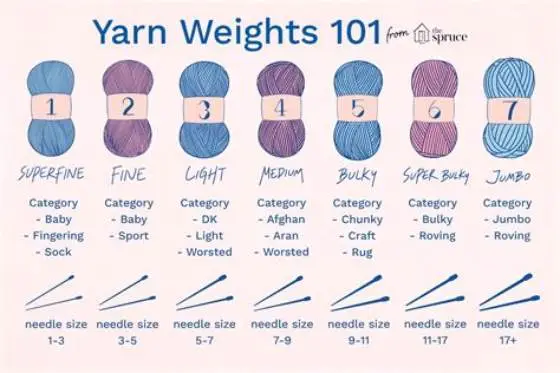
The Craft Yarn Council Standard Yarn Weight System lists bulky yarn, category 5, at 5.5 mm to 8 mm needles. That range is US 9 to 11. The same chart lists a gauge of 12 to 15 stitches per 4 inches (10 cm) for this weight. Treat those figures as a starting point, not a fixed rule.
Inside the category, bulky yarns still differ from one another. A loosely spun single ply knits thicker than a firm plied yarn with the same label. Fibre changes the result too. Wool springs back and fills small gaps after washing. Cotton holds the shape the needle gave it, with no spring to hide uneven tension. Acrylic sits between the two, softer than cotton and less springy than wool.
Fabric choice also moves the needle size. A scarf meant to drape softly takes a needle near the top of the range. A hat that must hold its shape takes one near the bottom. Pick a size inside the range and test it before you cast on the project. If the same project also needs sewing, the Needle and Thread Finder on this site matches a sewing needle and thread to the fabric.
Super Bulky Yarn: Needles From 8 mm Upward
The Craft Yarn Council Standard Yarn Weight System lists super bulky yarn, category 6, at 8 mm to 12.75 mm needles. That range is US 11 to 17. The same chart lists a gauge of 7 to 11 stitches per 4 inches (10 cm). A yarn at the thin end of this band can share an 8 mm needle with a thick bulky yarn. There is more on yarn weight chart explained in a separate guide.
Overlap between bands is normal. Two yarns in different categories can knit at the same stitch count, so the band alone does not fix the needle. A thick roving yarn and a firm plied yarn may sit on opposite sides of the line between categories. They can still knit alike on the same needles. Judge the yarn in front of you, not the name on the shelf tag.
The same chart lists jumbo yarn, category 7, at 12.75 mm needles and larger. That is US 17 and larger, with 6 or fewer stitches per 4 inches (10 cm). Most knitters meet it in arm-knitting blankets and thick roving yarn. If a pattern calls for jumbo yarn, a super bulky needle will make fabric far denser than the pattern intends.
Reading the Gauge Square: The Number on the Label
Every ball band carries a small square showing stitches and rows per 4 inches (10 cm), with the needle size the mill used. You might see 13 stitches per 4 inches beside a 6.5 mm needle size. That square is the mill's tested result for that exact yarn. It beats the category name, because two yarns can share a category number and knit at different stitch counts. Before you commit to anything, it is worth looking at fingering yarn needle size.
Patterns are written in stitch counts, not inches. A hat might ask for 60 stitches for a 20 inch (51 cm) head, at 3 stitches per inch. Knit at 2.5 stitches per inch and those 60 stitches stretch to 24 inches (61 cm). The hat slides down over the wearer's eyes. One stitch per inch sounds small, but it grows across the whole piece.
When you swap one bulky yarn for another, match the stitch count before anything else. Check fibre next, then yardage. Wool at 13 stitches per 4 inches will not behave like cotton at 12 stitches, even on the same needle. The stitch count tells you whether the swap fits the pattern. Fibre tells you whether the finished fabric will drape, stretch, or hold its shape.

Clover Swatch Ruler & Needle Gauge
Lets you check any needle or hook you own, reading off metric, US and Japanese sizes side by side so pattern conversions stop being guesswork.
The number printed on the needle is not the decision. The stitch count in your swatch is.
The Swatch Check: Knit, Measure, Then Change Size
Before you cast on the project, knit a small square in the pattern stitch. It is the only way to know how your hands, your needles, and this yarn work together. A chart can give you a starting size, but it cannot feel your tension or see how this yarn blooms. The square takes a few minutes, and it saves hours of unraveling later. We go through using two needles or circulars step by step elsewhere on the site.
Knit it on the needle size the label suggests, then lay it flat without stretching it. Measure 4 inches (10 cm) across the middle with a rigid ruler. Count the stitches inside that span, and write the number down before you forget it. Measure in the middle, not at the edges, because edge stitches pull tight and give a false count.
Hold the finished square up and look at the gaps between stitches. Pull it gently and see how far it springs back. If the fabric looks right and the count matches, cast on with confidence. If the fabric looks wrong, the count is not the only thing to fix, so change the needle and look again.
- Cast on about 20 stitches and knit about 20 rows in stockinette stitch.
- Lay the square flat, rest it for a few minutes, and measure 4 inches across the middle.
- Count the stitches in that span and compare the count with the label.
- Fewer stitches than the label means loose gauge, so go down one needle size.
- More stitches than the label means tight gauge, so go up one needle size.
- Knit a fresh swatch on the new size and measure again before casting on.
Tight and Loose Knitters: Start One Size Off the Label
Your hands have a default tension, set by how you hold the yarn and how hard you pull each stitch. Some knitters wrap the yarn firmly and pull each stitch close. Others let the yarn glide with almost no resistance. Neither way is wrong, but each one shifts the gauge the label expects. Most knitters only learn which way they lean after a few finished projects.
Tight knitting makes firm, dense fabric that resists stretching. It can also tire your hands on thick yarn, because every stitch takes force to form. Loose knitting makes soft fabric with an open drape, and it can stretch out of shape with wear. The signs show in the fabric long before you count stitches, so look at drape and hand feel as well as numbers.
If you know you knit tightly, start one size above the needle the label suggests. If you knit loosely, start one size below it. That offset is a starting point, not a correction. Start there and check the result on a small test square before casting on. A knitter who always shifts the same way across projects has found a real pattern in their own hands.
How Worsted Yarn Differs From Bulky Yarn
The Craft Yarn Council Standard Yarn Weight System lists worsted yarn, category 4, at 4.5 mm to 5.5 mm needles. That range is US 7 to 9. Its gauge is 16 to 20 stitches per 4 inches (10 cm). That is nearly double the stitch count of bulky yarn at the same width. A worsted sweater takes longer to knit, and it uses more stitches for the same area.
Fine detail, cables, and lace hold better in worsted than in bulky yarn. Bulky yarn works up faster and gives bold texture, but it hides small stitch detail. A pattern written for one will not fit if knit in the other without recalculating every stitch count. The fabric weight changes too, so a bulky scarf knit in worsted comes out narrow, stiff, and far less warm.
Beginners mix the two up because some labels print the word chunky for both. Check the number inside the small skein symbol on the ball band. A 4 means worsted, and a 5 means bulky. That number is the fastest way to tell them apart in a shop. It beats guessing from how thick the strand looks in the skein.
| Category | Stitches per 4 in (10 cm) | Needle size (mm) | US needle size |
|---|---|---|---|
| 5 (Bulky) | 12-15 | 5.5-8 mm | 9-11 |
| 6 (Super bulky) | 7-11 | 8-12.75 mm | 11-17 |
Circular Needles for Bulky Projects: Pick the Cable Length
Circular needles suit bulky projects well, because the weight of the fabric rests in your lap instead of hanging off the needle tips. Needle diameter sets the gauge, and the shape of the needle does not change it. Straight needles work just as well for flat pieces, so choose the shape your hands prefer and stop worrying about it. Many knitters keep one circular in each cable length they use most, so the right one is ready when a new project starts.
Cable length is the choice that matters. A 16 inch (40 cm) cable is the usual choice for hats and cowls knit in the round. Check that the cable holds your cast-on without crowding. Size up for sweaters, and size up again for blankets, so the stitches can spread without bunching.
A cable too short for the cast-on crowds the stitches and makes each one hard to work. A cable far longer than the project lets the fabric dangle and tug at the join. Match the cable to the widest part of the piece, and the knitting stays comfortable for longer sessions. Keep the spare cable length in mind when you pack a project to take out.
Still wondering?
Can I use 8 mm needles for bulky yarn if I want firmer fabric?
Yes. An 8 mm needle sits at the top of the bulky range, so the fabric comes out firm and dense. It suits a structured hat or a bag that must hold its shape.
Do bamboo and metal needles change gauge at the same size?
They can, by a small amount. Metal needles are slick, so stitches slide fast and gauge can loosen a fraction. Bamboo grips the yarn and can tighten gauge by a similar amount. The shift is usually less than half a stitch per 4 inches, but it can tip a borderline swatch.
What if my yarn has no label?
Start with a 6.5 mm needle, which sits near the middle of the bulky range. Work a small test square and compare its stitch count with the gauge your pattern asks for.
Can I swap super bulky yarn into a bulky pattern?
Not without recalculating the pattern. Super bulky yarn knits far fewer stitches per 4 inches, so the same stitch counts give a much wider piece. You would need to work out new cast-on and shaping numbers from your own gauge. For a first project, buy the weight the pattern was written for.