Crochet vs Knitting: Which Is Easier for Beginners?
Crochet is easier to start: one hook, one live loop, and mistakes you pull out in seconds. Knitting takes longer to click, but its fabric drapes better and its two basic stitches carry you further. Start with crochet unless fitted sweaters are your goal.
On this page (9 sections)
- Fit check
- The short version
- Crochet vs knitting, which is easier: the short answer
- The one-loop difference: why crochet starts easier
- Where knitting pulls ahead: fabric, fit and the long game
- Clover Amour: the pick for a first hook set
- Susan Bates Soft Ergonomic: the budget set
- Tulip Etimo Rose: the upgrade for hands that crochet daily
- Still wondering?
Part of our guide on serger for knits

Susan Bates Silvalume Soft Ergonomic Crochet Hook Set Sizes
Gives a beginner the five most-used hook sizes (one each 4.0mm, 5.0mm, 5.5mm, 6.0mm and 6.5mm) so you can
Check it on Amazon| Product | hook sizes in the set | Verdict | |
|---|---|---|---|
| Susan Bates Silvalume Soft Ergonomic Crochet Hook Set Sizes G6/4mm to Susan Bates | 5 hooks; sizes listed one each G6/4mm to K10.5/6.5mm (4.0–6.5 mm) vs required 5 hooks 4.0–6.5 mm | Meets it | View on Amazon |
| Clover 3672 Amour Crochet Hook Set Clover | no hook count or sizes published in bullets or product details | Not published | View on Amazon |
Key figures
- Easier to start
- crochet
- Crochet tools
- 1 hook, 1 live loop
- Knitting tools
- 2 needles, row live
- Crochet yarn use
- more than knitting
- Pick set
- 10 hooks, 2.25-6.00 mm
- Budget set
- 5 hooks, 4-6.5 mm
- First hook size
- 5-5.5 mm
The short version
- Crochet is easier to start, and mistakes tug out in seconds.
- Knitting is easier to keep simple: knit and purl carry most patterns.
- Pick the craft by the project: crochet for blankets and bags, knitting for fitted garments.
- A starter set with mid-range sizes, about 4 mm to 6.5 mm, suits most beginner projects.
Crochet vs knitting, which is easier: the short answer
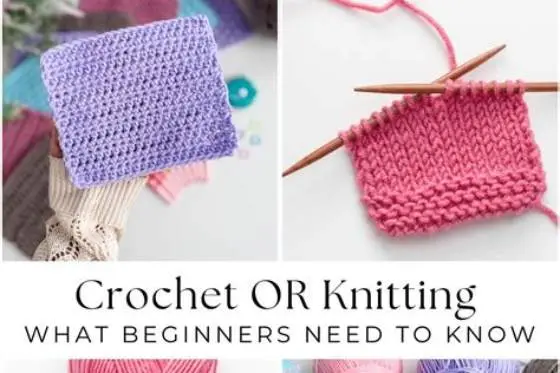
Crochet is easier to start. You work with one tool and a single open loop, finishing each stitch before you begin the next. Knitting asks you to hold two needles and keep a whole row of live stitches balanced while you work. That extra juggling is why most beginners feel at home with a hook sooner.
That gap closes fast. Knitting has only two stitches to learn at the start, knit and purl, and those two carry you through scarves, hats and sweaters. Crochet has more basic stitches to meet, and its fabric is thicker and thirstier for yarn. After the first week, neither craft is hard. What matters is which one feels easier in the first three hours.
Pick by what you want to make. Blankets, bags, amigurumi and quick gifts suit crochet, which builds tall stitches fast. Sweaters and socks suit knitting best. If you only want one craft, match it to the project on your list, not to a ranking.
Our answer stays simple: start with crochet and a hook set that covers the sizes you will actually use. A basic starter range often includes mid-sizes such as about 4 mm to 6.5 mm, which suit many worsted and aran weight beginner projects. Check the pattern's recommended hook size on the yarn label before buying. My pick below does that with comfortable handles, and the other sets do the same job at a lower cost or with softer grips. People in this spot often ask about knitting vs crochet as well.
The one-loop difference: why crochet starts easier
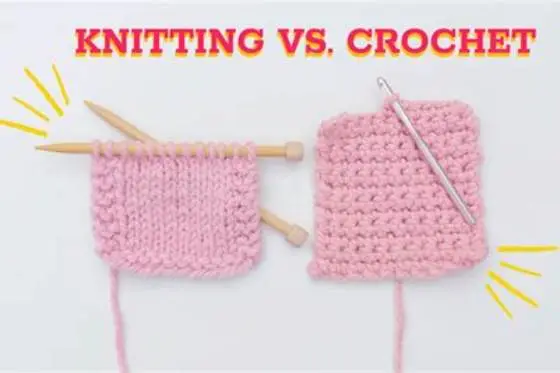
How many stitches stay live is the core difference. Knitting keeps a whole row of loops on the needle, and each one can slide off and run down the fabric. Crochet keeps a single loop on the hook. Nothing can drop, because there is nothing else to drop.
Mistakes show the difference best. A crochet mistake costs you a tug: pull the yarn, unravel back to the error, and put the hook back in the last loop. A knitting mistake can cost you a row, a laddered stitch, or a rescue with a spare needle. Beginners make mistakes constantly, so the craft that forgives them fastest feels easiest.
Tools stay simpler too. Crochet needs one hook and a ball of yarn, and a hook costs less than a pair of needles. Knitting needs two needles to begin, and many patterns ask for a spare needle, stitch markers and a cable needle before long. Fewer tools mean fewer decisions before the first stitch. It helps to understand yarn weights uk vs us before going further.
Speed favours crochet at first. Tall stitches build rows quickly, so a beginner sees a scarf grow in one evening. Knitting starts slower, and the first rows look uneven until tension settles. Quick visible progress keeps a beginner going, and crochet gives it sooner.
- Borrow or buy one 5.5 mm hook and a ball of worsted yarn.
- Chain 20 stitches, then work rows of double crochet for half an hour.
- Cast 20 stitches onto knitting needles and knit one row.
- Keep the craft whose first row felt calmer in your hands.
| Crochet | Knitting | |
|---|---|---|
| Tools | One hook | Two needles |
| Live stitches | One loop | A whole row |
| Fixing a mistake | Pull the yarn back | Pick up dropped stitches |
| Yarn use | More per square inch | Less per square inch |
| Fabric | Thick and textured | Smooth and stretchy |
| Best first project | Scarf or granny square | Scarf or dishcloth |
- one hook and one live loop
- mistakes pull out in seconds
- rows grow fast
- uses more yarn than knitting
- fabric is thicker and stiffer
- more basic stitches to learn
Susan Bates Silvalume Soft Ergonomic Crochet Hook Set Sizes G6/4mm to
Gives a beginner the five most-used hook sizes (one each 4.0mm, 5.0mm, 5.5mm, 6.0mm and 6.5mm) so you can start common patterns without extra purchases.
- Weight 2 oz
- Size Assorted
- Height 2.0 inches
Where knitting pulls ahead: fabric, fit and the long game
Knitting wins on fabric. Stockinette stitch is smooth, stretchy and draped, and it is the fabric most jumpers are made from. Crochet fabric is thicker, stiffer and more textured, which suits blankets and bags better than a fitted sleeve. If the garment in your head looks like a shop jumper, knitting makes it.
Knitting also wins on simplicity once the motion clicks. A knit stitch is four small movements: in, wrap, through, off. Learn knit and purl and you can make an impressive amount of fabric, because most patterns are combinations of those two. Crochet asks you to learn single, half double, double and treble before you have the same range.
Yarn use favours knitting too. Crochet stitches loop more yarn into every stitch. A crochet project typically takes more yarn than the same size knitted one, and the extra amount varies by stitch and yarn. That matters when you buy yarn by the skein: the same blanket costs more in crochet. Some comparisons show a smaller difference depending on stitch and yarn, but the direction holds.
None of this makes knitting the wrong first craft. It makes it the right first craft for a particular reader. Someone who wants fitted clothes and does not mind a slower first week will be glad they chose it. If that is you, skip the hook sets below and start with needles instead. Honestly, the answer depends on the project, not the craft.
- smooth stretchy fabric
- two stitches carry most patterns
- uses less yarn
- a whole row of live stitches
- slower first week
- dropped stitches run down

Mistakes tug out in seconds and progress shows in an evening: that is why most beginners finish a first crochet project before a first knitting row.
Clover Amour: the pick for a first hook set
A commonly recommended starter set is the Clover Amour set, which the maker lists with ten hooks from 2.25 mm to 6.00 mm. That range covers fine sock yarn to chunky blanket yarn. Each hook has a soft, colour-coded handle, and the size is printed on it, so you never guess which hook you are holding.
Comfort matters more than it sounds. A beginner grips too hard, and a bare metal hook digs into the hand after twenty minutes. Amour handles are wide and slightly soft, which spreads the pressure and lets you crochet longer. Long sessions are how the motion becomes automatic, so a kind handle is not a luxury.
Ten sizes also mean no extra purchases in the first year. A pattern that calls for a 4.5 mm hook and a pattern that calls for a 6 mm hook both sit inside this set. Buying hooks one at a time costs more per hook and leaves you waiting for the post when a pattern needs a new size.
One honest limit is the top end. Its largest hook is 6.00 mm, so very chunky yarn and jumbo projects need a bigger hook. Handles are fixed too, so you cannot swap them if your grip changes. Neither matters in the first year, and both are reasons to buy a single large hook later, not a different set now.
| Set | Hooks | Size range | Handles |
|---|---|---|---|
| Clover Amour (pick) | 10 | 2.25-6.00 mm | Soft, colour-coded |
| Susan Bates (budget) | 5 | 4.00-6.50 mm | Soft ergonomic |
| Tulip Etimo Rose (upgrade) | 9 | 2.0-6.0 mm | Cushion grip, case |

Lion Brand Yarn Basic Stitch Anti-Pilling Knitting Yarn
Supplies a beginner with a smooth worsted-weight (CYC #4) 185 yd (170 m) skein that shows stitch definition for learning with hooks in the recommended range.
Susan Bates Soft Ergonomic: the budget set
Susan Bates Soft Ergonomic is often cited as an entry-level option for a beginner who wants soft handles. The maker lists five hooks from 4 mm to 6.5 mm, and both US and metric sizes are printed on them. Verify the exact sizes on the product page before buying. Handles are soft plastic with an in-line aluminium head, and both US and metric sizes are printed on them.
Five hooks sound thin next to ten, but the range is the useful one. Worsted-weight yarn, the weight most beginner patterns use, takes a 5 mm or 5.5 mm hook, and both sit in this set. Chunky yarn takes the 6.5 mm hook at the top. Fine yarn is the gap: nothing here goes below 4 mm, so lace and sock yarn need a separate hook.
Notice the in-line head. Susan Bates hooks hold the yarn in line with the shaft, which gives even stitches and less wrist motion. Some crocheters prefer it, some prefer a tapered throat, and you will only learn your preference by trying both. This set is a cheap way to find out.
One trade-off is the case, or rather the lack of one. Hooks come loose in the box, so you will want a pouch or a pencil case to keep five hooks together. It also stops at 6.5 mm, which is fine for blankets and hats but short for jumbo yarn. For a first set at a budget cost, those are fair limits.
Tulip Etimo Rose: the upgrade for hands that crochet daily
Tulip Etimo Rose is a higher-end example for a beginner who already knows they will stick with the craft. The maker lists nine hooks from 2 mm to 6 mm, each with a cushion grip that is wider and softer than the Amour handle. It comes in a case with a ruler and yarn needles, so everything sits in one place.
Grips are the reason to pay more. Etimo hooks are the usual recommendation for crocheters with sore hands, because the cushion spreads the grip across the whole palm. A beginner who grips hard will feel the difference in the first hour, and a crocheter with arthritis will feel it sooner.
Nine sizes cover the same ground as the Amour set, from fine yarn to chunky. Its case keeps them together, and the ruler and needles cover the small tools a pattern assumes you own. Nothing here is wasted, though the smallest hooks, 2 mm and 2.5 mm, will sit unused until you try fine yarn.
Cost is the limit. That only makes sense if you crochet most days or your hands need the help. A casual beginner who crochets once a month will not feel the difference often enough to justify it. Start with the Amour set in that case, and keep the Etimo in mind for the day crochet becomes a habit.
Start with crochet, with a hook set that covers the sizes you will actually use.
Still wondering?
Is crochet really easier than knitting for a complete beginner?
Yes, for most people. Crochet uses one hook and one live loop, so there is less to manage and mistakes pull out in seconds. Knitting takes longer to feel natural, because two needles and a whole row of live stitches need more coordination. Neither craft is hard in the long run.
Can I learn both crochet and knitting at the same time?
Yes, and many people find learning both side by side helps each one make sense. Start with one craft for a week first, so the two motions do not blur together. After that, the second craft feels much less strange, because you already read yarn and gauge.
What size crochet hook should a beginner start with?
Start with a 5 mm or 5.5 mm hook and a ball of worsted-weight yarn. That size is big enough to see your stitches clearly and small enough to keep them neat. The matching hook size is printed on the ball band of most yarns.
Is crochet or knitting faster?
Crochet is faster at first, because its stitches are taller and rows build quickly. Experienced knitters can work very fast too, once the motion is automatic. Speed depends more on the project than the craft. A chunky crochet blanket beats a fine knitted one, and the reverse holds for a lace shawl.
Which craft should I learn if I want to make sweaters?
Knitting, for most people. It fits a body without bulk, and the fabric looks like the jumpers in shops. Crochet sweaters are thicker and boxier, which suits an oversized cardigan better than a fitted jumper. Learn knitting first if sweaters are your goal.