Top thread not picking up bobbin thread: what to check first
Your top thread misses the bobbin thread mainly due to incorrect needle insertion, faulty threading, badly seated bobbin, or timing issues. Start by checking the needle’s insertion and condition, then rethread top and bobbin threads with the presser foot up, and inspect bobbin placement and hook timing.
On this page (8 sections)
- The short version
- Why the top thread fails to catch the bobbin thread and form a stitch
- Needle checks: correct insertion, direction, size, bent or burred tip, and height
- Rethreading order for top thread and correctly seated bobbin/bobbin case
- Why thread jams or nests in the bobbin case and how to clear it
- Whether bobbin thread must match top thread weight and type
- Top thread not picking up bobbin thread: what to check first
- Still wondering?
Part of our guide on adjusting feed pressure
Key figures
- Needle size
- 80/12 EU/US
- Bobbin seating
- Correct and snug
- Top thread tension
- Medium setting
- Thread weight match
- Same or close
- Presser foot
- Up when threading
The short version
- Check needle insertion and tip condition first; a bent or wrong needle blocks loop formation.
- Always rethread top thread with the presser foot raised for proper tension.
- Ensure bobbin is seated correctly and that the bobbin case is clean and free of lint.
- Timing issues need machine service if adjusting hook position isn’t possible.
- Match bobbin thread weight and type closely with top thread for smooth stitching.
Why the top thread fails to catch the bobbin thread and form a stitch
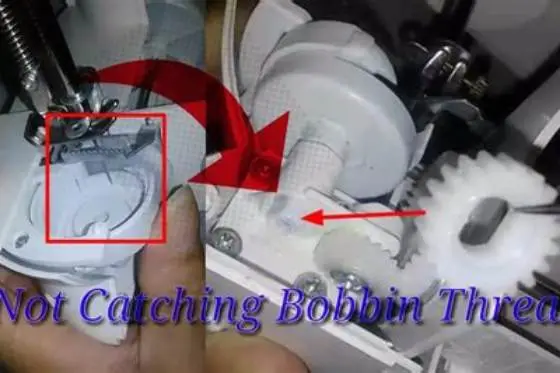
The top thread misses the bobbin thread loop when the needle fails to deliver a loop to the bobbin hook at the right time and place. This can happen because the needle is inserted incorrectly or damaged, the threading is wrong, the bobbin isn't seated properly, or the hook timing is off.
The hook timing means the bobbin hook must rotate to catch the needle's thread loop just as it forms. If it’s too early or too late, the stitch won’t form. This malfunction is common and frustrating but fixable with systematic checks.
Lint or thread nests in the bobbin area can also block the hook from catching the loop, causing skipped stitches or thread jams.
| Cause | Effect on stitch | Ease of fix |
|---|---|---|
| Wrong needle insertion | No loop formed | Easy |
| Bent or burred needle tip | Loop incomplete or broken | Easy |
| Incorrect threading | No loop or weak loop | Easy |
| Bobbin seated wrong | Hook misses loop | Medium |
| Hook timing off | Missed stitches | Hard |
| Lint/thread jams | Hook blocked | Medium |
Needle checks: correct insertion, direction, size, bent or burred tip, and height
Begin troubleshooting by checking the needle. It must be pushed all the way up in its holder and tightened securely. A needle not fully inserted often skips forming a proper loop. There is more on sewing machine thread keeps breaking in a separate guide.
The flat side of the needle shank faces the machine’s back or left, depending on the model. Inserting it reversed stops loop formation.
Use a needle sized for the fabric: typically EU/US 80/12 for medium-weight cotton. A bent or burred tip damages thread and fails to form loops. If the needle looks dull or bent, replace it.
Needle height affects loop timing too. If it sits too low or high, the hook misses the loop. You can check height by slowly rotating the handwheel to observe the needle’s lowest point relative to the hook. We cover thread bunching under fabric when sewing in its own article.
| Check | What to look for | Fix or replace |
|---|---|---|
| Insertion | Flat side faces back, pushed fully up | Re-insert properly |
| Size | Matches fabric weight, e.g. 80/12 | Replace with correct size |
| Tip condition | No bends, no burrs | Replace needle |
| Height | Lowest point aligns with hook | Adjust or service |

Schmetz Chrome Microtex Machine Needles
Gets your bobbin to catch again with a fresh Size 80/12 Microtex sharp point that forms the clean loop the hook needs.
Rethreading order for top thread and correctly seated bobbin/bobbin case
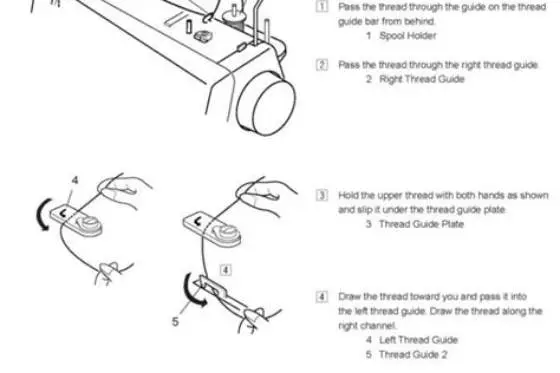
Rethread the top thread with the presser foot lifted. This opens the tension discs, ensuring the thread seats properly. Thread the machine following all guides and tension discs carefully to avoid slack or tight spots.
Remove and re-seat the bobbin. The bobbin must spin in the correct direction and fit snugly in the bobbin case. The thread should pull smoothly with even tension.
When bobbin tension feels uneven or the bobbin rattles loosely, the thread won’t form a proper loop, causing the top thread to miss it. We cover sewing machine stitches uneven in its own article.
Once both threads are correctly positioned, try sewing on scrap fabric to verify the stitch forms properly. The top thread should catch the bobbin thread cleanly and form a balanced stitch.
- Raise presser foot before threading top thread.
- Pass the thread through all tension discs and guides.
- Insert bobbin into case with thread direction correct (usually counterclockwise).
- Pull bobbin thread through tension spring slot until it holds snugly.
- Place bobbin case into the machine securely until it clicks.
- Draw up bobbin thread by turning the handwheel slowly.
- Lower presser foot and sew test stitches.
Most fixes for missed bobbin thread loops start with checking needle insertion and threading order—not with complicated timing adjustments.
Why thread jams or nests in the bobbin case and how to clear it
Thread jams or nests in the bobbin case usually happen when lint, fuzzy fibers, or broken threads build up. This buildup clogs the bobbin race and hook, blocking smooth thread movement.
Incorrect threading or bobbin insertion can also cause the thread to tangle and jam. The bobbin must be free to spin with consistent tension.
Clean the bobbin area regularly. Remove the bobbin and bobbin case, clear all lint with a small brush or compressed air, and check the hook race for debris.
If thread nests form, gently pull them free with tweezers. Avoid yanking hard as it can damage parts or bend the hook.
- Turn off and unplug the machine.
- Remove bobbin and bobbin case.
- Use a soft brush to clean lint and thread bits from the bobbin area.
- Blow out remaining dust with compressed air if available.
- Inspect hook race for thread nests or damage.
- Reassemble and retest stitches.
Whether bobbin thread must match top thread weight and type
Matching the bobbin thread weight and fiber type to the top thread keeps tension balanced and stitch formation smooth. For example, use 50 wt cotton thread in both top and bobbin for quilting cotton.
A heavier bobbin thread can cause loops to form unevenly, while a lighter one may break easily or tangle.
If you must use different fibers, such as polyester top and cotton bobbin, choose threads with similar thickness and smooth finish to avoid tension conflicts.
Check your machine’s manual for recommended thread types and weights. A standard medium-weight thread works for most home sewing but check if you sew leather, denim, or embroidery.
| Scenario | Effect on stitch | When to use |
|---|---|---|
| Matching weight and fiber | Balanced tension, smooth stitches | General sewing |
| Heavier bobbin thread | Looped or skipped stitches | Rarely recommended |
| Lighter bobbin thread | Thread breakage or tangles | Not recommended |
| Different fiber types | Possible tension issues | Only if thickness matches |
Top thread not picking up bobbin thread: what to check first
When your sewing machine's top thread fails to pick up the bobbin thread, start by checking the needle insertion and condition. Make sure the needle is new, correctly inserted with the flat side facing backward, and pushed all the way up.
Next, rethread the top thread with the presser foot raised to ensure the tension discs catch the thread properly. Remove the bobbin and check it sits snugly in its case, and the thread feeds smoothly with consistent tension.
Clean the bobbin area to remove any lint or thread nests blocking the hook from catching the needle loop. If the timing looks off (meaning the hook doesn't catch the thread loop at needle’s lowest point) then the machine needs professional service.
Try a test stitch on scrap fabric after every step. If the stitch forms, you've solved the problem. If not, move to the next check.
- Check needle insertion, size, and tip condition.
- Rethread top thread with presser foot up.
- Remove and correctly seat the bobbin and bobbin case.
- Clean bobbin area and remove lint/thread nests.
- Test stitch. If fails, consider hook timing service.
Still wondering?
How do I know if my needle is causing the top thread not to catch the bobbin thread?
Check the needle’s flat side faces backward and it’s fully inserted. A bent or burr on the tip will cause missed loops. Replace the needle if bent or dull.
Can I fix a timing problem myself if my top thread misses the bobbin thread?
Timing adjustment requires precise alignment of the hook and needle. Most home sewists should leave this to a qualified technician to avoid damage.
Why does lifting the presser foot help when threading the top thread?
Lifting opens the tension discs, allowing the thread to seat properly. Thread seated under pressure can cause tension issues and missed loops.
Does the bobbin thread direction matter when inserting it into the bobbin case?
Yes. Usually, the bobbin should spin counterclockwise. Wrong direction can cause uneven tension and missed stitches.
Can different threads in top and bobbin cause missed stitches?
Yes. Mismatched weight or fiber between top and bobbin thread can cause tension imbalance, leading to loops not catching properly.