Left-handed fabric scissors: what cuts cleanly in your left hand
Get true left-handed dressmaking shears with reversed blades in 8 to 10 inches for fabric. They let you see the cutting line and shear cleanly left-handed, while scissors with only left-handed handles still push and fold fabric.
On this page (9 sections)
- Fit check
- The short version
- Best left handed scissors: what truly cuts cleanly left-handed
- Difference: reversed blades versus left-handed handles
- Why right-handed scissors push and fold fabric in your left hand
- Checks: how to spot true left-handed blades before buying
- Size and type: what works for fabric and dressmaking left-handed
- Care and use: getting a clean left-handed cut every time
- Still wondering?
Part of our guide on best sewing table

Left Handed Sewing Scissors for Fabric Cutting
Keeps woven cotton flat on the table with 9.3 in overall and reverse blades for clean left-handed cuts
Check it on Amazon
YLaziion Left-Handed 10-Inch Heavy-Duty Fabric Scissors
Handles long pattern cuts without lifting fabric with 10.62 in overall, true left-handed blades and
See the heavy-duty one| Product | overall length (inches) | Verdict | |
|---|---|---|---|
| Left Handed Sewing Scissors for Fabric Cutting SCAIKTIG | 9.3 in overall vs 8 in needed - passes by 1.3 in | Meets it | View on Amazon |
| YLaziion Left-Handed 10-Inch Heavy-Duty Fabric Scissors YLaziion | 10.62 in overall vs 8 in needed - passes by 2.62 in | Meets it | View on Amazon |
Key figures
- True left-handed
- left blade on top left-handed
- Dressmaking size
- 8-10 in (20-25 cm)
- Usable edge
- 4-5 in (10-13 cm)
- Snips size
- 4.5-5 in (11-13 cm)
- Sight line
- see line left of blade
The short version
- True left-handed means the left blade sits on top in your left hand, not just comfy handles.
- Right-handed blades in your left hand hide the line and fold fabric instead of shearing it.
- Check photos for left-blade-on-top and a visible left-hand sight line before you buy.
- Use 8-10 in shears for fabric, 4.5-5 in snips for threads and notches.
Best left handed scissors: what truly cuts cleanly left-handed
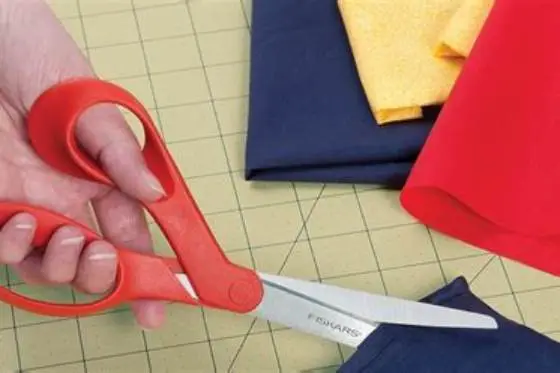
You need scissors that shear fabric when you close your left hand, not ones that just feel comfortable. The best left handed scissors have blades reversed so the left blade sits on top when you hold them in your left hand. That lets the blades press together and slice, and you can see the cutting line without leaning over the top blade. If the line disappears or the fabric folds between the blades, the blades are wrong for your hand, not your technique.
Many listings call a pair left-handed because the handles are shaped for the left hand or the handles are symmetric. Handles do not cut. Blades do. A truly left-handed pair mirrors a right-handed pair: the pivot screw stays the same, but the left blade is on top and the cutting edges face so they meet when you squeeze left-handed. You get a clean edge on cotton, linen and wool because the fabric is sheared, not bent.
For most home sewing you want 8 to 10 inches overall, which gives you about 4 to 5 inches of usable latest, depending on the handle. That length cuts long grain lines without lifting the fabric off the table, yet it still handles curves around armholes and notches. Shorter 5 to 6 inch trimmers are for snipping threads and points, not for cutting yardage. Pick the length that matches the job you do most.
Difference: reversed blades versus left-handed handles
Think of scissors as two knives crossing. On right-handed scissors the right blade sits on top in your right hand, so the edges bite toward each other as you close. On true left-handed scissors that stack is flipped, so the left blade sits on top in your left hand and the same bite happens on the left side. The handles can be bent, straight or symmetric and the cut stays clean if the stack is right. People in this spot often ask about best heavy duty scissors as well.
Ambidextrous or symmetric handles fool many buyers. The photo shows a comfortable grip for either hand, and the description says left-handed. Look at the blade stack, not the handle shape. If the right blade is on top when held left-handed, you will see the side of the top blade covering your line and the fabric will fold instead of shear. A softer grip does not fix that, it just feels nicer while the cut fails.
Makers who do it properly mark the pair as true left-handed or left-handed blades, not just left-handed handles, and they show the stack from the left side. Some stamp an L on the left blade or colour the handle for quick ID. You still need to verify the photo yourself. That one check before you order saves a return and the worry that your cutting is the problem.
- Reversed blades: left blade on top in left hand, edges meet left-handed, clean shear on fabric.
- Left-handed handles only: grip shaped for left hand, blade stack still right-handed, fabric folds.
- Ambidextrous handles: symmetric grip, blade stack usually right-handed, line hidden left-handed.
Left Handed Sewing Scissors for Fabric Cutting
Keeps woven cotton flat on the table with 9.3 in overall and reverse blades for clean left-handed cuts without folding.
- Size 9.3"
- Length 9.3 inches
- Width 3.5 inches
Why right-handed scissors push and fold fabric in your left hand
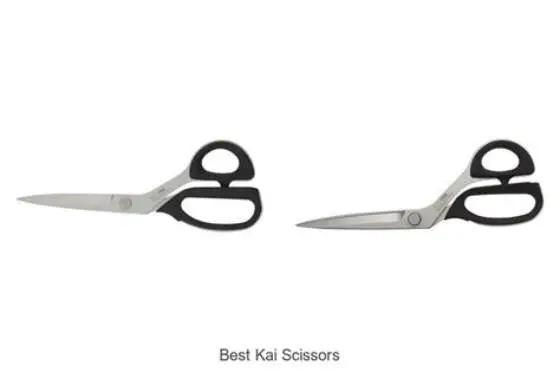
Scissors cut by pressing two beveled edges past each other. The screw or rivet pulls the blades together, and your hand pressure pushes them sideways so the edges meet. Right-handed scissors are ground and set so that pressure works when your right thumb pushes outward and your fingers pull inward. Swap hands and the pressure reverses, so the blades are pushed apart instead of together. There is more on Kai scissors in a separate guide.
When the blades separate even a hair, fabric does not shear. It bends into the gap, then folds and jams or leaves a chewed edge with threads pulled. You squeeze harder to compensate, which tires your hand and makes the cut wander off the line. On lightweight cotton or voile you see folding at once; on heavier wool you get a ragged edge and hand fatigue.
The sight line makes it worse. With right-handed blades in your left hand the top blade sits between your eye and the line, so you lean over to see and your shoulder lifts the fabric. True left-handed blades put the sight line to the left of the top blade, so you see the pencil or chalk mark as you feed. That is why the same fabric cuts cleanly left-handed with reversed blades and folds with ordinary ones.
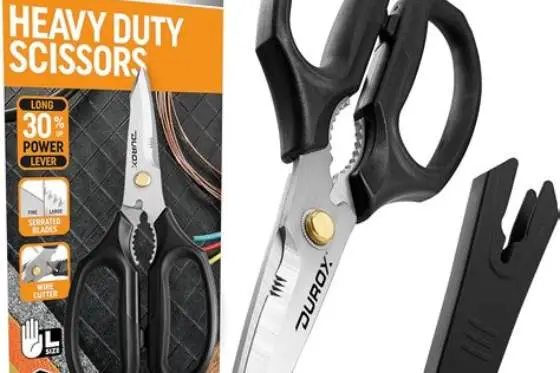
YLaziion Left-Handed 10-Inch Heavy-Duty Fabric Scissors
Handles long pattern cuts without lifting fabric with 10.62 in overall, true left-handed blades and adjustable brass pivot.
- Height 0.6 inches
- Width 3.54 Inches
- Length 10.62 inches
Right-handed blades hide the line from your left eye and fold fabric; reversed blades fix both at once.
Checks: how to spot true left-handed blades before buying
Listings rarely state the blade stack clearly, so you learn to read the photos. Sellers usually shoot the scissors lying flat and held in a hand. Use those two views to confirm reversal, hand fit and sight line. One minute of checking avoids buying a pair that only has left-handed handles. We cover how to sharpen fabric scissors in its own article.
If you already own a pair, test it on scraps. Cut a single layer of quilting cotton and a double layer of linen left-handed. A true left-handed pair leaves a crisp edge with little lint; a right-handed stack leaves folded tufts and a wavy line even when sharp. Sharpness will not rescue a wrong stack.
When photos are unclear, ask the seller for a left-hand top-blade photo or choose a listing that shows it. Reliable left-handed sewing brands show the left blade on top and state reversed blades in the bullets. That wording matters more than a title that just says left-handed.
- Find the top blade in the left-hand hold photo: you want the left blade on top, right blade underneath.
- Trace the cutting line: you should see the line to the left of the top blade, not hidden under it.
- Check the description: look for phrases like reversed blades, true left-handed, or left-handed grind, not just ergonomic left handle.
- Confirm size: look for 8-10 in overall for dressmaking or 4.5-5 in for thread snips in the specs.
- Test on arrival: cut muslin single layer and watch for folding; return if the fabric bends instead of shearing.
Size and type: what works for fabric and dressmaking left-handed
Dressmaking shears are the workhorse for fabric. Look for 8 to 10 inches overall with a bent lower handle that rides flat on the table, so you do not lift the fabric while cutting long seams. A bent handle keeps the lower blade parallel to the table and your left wrist neutral. That control matters on grainlines and pattern pieces where a lift distorts the cut.
Bent trimmers at 7 to 8 inches suit quilting and table cutting, where you cut strips and small blocks and want manoeuvrability. Spring-loaded thread snips at 4.5 to 5 inches are for snipping threads, clipping notches and opening buttonholes, not for yardage. Micro-serrated edges grip slippery fabrics like satin but can leave a faint tooth mark on fine cotton, so choose smooth edges for most wovens.
Weight and pivot matter too. A light pair with an adjustable pivot screw lets you set tension so the blades kiss without wobble. Heavy forged shears hold an edge longer but tire your hand on a big quilt. Try to keep one long pair for fabric and one small pair for threads, rather than one mid-size pair for everything. Your cuts get cleaner and your hands stay fresher.
| Type | Overall length | Best for | Trade-off |
|---|---|---|---|
| Dressmaking shears | 8-10 in (20-25 cm) | Long grain cuts, pattern pieces | Less nimble on tight curves |
| Bent trimmer | 7-8 in (18-20 cm) | Quilting, table cutting | Shorter edge needs more strokes |
| Thread snips | 4.5-5 in (11-13 cm) | Threads, notches, buttonholes | Not for yardage |
- 8-10 in shears: long smooth cuts, fabric stays flat
- 7-8 in bent trimmers: nimble on table, good sight line
- 4.5-5 in snips: precise clipping, spring reduces hand strain
- 10 in shears: heavier, harder on tight curves
- Short blades: more passes on long seams
- Serrated edge: grips satin, may mark fine cotton
Care and use: getting a clean left-handed cut every time
Cut with the fabric flat and your left wrist relaxed. Slide the lower blade under the fabric and let the bent handle glide on the table, then close smoothly rather than snapping. You should hear a soft shearing sound and see a clean edge with no threads pulled. If you hear crunching or see folding, stop and recheck the stack and your angle.
Keep the blades sharp and clean. Wipe lint and adhesive after cutting fusible or tape, and store shears closed or sheathed so the edges do not nick. Use fabric shears only on fabric; paper and plastic dull the bevel quickly. An occasional drop of sewing machine oil at the pivot screw and a tension tweak keeps the cutting action smooth.
Check tension before a big project. Hold the scissors by one handle and let the other fall; it should close about halfway under its own weight, then need a light push. If it drops fully, tighten a quarter turn; if it sticks, loosen a hair. That setting gives you a clean shear without hand strain, and it works on cotton, linen and light wool alike.
For fabric, choose true left-handed shears with reversed blades in 8-10 inches; handles alone do not make a clean left-handed cut.
Still wondering?
Can left-handed sewists just use ambidextrous scissors?
You can, but most ambidextrous pairs still have a right-handed blade stack, so fabric folds left-handed. They feel comfortable because the handles are symmetric, yet the cut stays ragged. For fabric, choose reversed blades, not just symmetric handles.
Are left-handed fabric scissors harder to sharpen?
No, but they need a sharpener who knows the left-handed bevel. The edge is ground on the opposite side, so a right-handed sharpening jig can dull it. Ask for left-handed sharpening or use a service that states it.
What if I share scissors with a right-handed partner?
A true left-handed pair will cut poorly right-handed for the same reason. Keep one left-handed and one right-handed pair and label them. Sharing one pair means one of you always fights the blade stack.
Do I need left-handed rotary cutters too?
Rotary cutters are often neutral, but left-handed blades and handles help sight line the same way. If you quilt left-handed, a left-handed rotary cutter with the blade on the left side keeps the ruler hand safe and the line visible.
Will left-handed scissors fix skipped or uneven cuts on stretch knits?
They help the shear, but knits need extra support. Use a ballpoint needle 80/12, light starch or stay tape, and cut single layer without stretching. Reversed blades give a cleaner edge, yet handling matters more on knits.