Best Fabric Glue: A Hem That Survives the Washing Machine
The best fabric glue for most sewing is Tear Mender. It sets fast, and its wash wait is the shortest on this page, so a hem fixed in the morning is ready for the wash sooner than the rest.
On this page (9 sections)
- Fit check
- The short version
- Best fabric glue: the pick for a hem that survives the wash
- The wash wait: the question to ask of any bottle
- Aleene's Insta-Fuse: the heat-set glue for heavy fabric
- Aleene's Flexible Stretchable: the glue for knits that stretch
- How to glue a hem that stays put
- When glue is the wrong fix: stitch it instead
- Still wondering?
Part of our guide on best fabric scissors reviews

Aleene's Fabric Fusion Glue 4 oz
Let the hem sit a full two days and it then holds through a cold machine wash without sewing or ironing — 48
Check it on Amazon
Tear Mender - TTB-6-D-B Instant Fabric and Leather Adhesive, 6
A two-bottle pack of the latex fabric-and-leather glue for clothing and gear repairs, but nothing on the page
Check the specs on Amazon
Tear Mender Fabric and Leather Cement
The same six-ounce latex cement for mending fabric and leather, but the page gives no curing schedule to say
Check the specs on Amazon| Product | wait before washing (hours) | Verdict | |
|---|---|---|---|
| Aleene's Fabric Fusion Glue 4 oz Aleene's | Full cure before washing 48 h, which meets the 48 h wait; dry time 2–4 h also within the 4 h limit. | Meets it | View on Amazon |
| Tear Mender - TTB-6-D-B Instant Fabric and Leather Adhesive, 6 oz Tear Mender | No wash-wait time and no dry time printed anywhere on this page, so there is nothing to measure. | Not published | View on Amazon |
| Tear Mender Fabric and Leather Cement Tear Mender | Page repeats only the product name; no wash wait and no dry time stated. | Not published | View on Amazon |
| Aleene's Fabric Fusion Insta-Fuse Permanent Fabric Glue Aleene's | Machine washable after curing is claimed, but no cure hours and no dry time are given. | Not published | View on Amazon |
| Aleene's Fabric Fusion Insta-Fuse Permanent Fabric Glue Aleene's | Cure required for washability is stated, but no cure hours and no dry time are given. | Not published | View on Amazon |
Key figures
- Pick
- Tear Mender, 6 oz bottle
- Bond type
- Permanent, flexible
- Best for
- Hems, mends, leather
- Heat-set glue
- Needs an iron
- Stretch glue
- For knits only
- Test first
- Hidden scrap, always
The short version
- Pick a glue by its wash wait, not its dry time.
- Tear Mender sets fast and washes sooner than the rest.
- Heat-set glue suits heavy fabric; stretch glue suits knits.
- Thin coats hold better than thick ones, and they stay hidden.
- Stitch a seam that carries weight; glue cannot carry it.
Best fabric glue: the pick for a hem that survives the wash
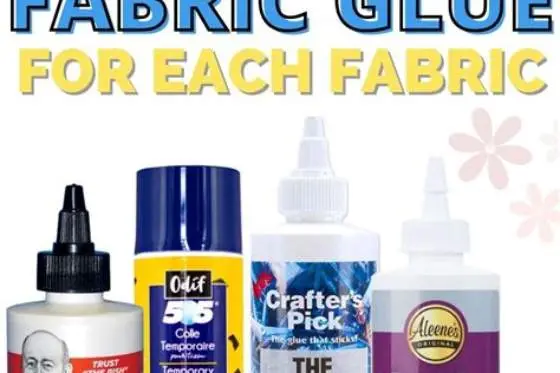
Tear Mender Instant Fabric and Leather Adhesive is the pick for most readers. It sets fast, and its wash wait is the shortest on this page. That speed matters when the hem comes down on the morning you need the garment.
This glue is a natural latex formula, water based and non-toxic. It bonds cotton, leather, suede and canvas into a flexible seam that moves with the cloth. Some fabric glues dry cloudy rather than clear, so keep the glue on the hidden side of the fabric.
Spread a thin coat on the turned-up hem and press the layers together until the glue grabs. Too much glue seeps through the weave, so less is more here. Fabric glue has a shelf life, and the bottle carries the date. Store it at room temperature and check the label before you buy. If you have a latex allergy, choose one of the other glues on this page.
My rule of thumb is simple: if the garment goes in the wash this week, the glue must be washable by tonight. Tear Mender clears that bar with hours to spare. The three glues here were picked from the makers' own directions, not from a test bench. If that sounds like your situation, read up on long pins for quilt layers next.
- Sets fast
- Washable sooner than the rest
- Stays flexible after washing
- Non-toxic latex formula
- Dries tea coloured, not clear
- No good on sheer fabric
- Must be used within a year
The wash wait: the question to ask of any bottle
Dry time and wash wait are two different numbers, and the label treats them that way. Dry time says when you can touch the repair. Wash wait says when the bond can survive the machine. A glue can feel dry long before it is ready for the machine.
Ask one question of any bottle: how long before I can wash it, and is that longer than my laundry day? The answer is printed on the label, and it is the only number that counts. A glue that is still curing when the machine starts will peel at the edge first.
Use the table below as the shortcut. Find your fabric in the last column, then check what each glue asks of you. If the wait is longer than your laundry day, pick a faster glue or stitch the hem. People in this spot often ask about quilting clips for thick layers as well.
Match the glue to the job, not to the clock. A fast glue suits a garment that goes in the machine tonight. A slow glue suits a project that can lie flat until the weekend. The wash wait on the bottle is the number that decides it.
| Glue | Needs | Dries | Best for |
|---|---|---|---|
| Tear Mender | Nothing but pressure | Not fully clear | Fast mends, leather |
| Aleene's Insta-Fuse | An iron | Clear | Denim, canvas, upholstery |
| Aleene's Flexible Stretchable | Patience and a flat surface | Clear | Knits and stretch fabric |
Aleene's Fabric Fusion Glue 4 oz
Let the hem sit a full two days and it then holds through a cold machine wash without sewing or ironing — 48 hours of curing is what makes the bond permanent.
- Height 6.0 inches
- Length 1.75 inches
- Weight 0.25 pounds
Aleene's Insta-Fuse: the heat-set glue for heavy fabric
Some fabrics need more than a squeeze bottle can give. Denim, canvas, leather and upholstery ask for a bond that heat sets into the fibres. Aleene's Fabric Fusion Insta-Fuse is that glue. It is thermo-activated, which means the iron switches it on, and the label gives the cure time and the wash instructions.
Apply the glue, press the layers together, then run a hot iron over the repair. The heat drives the bond to full strength, and the result is machine washable and dry clean safe. That makes it the pick for a coat hem, a bag strap or a canvas tote that will be used hard. There is more on best 45mm cutter blades in a separate guide.
Heat is also the drawback. You need an iron, a flat surface and a pressing cloth, and the job cannot be done away from home. A repair that needs doing on a trip or at work belongs with the pick instead. Keep the iron moving so the heat stays even and the fabric never scorches.
Reach for it where the fabric is thick and the bond must hold under pull. A denim knee patch, a leather bag seam and a canvas chair seat all suit it. On light cotton it is more glue than the job needs, and the pick does the same work without the iron.
- Cures fast with heat
- Machine washable and dry clean safe
- Suits denim, canvas and leather
- Needs an iron and a pressing cloth
- Not a travel repair
Tear Mender - TTB-6-D-B Instant Fabric and Leather Adhesive, 6 oz Bottle
A two-bottle pack of the latex fabric-and-leather glue for clothing and gear repairs, but nothing on the page says how long the mend must sit before it can be washed.
- Height 5.3 inches
- Length 2.0 inches
- Width 7.0 inches
A glued hem is only as good as its wash wait, and the label is the only place that number lives.
Aleene's Flexible Stretchable: the glue for knits that stretch
Knits break most fabric glues. A stiff bond cracks the first time the fabric stretches, and the repair peels away in flakes. Aleene's Flexible Stretchable Fabric Glue is made for that case. It dries clear and stays flexible, so the seam moves with the knit instead of fighting it.
Time is the cost. Stretch glues carry a long wash wait, so check the bottle before planning laundry day, and never soak the repair. Stretch the fabric while you apply the glue, as the maker directs, so the bond sets at the size the garment is worn. That wait is why this glue sits third on the page.
It suits dancewear, swimwear repairs, knit hems and stretch applique. Any garment that pulls and gives as it is worn suits it. Keep it away from woven cotton hems, where the pick dries faster and washes sooner. The right glue is the one that matches the fabric, not the one with the fastest label.
Use less than you think you need. Thick glue takes even longer to dry, and a thick layer on a knit turns stiff no matter what the label promises. Lay the garment flat while it dries, and leave it alone until it feels dry.
- Stays flexible on knits
- Dries clear
- Made for stretch fabric
- Long wash wait
- Slow to dry
- Never soak the repair
How to glue a hem that stays put
A glued hem fails for boring reasons: dirty fabric, too much glue, or moving the garment while the glue is still wet. Get those three right and the bond holds. Work on a flat table with the garment inside out, and keep a damp cloth nearby for your fingers. The steps below take a few minutes of work and a wait after.
Wash and dry the fabric first, with no fabric softener, so the glue meets clean fibres. A softener coating keeps glue from gripping, and the same goes for a hem that has been sprayed with starch. Let the fabric cool and lie flat, then press the crease with your fingers.
Test the glue on a hidden scrap first. Put a thin line on the scrap, press it, and look at the other side for soak-through. If the glue shows, use less on the real hem. Glue that has seeped through cannot be washed out once cured, so wipe it away while it is wet. If the scrap dries stiff, the glue does not suit that fabric, and stitching is the better answer.
Once the hem is glued, leave the garment flat until the glue is dry to the touch, then leave it longer still. Hang the garment only after the bond has cured, and wash it inside out on a gentle cycle the first time.
- Wash and dry the fabric, with no fabric softener.
- Turn the garment inside out and fold the hem to length.
- Press the fold with your fingers so it lies flat.
- Test a thin line of glue on a hidden scrap.
- Run a thin line of glue inside the fold.
- Press the hem flat and hold it for the set time.
- Leave the garment flat until the glue is dry.
- Wait the full wash time on the label before washing.
When glue is the wrong fix: stitch it instead
Glue is a helper, not a replacement for thread. A seam that carries weight will pull a glued bond apart. Bag straps, tent seams, upholstery and the crotch of trousers all carry load, and those seams want stitches. Glue can hold the layers in place while you sew them.
Temporary glue is a different tool from the glues on this page. A temporary basting glue holds fabric in place while you sew it, then washes out in the machine. It is the right choice for pinning a quilt top, placing an applique before stitching, or holding a zip in place. Never use it as the final bond, because the first wash takes it away. Look for the word permanent on the label; anything that says temporary or basting will wash out.
Certain fabrics refuse glue altogether. Coated and waterproof fabrics give the glue nothing to grip, and oily or waxed cloth sheds it. Sheer fabric shows every drop, and a tinted glue like the pick will show through pale cloth. Test every new fabric on a scrap, and stitch the piece if the test fails.
If you have a latex allergy, skip the pick and use a latex-free glue instead. The other two glues on this page use different formulas. When a repair must last for years on a garment you love, a few stitches beat any bottle. Glue saves the day; thread saves the garment.
Tear Mender is the best fabric glue for most sewing: fastest to wear and wash, with honest limits.
Still wondering?
Can fabric glue replace sewing on a hem?
For a light hem on cotton or denim, yes, if the glue is permanent and you respect the wash wait. The bond holds through normal washing once it has cured. Curtain hems and applique suit glue well, because nothing pulls at them.
How long must fabric glue dry before washing?
It depends on the glue, so read the label. The pick on this page is washable sooner than the rest, while the stretch glue asks for the longest wait. Washing early is the most common reason a glued hem fails.
Does fabric glue wash out?
A permanent fabric glue does not wash out once it has cured. A temporary basting glue is made to wash out, and that is its job. Check the label for the word permanent before you trust a repair to the machine.
Can I use fabric glue on stretchy fabric?
Yes, but only with a glue made for stretch fabric. A stiff glue cracks when the knit moves. Use the stretch glue on this page, apply it while the fabric is stretched, and allow the full day to dry.
Is fabric glue safe on skin?
Read the safety and cleanup directions on the bottle before you start. Some glues are solvent based and need a ventilated room, so keep them off your skin. Wash your hands after gluing, and keep every glue away from eyes.