Best Pins for Sewing: Glass Heads That Survive the Iron
The best pins for sewing for most home sewists are long glass head pins with fine steel shafts, because the heads survive pressing and the length holds two layers without slipping. Fine fabrics need a slimmer shaft, and quilt layers need a longer, sturdier pin.
On this page (9 sections)
- Fit check
- The short version
- Best pins for sewing: match the pin to the fabric
- Long glass head pins: the everyday pick for pressing as you go
- Extra-fine glass head pins: the fine box for silk and lawn
- Quilting pins: the longer pin for thick layers
- Pin choice by fabric: silk, cotton, knits and denim
- Pin care: replace bent pins before they snag fabric
- Still wondering?
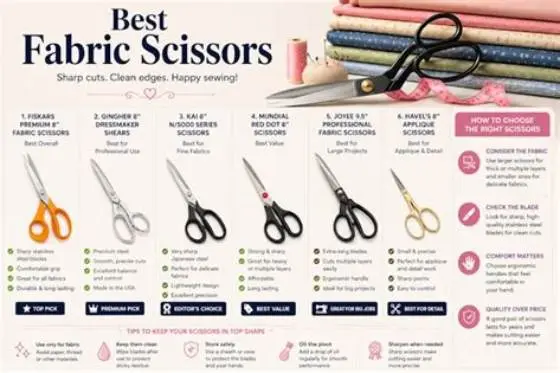
Part of our guide on fabric scissors for sewing

Dritz 3035 Crystal Glass Head Pins
At 47.6 mm the shaft goes through both garment layers and back out with enough showing to grip, and the glass
Check it on Amazon
Two (2) Boxes Quantity 100 Clover Extra Fine Patchwork Pins ~
38.1 mm clears both layers with a little to spare, and two boxes of 100 means a whole garment's worth of
See the budget option
Dritz Extra Fine Glass Head Pins (Size 22) 250 Per Package
No pin length anywhere on the page; 250 pins in the pack clears the 100-pin minimum
See the budget option| Product | pin length (mm) | Verdict | |
|---|---|---|---|
| Dritz 3035 Crystal Glass Head Pins Dritz | 1-7/8 in printed on the pack x 25.4 = 47.6 mm, comfortably past 36 mm | Meets it | View on Amazon |
| Clover Quilting Pins Fine Clover | 0.6 mm diameter x 48 mm length stated on the page, so 48 mm against 36 mm | Meets it | View on Amazon |
| Two (2) Boxes Quantity 100 Clover Extra Fine Patchwork Pins ~ Article Clover | 1-1/2 in printed on the box x 25.4 = 38.1 mm, past 36 mm | Meets it | View on Amazon |
| Dritz Extra Fine Glass Head Pins (Size 22) 250 Per Package Dritz | No pin length anywhere on the page; 250 pins in the pack clears the 100-pin minimum | Meets it | View on Amazon |
| Clover Q2508 Quilting Pins-100/Pkg Clover | Length not stated on the page; 100 pins per package meets the 100-pin minimum | Meets it | View on Amazon |
Key figures
- Everyday length
- 1-7/8 in (48 mm)
- Fine shaft
- 0.5 mm or slimmer
- Quilting pin
- 0.60 x 48 mm
- Heat-safe head
- glass, not plastic
- Knit tip
- ballpoint, rounded
- Box size
- 100 pins or more
The short version
- Glass heads survive a hot iron; plastic heads can melt onto fabric.
- Fine shafts near 0.5 mm spare silk, lawn and voile from pin holes.
- Long pins near 1-7/8 in hold quilt layers and thick seams flat.
- Ballpoint tips suit knits because they slip between yarns.
- Replace a bent or rough pin at once; it will snag every layer.
Best pins for sewing: match the pin to the fabric
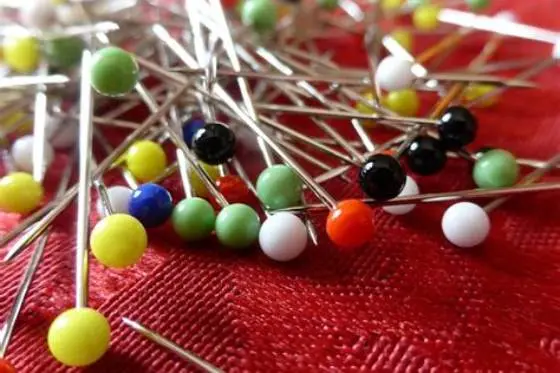
A pin has three jobs at once. It must slide through cloth without forcing the weave apart. It must hold layers still while you sew or press. It must come out cleanly and leave no mark behind.
Head material decides it. Pressing is the question. Glass heads tolerate iron heat, so a pin can stay in place while you press a seam. Plastic heads soften under a hot iron and can leave a melted spot on cloth.
Shaft thickness decides holes. Fine yarns show every mark. A shaft near 0.5 mm slips between fine yarns with little trace. A thicker shaft holds heavy layers with less bending, yet it can mark silk or lawn.
Length decides grip. Short pins slip out of thick stacks. Dressmaker pins for garments usually run from about 1-1/16 in (27 mm) up to 1-1/2 in (38 mm) in length. Quilting pins run longer, toward 1-7/8 in (48 mm), so they cross batting and come back up. We cover quilting clips for binding in its own article.
Point shape finishes the match. A sharp point suits most woven fabrics at home. An extra sharp point helps in tight weaves like batiste or microfiber. A rounded ballpoint point belongs with knits, where yarns loop instead of crossing.
- Glass head: safe near a hot iron, easy to spot on cloth.
- Plastic head: cheap and bright, yet keep it away from heat.
- Fine shaft: kind to silk, lawn, voile and fine piecing.
- Long shaft: steady through quilt layers and thick seams.
- Ballpoint tip: rounded point that suits knit yarns.
Long glass head pins: the everyday pick for pressing as you go
Long glass-head dressmaker pins, roughly 1-3/4 to 1-7/8 in (45-48 mm), cross two layers with shaft to spare. That length suits garment seams and piecing alike. The pin enters, travels under the cloth, and exits where fingers can grip it.
Brightly coloured glass heads are easier to spot against most fabrics. Missed pins cause needle strikes, so visibility protects both cloth and machine. Check the seam line once more before the needle starts moving. The other half of this decision is quilting cutter blades.
Heat resistance completes the pick. Pressing happens after nearly every seam in garment work. Check the listing words before you buy, since glass and plastic heads look alike in photos. Garment sewing presses seam after seam, and this box keeps up.
One honest limit deserves a mention. A fine shaft can bend in dense denim or thick batting. Keep this box for light to medium cloth, and reach for a sturdier pin when layers stack up.
Storage keeps the set ready at the machine. Store pins in a closed case or firm cushion so tips do not dull against hard surfaces. A closed case also keeps loose pins away from fingers and floor. That balance of length and fineness covers most sewing at home.
| Long glass head pick | Extra-fine glass head | Quilting pins | |
|---|---|---|---|
| Length | 45-48 mm | around 35 mm | around 48 mm |
| Shaft | fine steel | slim steel | heavier steel |
| Head | glass | glass | glass |
| Box size | small box | large box | small box |
| Best use | garments, piecing | silk, lawn, voile | quilt layers |
- long shaft holds two layers flat
- long reach through two layers
- bright heads stay easy to spot
- fine shaft can bend in denim
- glass heads can chip if dropped
Dritz 3035 Crystal Glass Head Pins
At 47.6 mm the shaft goes through both garment layers and back out with enough showing to grip, and the glass heads survive the iron when you press as you sew.
- Weight 0.35 oz
- Size 1-7/8-Inch
- Height 5.0 inches
Extra-fine glass head pins: the fine box for silk and lawn
Delicate cloth shows holes. Shaft size matters most here, because fine yarns cannot hide a thick pin. Extra-fine pins use a slim shaft, around 0.5 mm, that parts fine yarns instead of pushing them aside. Glass heads on fine pins let you press delicate seams without melting anything.
Length runs shorter, around 1-3/8 in (35 mm), and that helps control. Short pins sit neatly on small pieces, collars and curves. They also suit machine piecing where long pins crowd the work.
Buy fine pins in a large box and keep spares at the machine. A dropped pin never stops a project when the box stays full. Pin a garment with a few dozen pins, and expect a quilt top to want far more.
Treat the limit with respect. A slim shaft bends fast in canvas, denim or batting. Save this box for silk, lawn, voile and fine cotton, where fineness earns its keep.
Piecing shows the value of a short fine pin. Small quilt pieces shift under a long heavy shaft. Short pins sit flat and hold points in register. Short pins also stay clear of the presser foot on tight curves. Keep the fine box apart from sturdier pins so the right shaft comes to hand.
- slim shaft leaves little trace
- large box with spares ready
- short length suits small pieces
- bends in heavy fabric
- short reach through thick layers

Clover Quilting Pins Fine
48 mm of shaft with a 0.6 mm body pushes through a thick seam or quilt sandwich without bending, so the layers stay put while you stitch.
- Size Each
- Weight 0.35 oz
- Width 4.3 inches
A pin melts, bends or leaves holes for one reason: its head, shaft or length does not match your fabric and your iron.
Quilting pins: the longer pin for thick layers
Quilt layers punish fine pins. Batting resists, and thin shafts bow. Quilting pins are longer and thicker than dressmaker pins, around 1-7/8 in (48 mm) with a heavier shaft. The sturdier shaft crosses top, batting and backing without bowing.
Length does the holding work here. A long pin enters the sandwich, travels under it, and exits with grip to spare. Layers stay registered while you baste, piece or bind.
Sharpness matters too. Strength alone will not save a dull point. A long shaft is useless if the point is dull. Check that the tip is sharp before the box goes in your kit. A dull tip drags yarns and shifts the layers you just aligned.
Keep this box away from your finest cloth. A heavier shaft can mark silk, satin or tight lawn. Quilting cotton, flannel and layered seams are its home ground.
Binding and basting ask for the same strength. Thick folded edges resist a fine shaft and bend it. A sturdier pin crosses the fold and holds it flat. Pin from the center outward so layers stay registered at the edges. Work in sections so the sandwich never shifts under your hands. Thick layers stay put instead of creeping under the presser foot.
- sturdy shaft resists bending
- long length crosses batting
- sturdy point enters dense cotton
- too thick for silk
- long pins crowd small pieces
Two (2) Boxes Quantity 100 Clover Extra Fine Patchwork Pins ~ Article No
38.1 mm clears both layers with a little to spare, and two boxes of 100 means a whole garment's worth of pinning before you restock.
- Height 0.5 inches
- Length 6.0 inches
- Width 4.0 inches
Pin choice by fabric: silk, cotton, knits and denim
Fabric weight points the way. It beats brand names every time. Silk, chiffon and voile want the finest shaft you own. Pin inside the seam allowance on cloth that shows marks.
Quilting cotton sits in the middle ground. Standard glass head pins handle piecing and pressing well on quilting cotton. Pin across the seam line for control, and remove each pin just before the needle reaches it while sewing.
Knits ask for more. Tip shape changes with looped yarns. A ballpoint tip slips between looped yarns instead of piercing them. Pierced yarns can run or ladder, so the rounded point protects stretch fabric.
Denim and canvas need strength over fineness. Choose a longer, sturdier pin and pin inside the seam allowance where marks hide. Thick seam crossings may suit clips better than any pin.
Satin and taffeta punish careless pinning. Pin only inside the seam allowance on fabrics that mark. Steam closes holes in some weaves and leaves others marked. Some weaves close pin holes, and some keep them forever. When in doubt, choose the finer pin for any fabric that marks easily.
- Fold a scrap of the project fabric into two layers.
- Push the pin through both layers and back out again.
- Press the pinned scrap at the fabric's own iron setting.
- Remove the pin and check for holes, shine or drag marks.
- Keep the pin only if the scrap stays clean and flat.
Dritz Extra Fine Glass Head Pins (Size 22) 250 Per Package
No pin length anywhere on the page; 250 pins in the pack clears the 100-pin minimum
- Size 22
- Weight 0.01 oz
Pin care: replace bent pins before they snag fabric
Damage hides well. A bent pin ruins good cloth quietly. Bent shafts drag yarns sideways and leave a trail of snags. Rough tips catch on the weave and shift layers as you sew.
Check pins by touch as you work. Roll each shaft between finger and thumb after a tough seam. Any bend, burr or rough patch means the pin leaves the box for good.
Storage keeps good pins good. A closed case or a firm cushion stops tips from dulling against hard surfaces. Loose pins in a drawer bend, rust and hide where fingers find them.
Rust warns last. Color on the shaft means discard it now. Steel pins resist rust in normal sewing room air when stored dry. A rusty pin stains cloth on contact, so discard it the moment you spot color.
Count pins out and count them back. A missing pin in a garment pricks the wearer later. Sweep the table and floor with a magnet after pinning. The habit takes seconds and prevents a painful surprise. A tidy pin box saves fabric, fingers and time on every single project. Good pins feel smooth from head to point every time.
Start with long glass head pins, then add a finer box for silk and a sturdier box for quilts.
Still wondering?
Can I iron over glass head pins?
Glass heads tolerate iron heat, so pressing near them stays safe for the pin. Your fabric still sets the iron temperature. Keep the iron moving so heat never pools in one spot on the cloth.
How many pins do I need for one project?
A small box covers most garments, since a dress or shirt rarely needs more than a few dozen pins at once. Quilt tops and basting want far more, often well over a hundred across a large top. Keep one box at the machine and one at the cutting table.
Why do my pins bend in quilting cotton?
Angle and support matter as much as shaft size. Pin at a shallow angle so the shaft travels through layers instead of spearing down through them. Support thick stacks on the table, and move to a heavier quilting pin when fine shafts bow.
Do knits really need ballpoint pins?
Knits do better with a rounded ballpoint tip. The point slips between looped yarns instead of cutting through them. Cut yarns can run down the fabric, so test any sharp pin on a knit scrap before you commit.