What fabric to sew for a rain jacket that holds in heavy rain
For heavy, sustained rain choose a 2.5- or 3-layer waterproof breathable shell rated 10000 mm hydrostatic head or higher with taped seams. It holds under pack straps and sitting pressure, breathes so you do not soak from sweat, and sews on a home machine with the right needle and foot.
On this page (9 sections)
- Fit check
- The short version
- Best fabric for rain jacket: what actually holds in heavy rain on a home machine
- Ratings: what hydrostatic head means and how much you need
- Breathability: why DWR and PU vs membrane matters
- Seams: which fabrics need tape or sealant and what you can handle at home
- Weight and handling: needle, thread and presser foot for each cloth
- After sewing: how to test and keep waterproofing alive
- Still wondering?
Part of our guide on staying cool without fabric cling
All true shell fabrics by the yard lacked hydrostatic head ratings except PU3000 at 3000 mm; jackets with ratings were excluded as wrong product type.
Closest of the ones checked: emma kites Black Ripstop Nylon PU3000 Waterproof 1.9 oz 70D Diamond — 3000 mm against 10000 mm needed
Light drizzle poncho where breathability matters less
Fashion trench not intended for sustained rain
Waxed cotton look where taping is not possible
| Product | hydrostatic head (mm) | Verdict | |
|---|---|---|---|
| 2 Yards of Waterproof Breathable Fabric (Urban Grey) Made in USA Urban Grey | No hydrostatic head or breathability published vs 10000 mm needed | Not published | View on Amazon |
| emma kites Black Ripstop Nylon PU3000 Waterproof 1.9 oz 70D Diamond emma kites | 3000 mm vs 10000 mm needed (also below 8000 mm budget minimum) | Short by 70% | View on Amazon |
Key figures
- Heavy rain rating
- 10000 mm or more
- Light rain rating
- 1500-5000 mm
- Breathability - good
- 10000 g/m2/24h +
- Best home-sew pick
- 2.5-layer membrane
- Needle
- 80/12 to 90/14 sharp
- Thread
- 50 wt polyester
- Seams
- Must be taped/sealed
The short version
- Heavy rain needs 10000 mm or more; light drizzle holds at 1500 mm.
- Membrane shells breathe and last; PU coating is cheaper but less breathable.
- Every seam and stitch hole must be taped or sealed or it will leak.
- Use a 80/12 to 90/14 needle, 50 wt polyester, and a nonstick or walking foot.
- Test with a shower head, then re-proof DWR when water stops beading.
Best fabric for rain jacket: what actually holds in heavy rain on a home machine
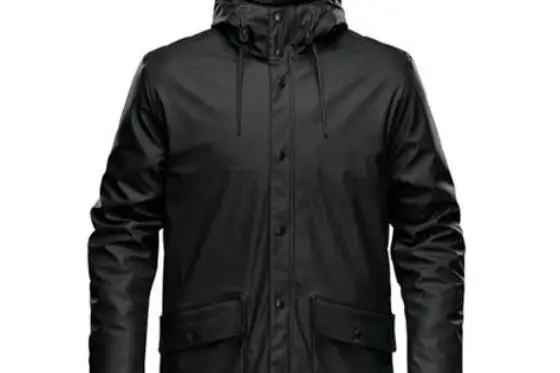
A 10000 mm hydrostatic head 3-layer or 2.5-layer waterproof breathable shell holds in heavy rain on a home machine when you tape its seams. That rating means the fabric holds a 10-metre column of water before it leaks under lab pressure, which roughly matches sitting, leaning on straps, and wind-driven rain.
You face two jobs at once. The cloth must block outside water and let inside vapour out. Cheap PU-coated polyester blocks water but traps sweat, so you feel clammy in ten minutes. A membrane shell with a DWR (Durable Water Repellent) finish beads water on the face and lets vapour pass through the middle layer.
For most home sewists I would choose a 2.5-layer membrane shell around 3-5 oz per sq yd for your first heavy-rain jacket. It cuts and topstitches cleanly, needs no separate lining, and seam tape sticks well with a warm press. Save true 3-layer for alpine use where you want more abrasion resistance.
Check one thing before you buy. Look at the bolt label or listing for hydrostatic head (mm) and breathability (g/m2/24h). If the seller lists only "waterproof" with no number, assume it is not rated for heavy rain. That one check saves a jacket that wets through. We cover choosing knit that sews easily in its own article.

2 Yards of Waterproof Breathable Fabric (Urban Grey) Made in USA
No way to tell if it will keep heavy rain out under pressure - no waterproof rating given.
- Weight 2.9 oz
- Size 58 Inches
Ratings: what hydrostatic head means and how much you need
A 1500 mm hydrostatic head holds light drizzle for a short walk, while 10000 mm hydrostatic head holds heavy, wind-driven rain when you sit or carry a pack. The number comes from a lab test where water pressure is raised against the fabric until three drops come through. Higher pressure comes from real life, not just harder rain.
Think of the rating as pressure resistance, not just rain type. A jacket shoulder under a backpack strap sees far more pressure than the same fabric hanging loose. That is why a 5000 mm jacket can feel fine standing, then leak at the shoulders and seat. Heavy rain plus pressure is the test you must pass.
Use these ranges as a guide, not a promise. 0-1500 mm resists mist and brief showers. 1500-5000 mm handles steady light rain for an hour or two. 10000-15000 mm handles prolonged heavy rain. 20000 mm and up is for sustained downpours and alpine exposure. Breathability and seam sealing still decide comfort. It helps to understand best cotton twill weight tote before going further.
Your Fabric Yardage Calculator helps once you pick the cloth, you enter your pieces and fabric width and it tells you the yards to buy so you do not under-buy coated shell that cannot be pieced easily.
| Use | Hydrostatic head needed | What it feels like |
|---|---|---|
| Light drizzle, short walk | 1500 mm | Beads off, no pressure |
| Steady rain, 1-2 hours | 5000-8000 mm | Shoulders may dampen |
| Heavy rain, wind, sitting/pack | 10000-15000 mm | Holds under pressure |
| Prolonged storm, alpine | 20000 mm + | Holds under high pressure |
Breathability: why DWR and PU vs membrane matters
A 10000 g/m2/24h breathability rating lets most sweat vapour escape during a brisk walk at 50-65°F, while 5000 g/m2/24h feels clammy once you warm up. Breathability is measured as grams of vapour passing one square metre in 24 hours. The number depends on temperature, humidity, and the air gap inside.
DWR is the face finish that makes water bead and roll off. It is not the waterproof layer itself. When DWR wears off, the face wets out, the jacket feels cold and damp, and breathability drops even if the membrane still blocks rain. You can restore DWR with a wash-in or spray-on re-proofer after a gentle tech wash. We go through wool blends for suit sewing step by step elsewhere on the site.
PU-coated polyester is a polyurethane layer painted on one side. It is affordable, fully waterproof at 5000-10000 mm, and easy to find. It breathes poorly, often 3000-5000 g/m2/24h, and the coating can crack or delaminate after a few seasons. It suits occasional rain jackets and kids' shells where cost matters more than all-day comfort.
A membrane shell, often ePTFE or PU membrane, is a thin film bonded between face and backer. It blocks water at 10000-20000 mm and breathes at 10000-20000 g/m2/24h when the DWR is fresh. It costs more and needs careful heat when taping, but it stays comfortable longer. That trade is why I suggest membrane for heavy rain you will actually hike in.
- Membrane: breathes well, durable waterproofing
- PU-coated: budget friendly, easy to source
- Membrane: needs careful pressing and seam taping
- PU-coated: lower breathability, coating can age
Most “waterproof” fabrics leak at the needle holes, not the face, so your seam tape matters as much as your mm rating.
Seams: which fabrics need tape or sealant and what you can handle at home
Every needle hole leaks unless you seal it, so a taped seam with 20 mm seam tape applied at 275-300°F is the fix for a truly waterproof jacket on a home machine. Tape is a heat-activated adhesive film that covers stitch lines from the inside. Without it, even a 20000 mm shell wets through at the seams.
2.5-layer and 3-layer membrane shells are designed for tape and take it well with a press cloth and a household iron or heat press set low. PU-coated ripstop also tapes, but test first, some coatings soften and bubble if the iron is too hot. Waxed cotton and oilskin do not take tape, you seal seams with a liquid seam sealant or wax after sewing.
You can do this at home. Sew with a 80/12 or 90/14 Microtex needle and 50 wt polyester thread, keep stitch length at 3.0-3.5 mm, and avoid backstitching inside taped areas. Press seams open lightly, then lay tape centered over the seam and press for 8-12 seconds with a press cloth. Let it cool before you move it.
Plan your construction to help the tape. Reduce bulk at intersections, trim seam allowances to 3/8 inch (1 cm), and keep topstitching away from taped lines. If your machine struggles to feed, switch to a walking foot or Teflon foot. That one change stops the layers from creeping and keeps tape flat.
- Sew the structural seam with 3.0-3.5 mm stitch length and trim allowance.
- Press seam open or to one side with low heat and a press cloth.
- Cut seam tape 1 inch longer than the seam and round the ends.
- Press tape centered over seam at 275-300°F for 8-12 seconds, then cool flat.
- Test with a shower head for 2 minutes and reseal any wicking spots.
Weight and handling: needle, thread and presser foot for each cloth
A 3-layer shell at 5-7 oz per sq yd sews like a light canvas and holds shape, while a 2.5-layer at 3-4 oz drapes softer and packs smaller. Weight here is fabric weight per square yard, and it changes drape, bulk at seams, and how hot the iron must be. Heavier shells need a slightly larger needle and longer stitch.
Match needle, thread and foot to the cloth. Use a Microtex/Sharp 80/12 needle for 2.5-layer and lightweight PU, and a 90/14 for 3-layer or any shell with a heavier face. Use 50 wt polyester thread for strength and a little give, and a Teflon or walking foot so the coated side does not stick. A roller foot also works if you own one.
Press with care. Most membranes like low to medium heat with a press cloth, PU coatings can glaze or melt above 300°F, and waxed cotton needs very low heat or no press at all. Test on a 4 inch (10 cm) scrap first. If the surface shines or ripples, lower heat and add a cloth. Never press DWR faces directly on high.
Cut with a sharp rotary cutter and pattern weights, not pins, which leave holes. Use double-sided tape or clips to hold seams, and mark with chalk on the wrong side only. These small choices keep the face clean and keep holes only where the needle must go.
| Fabric | Weight (oz/sq yd) | Needle | Foot | Pressing note |
|---|---|---|---|---|
| 2.5-layer membrane | 3-4 | 80/12 Microtex | Teflon / walking | Low heat, press cloth |
| 3-layer membrane | 5-7 | 90/14 Microtex | Walking | Low-medium, short press |
| PU-coated ripstop | 2-4 | 80/12 Microtex | Teflon / walking | Very low, test first |
| Waxed cotton / oilskin | 7-10 | 90/14 Jeans | Walking / roller | Cool or no press |
After sewing: how to test and keep waterproofing alive
A 2-minute shower test at close range shows leaks faster than any short lab figure. Hang the finished jacket inside out, run a shower head or hose on medium for two minutes, and watch seams, shoulders and pockets. Dark spots that spread mean wicking, drips mean an open hole or missed tape. Mark leaks with tape and reseal.
Washing matters as much as sewing. Wash shells with a tech wash at 86°F (30°C) on gentle, no softener, no bleach. Residue from detergent and softener clogs the membrane and strips DWR. Rinse twice if your machine allows it. This keeps breathability near its rated 10000 g/m2/24h longer.
Re-proof when water stops beading. Spray-on DWR is best for 2.5- and 3-layer shells because it coats only the face, wash-in suits PU linings but can coat inside too. Tumble low for 10 minutes if the label allows, heat reactivates DWR. Do this every 5-10 washes or once a season with regular wear.
Store the jacket hanging, not tightly stuffed. Long compression can crease tape and crack PU. If tape lifts at an edge, re-press that section with a press cloth for 8 seconds and let it cool flat. Small fixes now prevent a full re-tape later.
- Wash with tech wash, no softener, rinse well and air dry.
- Spray or wash-in DWR following the bottle directions.
- Tumble low 10 minutes or iron on low with cloth to reactivate.
- Shower-test 2 minutes and mark any leaks.
- Re-press or reseal leaks, then test again.
For heavy rain you can sew at home, a 2.5-layer membrane shell at 10000 mm+ with taped seams balances hold, breathability and ease of sewing.
Still wondering?
Can I use regular cotton or quilting cotton with a waterproof spray for heavy rain?
No for heavy rain. Spray adds water resistance but cotton holds water and leaks under pressure. It may bead for a while, then wets through and stays wet. Save it for a shower-resistant tote, not a jacket.
Do I have to tape every seam, even side seams and pockets?
Yes if you want it to hold in heavy rain. Any stitched seam creates holes. Tape structural seams and pocket seams that go through the shell. Use sealant where tape cannot turn a tight curve.
Will a home sewing machine sew 3-layer shell?
Most modern home machines will with a 90/14 Microtex needle, 50 wt polyester thread, and a walking or Teflon foot. Sew slowly, lengthen stitch to 3.0-3.5 mm, and reduce presser-foot pressure if your machine allows it.
How often should I re-proof DWR?
When water stops beading and the face looks wet even though you stay dry inside. For regular use that is about every 5-10 washes or once a season. Wash with tech wash first so the proofer bonds.
Is PU-coated fabric bad for a rain jacket?
Not bad, just different. It is waterproof and budget friendly and sews easily. It breathes less, so you may feel damp from sweat on long walks. Choose it for occasional use and choose membrane for all-day comfort in heavy rain.