What weight hoodie fabric your home machine can actually handle
For most home machines the best fabric for hoodies is a 280-340 GSM cotton-poly French terry or sweatshirt fleece. It feeds without skipped stitches, holds shape after washing, and embroiders clean with light stabilizer. Heavier than 340 GSM needs an upgraded needle and slower feeding.
On this page (9 sections)
- Fit check
- The short version
- GSM and weight: best fabric for hoodies your home machine can feed
- French terry vs fleece vs sweatshirt knit: structure, warmth and bulk
- Cotton vs cotton-poly vs poly: shrinkage, pilling and dye hold
- Needle, presser foot and tension: tweaks for thick hoodie knits
- Which hoodie fabrics embroider clean: stabilizing knits without puckering
- Prewash and care: keeping hoodies from shrinking and pilling
- Still wondering?
Part of our guide on fabric for hot humid weather

61" Wide Poly Cotton Fleece Fabric by The Yard
Feeds smoothly on your home machine at 250 GSM, giving you plenty of headroom under the 340 GSM ceiling for
Check it on Amazon
Cotton Jersey Knit Fabric by the Yard with Matching Rib
Feeds very easily at 200 GSM well under your 340 GSM ceiling, though you get a lighter tee-weight fabric
See this alternative| Product | fabric weight (GSM) | Verdict | |
|---|---|---|---|
| 61" Wide Poly Cotton Fleece Fabric by The Yard Texco | 250 GSM listed vs 340 GSM max - under by 90 GSM | Meets it | View on Amazon |
| Cotton Jersey Knit Fabric by the Yard with Matching Rib Generic | 200 GSM listed vs 340 GSM max - under by 140 GSM | Meets it | View on Amazon |
| Midweight Cotton French Terry Fabric by the Yard Generic | 350 GSM listed vs 340 GSM max - over by 10 GSM | Falls short | View on Amazon |
Key figures
- Home-machine sweet spot
- 280-340 GSM (8-10 oz)
- Max for most machines
- 340 GSM, 90/14 needle
- French terry weight
- 260-320 GSM typical
- Brushed fleece weight
- 300-380 GSM typical
- Shrinkage risk
- Cotton 3-5%, poly <1%
- Embroidery stabilizer
- Cutaway + wash-away topper
The short version
- Stay at 280-340 GSM for reliable feeding on home machines; over 360 GSM often skips and strains feed dogs.
- French terry for drape and layering, brushed fleece for warmth, sweatshirt knit for stable structure.
- Cotton shrinks and fades, poly resists shrinkage and pilling, cotton-poly blends balance comfort and durability.
- Use a 90/14 stretch needle, walking foot and 50 wt polyester thread for thick knits.
- Prewash hot and tumble dry before cutting to take shrinkage out, then wash hoodies cold.
GSM and weight: best fabric for hoodies your home machine can feed
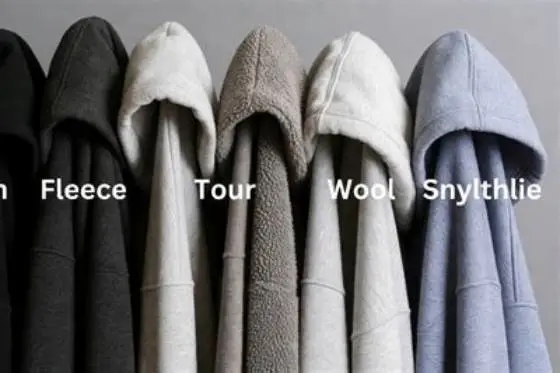
A 340 GSM hoodie fabric (about 10 oz per square yard) is the heaviest most home machines feed cleanly with a 90/14 stretch needle and a walking foot. At that weight you are pushing two layers plus seams under the foot. The figure holds when seams are pressed flat and you sew at moderate speed. Add bulky seams or a thick fleece pile and the limit drops.
Home machines usually handle 240-340 GSM without skipped stitches or broken needles. Light 240-280 GSM terry glides easily and needs only an 80/12 stretch needle. Mid 280-340 GSM sweatshirt knits and lightly brushed fleeces sew well with a 90/14 and slightly longer stitch. Above 360 GSM you will hear the motor strain, see uneven feeding and get skipped stitches at seam intersections. That is your cue to lighten the fabric or change setup.
Check your own machine before you buy yards. Stack your fabric to four layers at a side seam and try to slide it under the presser foot. If you must force it, the machine will struggle in real sewing. Use the Fabric Yardage Calculator on this site to estimate how much to buy once you pick a weight, entering your pattern pieces and fabric width in inches. You will save a trip back to the shop.
| Weight range | Typical fabric | Home-machine handling |
|---|---|---|
| 200-260 GSM (6-7.5 oz) | Light French terry, jersey | Easy, 80/12 needle, standard foot |
| 280-340 GSM (8-10 oz) | Mid French terry, sweatshirt fleece | Sweet spot, 90/14 stretch, walking foot helps |
| 360-450 GSM (10.5-13 oz) | Heavy brushed fleece | Hard, skipped stitches, needs industrial or very slow feeding |
French terry vs fleece vs sweatshirt knit: structure, warmth and bulk
French terry shows loops on the inside and a smooth face outside, usually 260-320 GSM. Those loops trap a little air without adding bulk. It drapes better than fleece and layers without puffing up. You get warmth for spring and fall without the marshmallow look. It also feeds more evenly because the surface is flat. People in this spot often ask about best fabric for blankets as well.
Brushed fleece starts as a similar knit then gets napped on one or both sides to raise a soft pile, often 300-380 GSM. That pile feels warmer right away but adds thickness under the foot and at seams. Hoods get bulky and cuffs get spongy. If you want maximum warmth choose fleece, if you want a slimmer hoodie that still feels cozy pick terry.
Sweatshirt knit is a stable double-knit or interlock with little loop texture, usually 280-340 GSM. It has less mechanical stretch than terry and holds embroidery more steadily. It is less drapey, so it gives that classic athletic hoodie shape. For beginners who worry about wavy seams, sweatshirt knit is the most forgiving of the three.
- French terry: lower bulk, good drape, easy feeding
- Fleece: thick seams, more lint, harder embroidery
61" Wide Poly Cotton Fleece Fabric by The Yard
Feeds smoothly on your home machine at 250 GSM, giving you plenty of headroom under the 340 GSM ceiling for hoodie sewing.
- Size 1 Yard
- Weight 0.5 pounds
Cotton vs cotton-poly vs poly: shrinkage, pilling and dye hold
Cotton feels breathable and takes dye and fabric paint beautifully. It also shrinks 3-5% after a hot wash and can lose shape at the hem and cuffs. Blacks fade faster with repeated washing. You get comfort and color depth at first, then maintenance. Prewash is not optional with cotton. There is more on embroidery machine for clothes in a separate guide.
Polyester barely shrinks, usually under 1%, and resists pilling longer when it is a filament knit. It holds heat more and can feel clammy for some wearers. Dye sits on the surface, so pigment and sublimation look bright but fiber-reactive dyes do not bond the same way as on cotton. For workhorse hoodies that get washed weekly, poly or poly-rich blends last.
Cotton-poly blends, often 50/50 or 60/40 cotton-poly, split the difference. A 60% cotton / 40% poly French terry around 300 GSM gives you soft hand, reduced shrinkage near 1-2%, and better shape retention. Pilling is lower than 100% cotton and breathability is better than 100% poly. If you paint or dye hoodies, test on a swatch first and expect slightly muted results versus pure cotton.
- Cotton: softest hand, best for dye and paint, shrinks most, pills with friction
- Cotton-poly: balanced shrinkage and softness, holds shape, good for daily wear
- Poly: least shrinkage, most durability, warmest, can pill if staple fibre and holds surface dye
Cotton Jersey Knit Fabric by the Yard with Matching Rib
Feeds very easily at 200 GSM well under your 340 GSM ceiling, though you get a lighter tee-weight fabric rather than cozy hoodie warmth.
- Size 60 Inch
Most hoodie fails are not the pattern. They are 400 GSM fleece your home machine cannot feed.
Needle, presser foot and tension: tweaks for thick hoodie knits
Thick knits skip stitches when the needle cannot form a loop cleanly. Switch to a stretch or jersey needle sized to the weight: 80/12 for 240-280 GSM, 90/14 for 280-340 GSM. Use 50 wt polyester thread for strength with a little give. A fresh needle matters more than any dial turn. Change it at the start of the hoodie. The other half of this decision is fabric that holds shape after washing.
Feeding is the other half. A walking foot moves the top layer with the feed dogs and stops creep on stretchy terry. Lengthen stitch to 3.0-3.5 mm so the feed can advance the bulk. Loosen presser foot pressure a half turn if your machine allows it. You want the fabric to move without being pressed flat like a sandwich.
Tension tweaks come last. If loops show on top, lower top tension a notch and re-test on a scrap with the same layers as your seam. Hold the thread tails for the first two stitches to prevent nests under the throat plate. If you still get nests after those changes, re-thread with the presser foot up and clean lint from the bobbin case. That fixes most nests before you touch tension again.
- Cut a 6 inch (15 cm) scrap stack matching your thickest seam and mark it.
- Install new stretch needle 90/14, thread 50 wt polyester, attach walking foot.
- Set stitch length 3.0-3.5 mm, tension at normal, pressure slightly light.
- Sew the stack slowly, check for skips and even feed, then adjust tension one notch at a time.
- If stitches still skip, reduce layers by trimming seam allowances or choose lighter fabric.

SINGER 10-Pack Stretch 2045 Sewing Machine Needles
Provides the exact 90/14 stretch needles you need to feed 280-340 GSM hoodie knits without skipped stitches.
Which hoodie fabrics embroider clean: stabilizing knits without puckering
Stable knits embroider cleaner than lofty ones. Sweatshirt knit and firm French terry around 280-320 GSM hold registration with a 75/11 or 90/14 embroidery needle and 40 wt embroidery thread. Lofty brushed fleece compresses under the hoop and springs back later, which leaves outlines that do not line up. The rule is simple. Flatter is easier. We go through fabric for swimwear step by step elsewhere on the site.
Use a medium cutaway stabilizer on the inside for most hoodies, plus a light wash-away topper on the pile side for fleece. Hoop the stabilizer drum-tight and float the hoodie on top with temporary spray if the bulk will not hoop well. Reduce hooping pressure so you do not stretch the knit as you tighten. A stretched hooping puckers as soon as you unhoop.
Dense designs pucker more. Choose designs under about 15,000 stitches for chest logos and keep satin columns narrow. Run a test sew on a double layer scrap with the same stabilizers. If the test puckers, add another layer of cutaway or choose a less dense design. That test saves a hoodie front.
- Sweatshirt knit: most stable, best registration
- Heavy fleece: compresses, distorts, needs extra topper
Prewash and care: keeping hoodies from shrinking and pilling
Prewash hoodie fabric exactly how you will wash the finished hoodie, then tumble dry. Cotton can shrink 3-5% in length, which shortens a hoodie by 1-1.5 inches (2.5-3.8 cm) on a 28 inch (71 cm) body. Poly blends move far less. Measure a 10 inch (25 cm) square before and after to know your true shrinkage. Cut only after it is stable.
Pilling comes from friction, heat and staple fibres rubbing. Wash hoodies inside out on cold, with similar knits, and skip high heat in the dryer. A short low-heat tumble then air dry keeps the inside face softer longer. If you must use high heat to pre-shrink cotton, do it before cutting, not after sewing.
Color hold follows fibre. Cotton blacks and reds fade faster, especially with warm washes and bleach. Poly keeps color but can hold odors if washed in hot water repeatedly. For painted or dyed hoodies, wash cold and avoid fabric softener which can dull paint. A quick lint roll of fleece before first wear removes loose fibre that would otherwise pill.
- Prewash: hot wash and dry for cotton, cold for poly-rich if you will wash cold later
- Wash finished hoodie: cold, inside out, gentle cycle
- Dry: low heat or air dry, remove promptly and reshape hood and cuffs
For home machines, 280-340 GSM cotton-poly French terry is the most reliable hoodie choice for warmth, easy feeding and embroidery.
Still wondering?
What GSM is warm enough for winter hoodies without overwhelming a home machine?
Aim for 300-340 GSM French terry or light fleece. You get real warmth without the bulk of 380 GSM heavy fleece. Pair it with a 90/14 stretch needle and walking foot, and keep seam allowances trimmed at the hood.
Can my basic home machine sew a 400 GSM heavy fleece hoodie?
Most cannot do it cleanly. You will see skipped stitches at cross seams and uneven feed. If you must use it, sew slowly, use a 90/14 or 100/16 stretch needle, and reduce bulk by grading seams. A lighter 320 GSM often looks just as warm.
Which fabric is best for embroidering a hoodie logo?
A stable 280-320 GSM sweatshirt knit or firm French terry. Use cutaway stabilizer inside and a wash-away topper on fleecy surfaces, and keep designs less dense. Test on a scrap sandwich first.
How much should I pre-shrink before cutting?
Wash and dry the fabric the way you will wash the hoodie, then measure. Expect 3-5% for 100% cotton and 1-2% for cotton-poly. Do not cut until measurements stop changing.
What stitch should I use for hoodie seams that stretch?
Use a stretch stitch or narrow zigzag about 2.5 mm wide and 2.5-3.0 mm long for seams that need give, like shoulders and cuffs. Use a straight stitch 3.0-3.5 mm for stable side seams. Serge or zigzag to finish edges.