What yarn weight numbers 0 to 7 mean for needles and gauge
Yarn weights numbered 0 to 7 classify thickness from lace to jumbo yarn. Each weight links to wraps per inch (WPI) and stitches per 4 inches, guiding needle size and gauge to match your pattern or swap yarns safely.
On this page (7 sections)
- The short version
- What the 0 to 7 system means and the common names from lace to jumbo
- How thickness is measured: wraps per inch and stitches per 4 inches vs skein weight
- Typical needle/hook range and gauge for each weight number
- How to determine yarn weight when the label is missing
- Yarn weight chart explained: how to tell if you can substitute a different weight and what breaks gauge
- Still wondering?
Part of our guide on best serger for knits
Key figures
- Yarn weight numbers
- 0 to 7
- Typical wraps per inch
- 3 to 36 WPI
- Gauge stitches per 4 inches
- 4 to 40 stitches
- Needle size range US
- 000 to 50
- Common weight names
- Lace to Jumbo
The short version
- Yarn weight numbers 0-7 match distinct thickness ranges and common names.
- Wraps per inch and stitches per 4 inches are physical checks to confirm weight.
- Needle and hook size ranges vary by weight to achieve correct gauge.
- Without a label, measure WPI or knit a swatch to identify yarn weight.
- Swapping yarn weights changes gauge; check stitches per inch to avoid project issues.
What the 0 to 7 system means and the common names from lace to jumbo
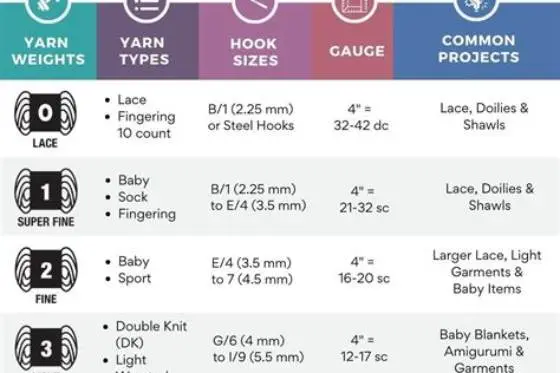
The yarn weight system numbers yarn thickness from 0 to 7, with 0 for the thinnest lace yarn and 7 for the thickest jumbo yarn. Each number corresponds to a general category that helps you pick needles and estimate gauge.
Common names make it easier: 0 is Lace, 1 is Super Fine, 2 Fine, 3 Light, 4 Medium, 5 Bulky, 6 Super Bulky, and 7 Jumbo. These names often appear on yarn labels and knitting patterns.
This system lets you match yarn to your project’s requirements without guesswork, but keep in mind that actual thickness can vary slightly between brands.
Labels rarely say just the number, so learn the nicknames that hide the same weight. A skein marked worsted, aran, or afghan is almost always a 4 Medium, and shops shelve them together. That weight sits at 9 to 12 wraps per inch when you wrap with light, even tension. If your pattern calls for worsted and the label says Medium 4, you have a direct match. People in this spot often ask about crochet hook size chart as well.
The jump from 6 Super Bulky to 7 Jumbo feels huge on the needles, even though numbers sit side by side. A 6 measures about 7 to 8 wraps per inch and knits 7 to 11 stitches per 4 inches on US 11 to 17 needles. A 7 drops to 6 wraps per inch or fewer and often needs US 17 or larger, sometimes just your arms. Buy one ball first and check gauge, because two 6s from different mills can still differ by 2 stitches per 4 inches.
| Weight Number | Common Name |
|---|---|
| 0 | Lace |
| 1 | Super Fine |
| 2 | Fine |
| 3 | Light |
| 4 | Medium |
| 5 | Bulky |
| 6 | Super Bulky |
| 7 | Jumbo |
How thickness is measured: wraps per inch and stitches per 4 inches vs skein weight
Thickness can be measured physically with wraps per inch (WPI). Wrap yarn around a ruler snugly without stretching, then count how many wraps fit in one inch. This number directly reflects the yarn’s thickness.
Another way is to knit a 4-inch (10 cm) square gauge swatch and count stitches per 4 inches. A thinner yarn gives more stitches per 4 inches, thicker yarn fewer stitches. It helps to understand best circular needle for blankets before going further.
Skein weight (the skein’s total grams or ounces) doesn’t reliably measure thickness alone because skeins vary in length. WPI and gauge checks give you the true picture of yarn thickness.
Wraps per inch (WPI) can vary slightly within the same yarn type due to tension when wrapping. Too tight or loose wrapping gives false thickness readings. Aim for gentle snugness without stretching the yarn.
Skein weight combined with yardage can hint at yarn density. For example, a 100-gram skein with 200 yards has thinner yarn than one with 100 yards. This can guide your expectations but cannot replace WPI or gauge. We go through best needles for sock projects step by step elsewhere on the site.
Gauge can change with fiber type and yarn ply. Two yarns with the same WPI might behave differently due to fiber elasticity or twist, affecting stitch size and needle choice. Always test gauge on the actual yarn.
| Method | What it measures | How to do it |
|---|---|---|
| Wraps Per Inch (WPI) | Yarn thickness | Wrap yarn around ruler, count wraps in 1 inch |
| Gauge swatch | Stitch density per area | Knit 4" square, count stitches across |
| Skein weight | Total yarn mass | Weigh skein in grams or ounces |

BENECREAT 3Pcs Knitting Needle Gauge Multifunctional Wood Spinning Control
When the label is missing you can still identify the yarn weight by counting wraps on its 1-inch guide.
Typical needle/hook range and gauge for each weight number
Each yarn weight number links to a typical range of needle or crochet hook sizes and gauge stitches per 4 inches. For example, lace yarn (0) usually uses 000-1 knitting needles, producing 33 to 40 stitches per 4 inches.
Medium weight yarn (4) typically calls for US 6-9 needles, yielding 16 to 20 stitches per 4 inches. Bulky yarns (5) require larger needles like US 9 to 11 and fewer stitches per 4 inches, around 12 to 15.
These ranges guide you to match your yarn to pattern requirements. Changing to needles outside these can alter gauge, affecting final project size.
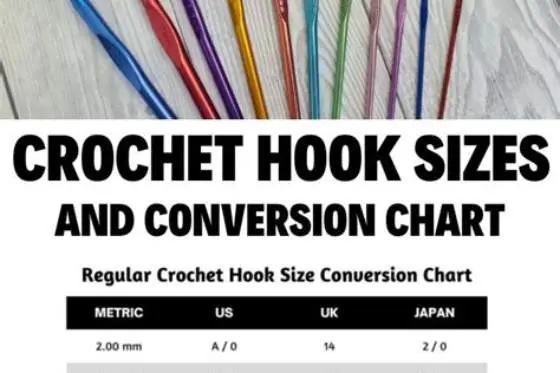
Fill in the gaps and you can spot a mismatch before you swatch. A 1 Super Fine usually takes US 1 to 3 needles and gives 23 to 26 stitches per 4 inches. A 2 likes US 3 to 5 for 21 to 24 stitches and a 3 prefers US 5 to 7 for 18 to 22 stitches. Crochet hooks track about two sizes larger than knitting needles for the same weight, so check the hook range on the band.
These ranges assume smooth wool or acrylic with a springy twist, so slippery or fuzzy fibers shift your gauge. A cotton 4 on US 8 may give 17 stitches per 4 inches where wool gives 19. A slick metal needle can add half a stitch per inch versus wood, so swatch with the exact needles you will use. If your swatch comes out 2 stitches tight per 4 inches, go up one US size and recheck.
| Weight Number | Needle Size (US) | Stitches per 4 inches |
|---|---|---|
| 0 (Lace) | 000–1 | 33–40 |
| 1 (Super Fine) | 1–3 | 27–32 |
| 2 (Fine) | 3–5 | 23–26 |
| 3 (Light) | 4–6 | 19–22 |
| 4 (Medium) | 6–9 | 16–20 |
| 5 (Bulky) | 9–11 | 12–15 |
| 6 (Super Bulky) | 11–17 | 7–11 |
| 7 (Jumbo) | 17+ | 5–7 |
This article shows how to measure yarn thickness and gauge to decode yarn weight numbers 0 to 7 and safely swap yarns without ruining your project.
How to determine yarn weight when the label is missing
If your yarn label is missing, start by measuring wraps per inch (WPI). Wrap the yarn neatly around a ruler or WPI tool, count the number of wraps in exactly one inch (2.54 cm).
Next, knit or crochet a small 4-inch (10 cm) swatch with an estimated needle size based on the WPI reading, then measure the stitches per 4 inches. Compare these numbers with yarn weight charts to identify the weight number.
The combination of WPI and gauge stitches per 4 inches lets you pinpoint the yarn weight accurately enough to follow or adapt patterns. A WPI tool is simple and affordable and the best helper here.
Look at the yarn’s ply count if the label is missing. More plies usually mean thicker yarn, though fiber thickness also matters. For example, 4-ply fingering weight is thinner than 4-ply worsted weight yarns.
Feel the yarn. Thin yarns feel light and delicate; bulky ones feel thick and heavy. This tactile check helps narrow down the weight before measuring WPI or knitting a swatch.
If you have similar yarns labeled with weight numbers, compare the mystery yarn side-by-side. Match its thickness and stretch to a known yarn to estimate the weight range quickly. This works well when you have a yarn stash.
- Wrap yarn around ruler for one inch and count wraps (WPI).
- Use typical needle size for that WPI to knit a 4-inch square swatch.
- Measure stitches across 4 inches of the swatch to get gauge.
- Match both WPI and gauge to yarn weight chart to identify weight number.
Yarn weight chart explained: how to tell if you can substitute a different weight and what breaks gauge
Substituting yarn weight requires close attention to gauge. Gauge is the number of stitches and rows in a 4-inch square. If the substitute yarn’s gauge differs by more than 2 stitches per 4 inches from the pattern’s, the finished item won’t fit as expected.
Thicker yarns produce fewer stitches per inch, so swapping from medium to bulky yarn without adjusting needle size or pattern will enlarge the project. Conversely, a thinner yarn shrinks it.
Always knit a gauge swatch with your substitute yarn and needles before starting. If the gauge matches within 2 stitches per 4 inches, the swap is usually safe. More difference means you need to change needle size or pattern to compensate.
Run the math before you buy enough yarn for a sweater. Say the pattern wants 18 stitches per 4 inches on a 4 Medium, but your 5 Bulky swatches at 14 stitches on US 10. A 40-inch chest at pattern gauge needs 180 stitches, but at 14 stitches per 4 inches those 180 stitches stretch to about 51 inches. That is four sizes too big with wide, loose fabric, so wash your swatch and remeasure before you commit.
| Original Weight | Substitute Weight | Gauge Change | Effect on Project |
|---|---|---|---|
| 4 Medium | 5 Bulky | -4 to -8 sts/4in | Project larger, looser fabric |
| 4 Medium | 3 Light | +4 to +8 sts/4in | Project smaller, tighter fabric |
| 3 Light | 2 Fine | +3 to +6 sts/4in | Smaller size, denser fabric |
| 5 Bulky | 6 Super Bulky | -3 to -5 sts/4in | Larger, coarser fabric |
Still wondering?
Can yarn weight vary between brands for the same number?
Yes, yarn labeled with the same weight number can vary slightly in thickness. Always measure WPI or knit a gauge swatch to be sure.
What if I can’t make a gauge swatch?
Use WPI measurement to estimate yarn weight and pick needles, but realize final size may vary more without a swatch confirmation.
Is skein length a way to check yarn weight?
No, skein length alone doesn’t indicate thickness because yarn density and fiber type vary. Measure wraps per inch for real thickness.
What needle size should I use if switching from medium to bulky yarn?
Increase needle size by 2-3 US sizes from your medium yarn needle range to accommodate the thicker bulky yarn and keep gauge similar.
Does crochet hook sizing match knitting needle sizes for yarn weight?
Crochet hook sizes are different but related; heavier yarns need larger hooks. Check the yarn label or use the same WPI and gauge principles.