Does a serger replace a sewing machine? What each can and can't sew
A serger does not replace a sewing machine because it specializes in edges and seams but cannot handle all stitching types. A sewing machine offers versatile stitches for assembly, topstitching, and decorative work that a serger cannot do.
On this page (8 sections)
- The short version
- What a sewing machine does vs what a serger does stitch by stitch
- When to use a serger vs when you need a sewing machine
- Does a serger replace a sewing machine and is a serger a sewing machine
- Can a sewing machine do a serger finish and can you sew a garment with only a serger
- Serger needles vs sewing machine needles and cover stitch vs serger difference
- Sewing machine vs serger: what each can and can't sew
- Still wondering?
Part of our guide on beginner sewing machine
Key figures
- Serger threads
- 3-5 threads
- Sewing machine stitches
- 10-100+ types
- Common serger stitch
- Overlock
- Buttonholes
- Sewing machine only
- Seam finishing speed
- Serger generally faster
- Fabric types
- Sewing machine all types
The short version
- Sergers excel at clean, stretchy seam finishes but cannot sew buttonholes or zippers.
- Sewing machines handle all stitch types, including straight, zigzag, and decorative stitches.
- Using a serger alone limits your project options to knit fabrics and seams only.
- Both machines often work best together: sewing machines for construction, sergers for finishing.
- Check your projects’ stitch needs first before deciding which machine to rely on.
What a sewing machine does vs what a serger does stitch by stitch
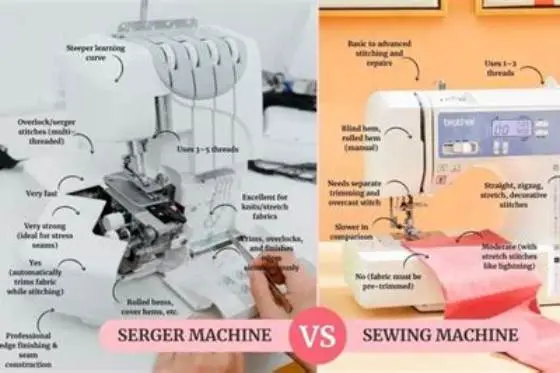
A sewing machine creates a variety of stitch types using a single needle and bobbin thread. It can sew straight, zigzag, decorative, stretch, and buttonhole stitches. This versatility lets you assemble, embellish, and finish nearly any project.
A serger uses multiple threads (usually 3 to 5) and loopers to trim fabric edges while wrapping thread around seams to prevent fraying. It specializes in overlock stitches that stretch well and finish edges quickly but cannot produce straight or decorative stitches.
While a sewing machine can form buttonholes and attach zippers, a serger cannot. Sergers excel at seaming knit fabrics because their stitches stretch, but they cannot do dense topstitching or quilting that a sewing machine handles.
| Function | Sewing Machine | Serger |
|---|---|---|
| Straight stitch | Yes | No |
| Overlock edge finish | Some models with specialty feet | Yes |
| Buttonholes | Yes | No |
| Zippers | Yes | No |
| Decorative stitches | Yes | No |
| Seam trimming | No | Yes |
When to use a serger vs when you need a sewing machine
Choose a serger when you want a fast, stretchy seam finish on knit fabrics or need professionally clean edges. Sergers trim away a narrow strip of fabric as they sew. The width of this trim depends on your serger’s cutting-width setting, so you must account for it in your seam allowance. It helps to understand serger tension settings guide before going further.
Use a sewing machine when your project requires varied stitch types, such as attaching zippers, making buttonholes, quilting, or decorative stitching. Sewing machines handle woven fabrics better because they do not trim fabric or rely solely on stretchy seams.
When working with heavy or multiple layers, sewing machines offer better control. Sergers trim fabric edges and may weaken bulky seams. Projects needing precise topstitching or embroidery also demand a sewing machine.
Adjust the differential feed on your serger starting at a neutral setting. Increase or decrease it on a scrap of your fabric until the edge feeds flat without waves or puckers. Stitch length and differential feed vary by machine and fabric. Test on a scrap of jersey and check that the seam stretches without popping. We go through choosing finishes by fabric type step by step elsewhere on the site.

Universal Sewing Machine Needles
Covers your fabric needs with needle sizes from 65/9 to 90/14 included, ensuring versatility for different fabrics.
Does a serger replace a sewing machine and is a serger a sewing machine
A serger cannot replace a sewing machine because it does not perform fundamental stitches required for garment construction or decoration. It is a specialized machine designed for finishing seam edges with overlock stitches.
Though a serger is technically a type of sewing machine, it serves a different function. Sergers lack a bobbin, buttonhole function, and many stitch types found on a regular sewing machine.
Relying solely on a serger limits what you can make, especially for projects needing straight seams, topstitching, or decorative effects. Most home sewists find a serger best supplements their sewing machine.
You can sew only with a serger if most of your projects are simple knits like tees and leggings with no closures. That setup still fails the moment you need a straight seam for a woven waistband or a secure zipper. Sergers use substantially more thread than sewing machines. Thread consumption varies with stitch length, width, and tension; check your manual and estimate usage from a test seam on scrap.
A serger trims a narrow strip as it sews. The amount depends on the cutting-width setting, so plan extra seam allowance accordingly. You cannot undo serger seams once trimmed, which matters on fitted wovens where you might need to let out seams later. Differential feed settings also affect fabric edge appearance. Start at neutral and adjust on scrap until the edge lies flat without curling or waves.
See exactly what seams, fabrics, and finishes a serger can do—and where you must use a sewing machine instead.
Can a sewing machine do a serger finish and can you sew a garment with only a serger
Some sewing machines offer built-in overlock or stretch stitches that imitate serger finishes, but these do not trim fabric edges or form true overlock seams. The finish is close but not as durable or stretchy as a serger’s.
You can sew simple garments with only a serger if the fabric is knit and seam finishes are your priority. However, you lose options like buttonholes, zippers, and decorative stitching. Sewing machines are necessary for complex construction.
A serger alone cannot sew hems cleanly or topstitch since it trims edges during sewing. Many garments need these finishing touches, so a serger-only setup limits your project range.
Your sewing machine can approximate a serger edge using an overlock foot and a wide overedge stitch. Adjust stitch width and length on scrap fabric until the thread wraps the raw edge neatly. Trim fabric close to the stitch line before sewing to avoid a bulky finish. If the fabric tunnels or stitches skip, adjust the top thread tension and test again on scrap.
You can sew a whole knit dress on a serger alone using a 4-thread overlock stitch. Add extra allowance to your pattern for the fabric trimmed by the serger’s knife. Because the serger cuts and sews simultaneously, unpicking seams is difficult and can cause unraveling. Finish hems on a sewing machine with a twin needle or narrow zigzag to secure the edge for washing.
Serger needles vs sewing machine needles and cover stitch vs serger difference
Sewing machines use a single needle to form stitches with thread from the needle and the bobbin. Needle sizes vary by fabric weight and type. Sergers use similar needles but rely on multiple threads and loopers to create stitches.
Cover stitch machines differ from sergers. They use two needles and a looper to create flat hem-stretch stitches common in knitwear hems. Sergers finish edges with overlock stitches but do not form the flat hems that cover stitch machines do.
Because of these differences, a serger cannot replace a cover stitch machine, nor does a sewing machine replicate a true serger finish without specialty feet or attachments.
| Machine Type | Needle Threads | Key Stitch Types | Purpose |
|---|---|---|---|
| Sewing machine | 1 needle + bobbin | Straight, zigzag, buttonhole | Versatile assembly and detail |
| Serger | 1 needle + 3-4 loopers | Overlock (edge finish) | Seam finishing and trimming |
| Cover stitch machine | 2 needles + looper | Cover stitch (hem) | Stretch hem stitches |
Sewing machine vs serger: what each can and can't sew
Sewing machines can sew a wide range of fabric weights and types with the correct needle and thread. They handle straight seams, topstitching, embroidery, quilting, buttonholes, and zippers.
Sergers excel at knit fabrics and woven fabrics that fray easily, producing durable, stretchable seam finishes quickly. They cannot sew buttonholes, attach zippers, or do decorative topstitching.
Rely on a sewing machine for garment assembly, hems, and detailed stitching. Use a serger for fast seam finishing and professional edge trimming. Projects that demand both will benefit from owning both machines.
Sewing machines handle a wider range of fabric weights and layers than home sergers. Sergers may struggle with very heavy fabrics or multiple layers. Test your serger on folded layers of your chosen fabric; if stitches skip or the motor strains, switch to the sewing machine.
Sergers generally sew faster than sewing machines, but speeds vary widely by model. Check your machine’s manual for rated stitches per minute. Faster serging helps with long seams on knits but may cause puckering on tight curves. Slow down the machine and guide fabric carefully to maintain seam quality.
| Task | Sewing Machine | Serger |
|---|---|---|
| Straight seams | Yes | Yes, but trims edges |
| Buttonholes | Yes | No |
| Zippers | Yes | No |
| Seam finishing | Some models | Yes, trims edges |
| Hems | Yes | Limited |
| Decorative stitching | Yes | No |
| Quilting | Yes | No |
A serger complements but cannot replace a sewing machine for most home sewing projects.
Still wondering?
Can I use a serger alone to sew all my clothes?
You can sew simple knit garments with a serger alone, but you will miss buttonholes, zippers, and hems. A sewing machine is needed for those essential tasks.
Can a sewing machine do the same edge finish as a serger?
Some sewing machines mimic overlock stitches but lack fabric trimming and stretch durability. A serger’s finish is cleaner and more elastic.
Do sergers use different needles than sewing machines?
Sergers use similar needle sizes but rely on multiple threads and loopers for stitches. Needle choice still depends on fabric type and weight.
Is a cover stitch machine the same as a serger?
No. A cover stitch machine makes flat hem stitches using two needles and a looper, while a serger trims edges and finishes seams with overlock stitches.
Which should I buy first: a sewing machine or a serger?
Start with a versatile sewing machine that meets your common stitch needs. Add a serger later if you want faster seam finishes and work often with knits.