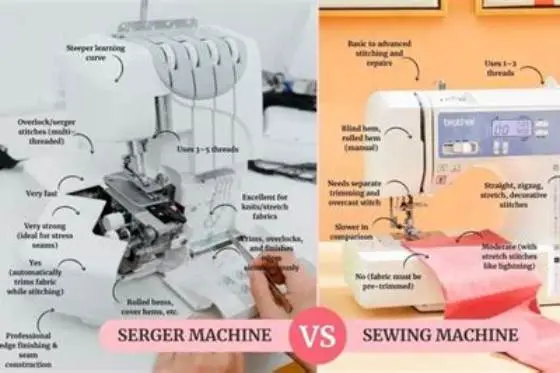
Seams without a serger: which finish holds up to washing
Use zigzag overcasting for most cottons, French or flat-felled for light and hard-wearing wovens, and a light stretch zigzag or narrow bound finish for knits. Match the finish to fabric weight, stretch and your seam allowance width and it will hold up to washing without bulk or popping.
On this page (8 sections)
- The short version
- How to finish seams without a serger: matching finish to fabric and allowance
- Zigzag and overlock foot: settings and limits on a regular machine
- French, flat-felled and bias-bound: when each fits and when it bulks
- Pinking, turned-and-stitched and Hong Kong: light vs heavy wovens
- Allowance width: how 1/4", 3/8" and 5/8" decides your finish
- Curves, knits and washing: what holds up and how to test fraying
- Still wondering?
Part of our guide on best online sewing classes for beginners
Key figures
- Zigzag width
- 3.5-5 mm, length 1.5-2.5 mm
- French seam total
- needs 5/8" (1.6 cm) allowance
- Flat-felled needs
- 5/8" (1.6 cm) to fold
- Pinking only
- holds on tight wovens only
- Knit stitch
- narrow zigzag 1.5 x 2.5 mm
- Wash test
- 40°C wash, tumble or line dry
The short version
- Match finish to weight, stretch and allowance width, not habit.
- Keep allowance width in mind before you cut: 5/8" gives options, 1/4" limits them.
- Zigzag overcasting needs the edge just under the swing, not trimmed away.
- French and flat-felled seams add strength but add bulk on thick fabrics.
- Test a 4-inch scrap through wash and wear before you commit to the garment.
How to finish seams without a serger: matching finish to fabric and allowance
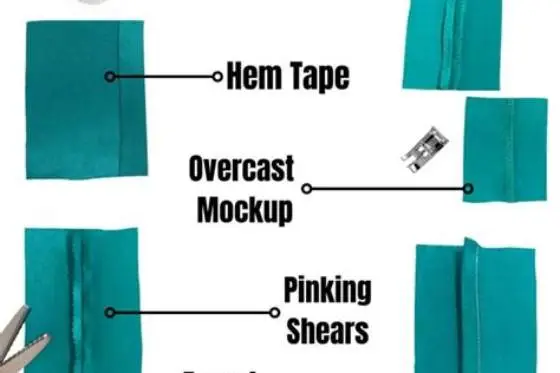
You want to know how to finish seams without a serger so they stay neat after washing, not just on the sewing table. Start with three facts about your fabric: how heavy it is, whether it stretches, and how tightly it is woven. Then look at your seam allowance width. Those four details decide the finish that will hold without bulk or popped stitches.
Light, tightly woven cotton and linen fray less and press well, so an enclosed finish works. Mid-weight denim and twill need a finish that can take abrasion without adding four layers at the seam. Loose weaves like gauze fray fast and need the edge fully covered, while knits do not fray the same way but will pop if you lock them with a straight stitch. Your allowance locks in your choices before you sew.
If you are choosing a machine for these finishes, the Sewing Machine Matchmaker on this site helps you narrow by fabric and stitch needs in four questions. For now, check your pattern envelope for the allowance it was drafted with. A 5/8" (1.6 cm) allowance gives you room to fold, a 1/4" (0.6 cm) allowance leaves almost none. That one number tells you what you can still change.
- Light tight wovens: French, flat-felled or narrow Hong Kong binding presses flat.
- Heavy wovens: zigzag overcast or bound edge that does not add layers.
- Loose wovens: bias-bound or Hong Kong, not pinking alone.
- Knits: narrow zigzag or lightning stitch, never a straight stitch on the edge.
| Finish | Best fabric | Allowance needed | Bulk level |
|---|---|---|---|
| Zigzag overcast | Most wovens, light to mid | 3/8" (1 cm) or more | Low |
| French seam | Light wovens, sheer | 5/8" (1.6 cm) | Medium |
| Flat-felled | Jeans, shirts, workwear | 5/8" (1.6 cm) | High |
| Bias/Hong Kong | Unlined jackets, loose weaves | 1/2" (1.3 cm) or more | Medium |
Zigzag and overlock foot: settings and limits on a regular machine
A regular machine can overcast well if you set the swing to catch the edge, not chew it. Use a 3.5-5 mm wide zigzag with length 1.5-2.5 mm for most cottons, and move the needle so the right swing just drops off the fabric. That wraps thread around the raw edge instead of pulling it in. Test on a double layer scrap first. People in this spot often ask about serger vs sewing machine as well.
An overlock foot has a little bar that the thread wraps around, which keeps the edge flat while the needle swings. Set the same zigzag, guide the raw edge against the bar, and let the foot control the feed. You still need to trim evenly before you stitch. The foot does not cut like a serger, so any uneven trimming shows.
This finish has limits you should respect. It will not stop a very loose weave from fraying after several hot washes, and it adds a little ridge that can show through thin fabrics. On knits, a wide zigzag can wave the edge if you stretch as you sew. If the edge still frays after a wash test, choose a bound finish instead. That is the trade you accept for speed.
- Needle:
80/12universal for quilting cotton,90/14for denim or canvas,75/11stretch for knits. - Thread:
50 wtpolyester for strength, cotton-wrapped if you want less shine. - Presser foot: overlock foot with guide bar, pressure normal, feed dogs up.
- Stitch: zigzag or overcast stitch, width 3.5-5 mm, length 1.5-2.5 mm.

TISEKER Overlock Overcast Presser Foot
Finishes raw edges without a serger by guiding fabric at the needle so your zigzag wraps and locks around the edge and stays flat after washing, fits all low-shank snap-on machines.
French, flat-felled and bias-bound: when each fits and when it bulks
French seams enclose the raw edge inside itself, so nothing frays and nothing shows on the outside. You sew wrong sides together at 1/4" (0.6 cm), trim, press, then sew right sides together at 3/8" (1 cm) to trap the edge. The total uses a 5/8" (1.6 cm) allowance. It lies flat on light wovens like voile and lawn, but it turns bulky on thick denim or at intersecting seams. Use it where you want a clean inside on sheer or unlined garments.
Flat-felled seams are the jeans seam. You sew right sides together, press one allowance over the other, fold the wider one under, and topstitch. That gives two rows of stitching and a very strong seam that survives abrasion. It needs a full 5/8" (1.6 cm) to fold neatly and it adds layers, so it can feel stiff on curves and collars. It shines on shirts, denim and workwear where strength matters more than drape.
Bias-bound or Hong Kong finishes wrap each allowance with bias tape, so the edge is covered but not folded back on itself. Hong Kong uses single-fold bias and shows the wrap, while a fully bound seam encloses the edge and is topstitched. Both handle loose weaves well and reduce bulk compared with a French seam on mid-weight fabric. They take more time and bias, and they add a line of stitching you will see if the garment is unlined.
| Finish | Strength after wash | Bulk | When to avoid |
|---|---|---|---|
| French | High, edge hidden | Medium, 4 layers at seam | Heavy fabrics, tight curves |
| Flat-felled | Very high, topstitched | High, folded layers | Drape fabrics, sharp points |
| Bias/Hong Kong | High if stitched close | Medium, tape adds layer | Very thick seams, 1/4" allowance |
- French: no raw edge, neat inside on sheers
- Flat-felled: strongest for jeans and shirts
- Bound: covers loose weaves without folding bulk
- French: needs wide allowance, slow on curves
- Flat-felled: stiff, shows topstitching
- Bound: uses bias, visible stitch line
A pinked edge can look neat on day one and shed threads by wash three if the weave is loose.
Pinking, turned-and-stitched and Hong Kong: light vs heavy wovens
Pinking cuts the edge with small triangles to break up fraying, and it costs no thread. On tight wovens like quilting cotton it can be enough for a garment that is washed cool and not rubbed hard. On loose weaves it only delays fraying, and after a warm wash you will see threads poking past the points. If you pink, use sharp pinking shears and cut just outside your stitch line so you do not clip the seam.
Turned-and-stitched means you turn the raw edge under by 1/8" (0.3 cm) and stitch it down, usually with a straight stitch close to the fold. It gives a tidy finish on light wovens and linings where you want no extra tape. It struggles on heavy or stiff fabrics because the fold will not stay flat and the stitch can skip over thick spots. It also eats allowance width, so you need at least 1/2" (1.3 cm) to turn without pulling the seam.
Hong Kong and bound finishes earn their keep when the weave is open or the garment is unlined and you want the inside to look clean. You wrap each allowance with bias cut at 1" (2.5 cm) wide for Hong Kong, stitch in the crease, fold over and stitch again close to the edge. On heavy wovens, choose a light bias like lawn so you do not add stiffness. On light wovens, a narrow binding keeps drape. This is the finish I would choose for an unlined jacket in a loosely woven wool.
Light wovens forgive a little bulk but show every ridge, so keep the finish flat and press well. Heavy wovens hide bulk but punish extra layers at intersections, so avoid double-fold tricks there. Your iron matters as much as your stitch here. Press each step before the next one and the bulk stays under control.
- Pinking shears: cut after stitching, not before, to keep the seam true.
- Turned-and-stitched: fold 1/8" (0.3 cm), edgestitch at 1/16" (0.15 cm).
- Hong Kong: 1" (2.5 cm) bias, single fold, stitch in ditch then close.
Allowance width: how 1/4", 3/8" and 5/8" decides your finish
Your pattern’s seam allowance decides the finish before you thread up. A 5/8" (1.6 cm) allowance is the most forgiving. You can zigzag overcast, French, flat-fell or bind without trimming away strength. A 1/2" (1.3 cm) allowance still allows overcasting and binding, but a French seam will feel tight at the second pass. A 3/8" (1 cm) allowance suits overcasting and a narrow turned edge, while a 1/4" (0.6 cm) allowance leaves room only for a close zigzag or a very narrow binding.
If you are cutting your own width, choose with the fabric in mind. For quilting cotton and shirting, keep 5/8" (1.6 cm) on side seams you plan to press open and finish separately. For bags and home decor with heavy canvas, 1/2" (1.3 cm) reduces bulk at corners and still allows a zigzag. For knits, a 3/8" (1 cm) allowance with a narrow zigzag keeps the seam elastic and trims cleanly.
Changing allowance after cutting is where things go wrong. Trimming a wide seam down to pink it removes the fabric you need for a French seam later. Adding width with tape does not restore strength. Check the allowance on the pattern piece itself, not just the envelope, and measure with a clear ruler at the seam line. One quick check now saves you from picking a finish you cannot actually sew.
- Measure the allowance on the pattern tissue at the seam line with a ruler.
- Sort seams by width: 5/8" (1.6 cm) any finish, 3/8" (1 cm) overcast or turned, 1/4" (0.6 cm) narrow zigzag only.
- Sew a 6-inch test seam at the intended width and finish the allowance as planned.
- Wash the test as you will wash the garment, then inspect for fraying and bulk at the ends.
Curves, knits and washing: what holds up and how to test fraying
Curves and corners punish stiff finishes. A French seam will not ease around a tight armhole without puckering, and a flat-felled seam will fight a princess curve. On those shapes, use a narrow zigzag overcast or a bias-bound edge that can follow the curve. Clip notches only after finishing, and keep clips shy of the stitching so they do not fray open in the wash.
Knits need stretch in the seam, not just at the edge. A straight stitch on a knit seam will pop when the fabric stretches, even if the edge looks neat. Use a narrow zigzag at 1.5 mm width and 2.5 mm length, or a lightning stitch if your machine has it, with a 75/11 stretch or 80/12 ballpoint needle and 50 wt polyester thread. Guide the fabric without pulling, and let the feed move it. If the edge waves, reduce presser foot pressure by one notch and lengthen the stitch a little.
What survives washing is the finish that still covers the edge after agitation and heat. To test, cut two 4" (10 cm) squares of your fabric, sew a seam down the middle, finish each allowance with your chosen method, and wash with a normal load at the temperature you plan to use. Tumble or line dry as you normally would, then rub the edge between fingers. If threads appear beyond the stitching or the edge rolls, try a bound finish or a tighter zigzag before you cut the garment.
- Cut two 4-inch squares, sew a 5/8" (1.6 cm) seam, finish allowances as planned.
- Wash at 40°C with detergent, dry as usual, then inspect edges under good light.
- Rub the edge, pull gently across the seam, and look for fraying or popped stitches.
- If it fails, switch to a bound finish for wovens or a narrower zigzag for knits and retest.
For most home sewists, a well-set zigzag overcast covers everyday wovens, while French and flat-felled seams earn their place on sheers and hard-wear garments.
Still wondering?
Can I use an overlock foot to get a serger look?
It neats the edge and keeps it flat, but it does not trim or chain like a serger. You still trim evenly by hand and the stitch is a zigzag that wraps the edge. For most cottons it looks tidy and holds up if you keep the swing just off the edge.
What stitch length and width stop fraying without bulk?
Start at 3.5-4 mm wide and 1.5-2 mm long for wovens, then adjust. Wider wraps more edge but can ridge thin fabrics. Shorter locks tighter but can pucker. Test on a double-layer scrap and wash it before you decide.
Is a French seam too bulky for quilting cotton?
No, it presses flat on quilting cotton and lawn because the fabric is thin. It gets bulky where seams cross or on heavy twill and denim. In those spots, switch to zigzag overcasting or a Hong Kong finish.
How do I finish a knit without waviness?
Use a narrow zigzag or lightning stitch, a stretch or ballpoint needle, and do not stretch the fabric as it feeds. Reduce foot pressure a touch, lengthen the stitch slightly, and sew with the fabric relaxed. Steam press lightly, do not iron with pressure.
How do I know if pinking is enough?
Sew and pink a scrap, then wash it at your normal temperature. If threads stick out past the points or the edge softens and frays, pinking alone is not enough. Move to zigzag overcasting or binding.