Is Juki a good sewing machine brand for your sewing tasks?
Yes, Juki is a genuinely good sewing machine brand, but only for certain sewing. It is built for the straight stitch above all else, and it is overkill or under-equipped for decorative machine embroidery and fancy-stitch projects.
On this page (10 sections)
- The short version
- Is Juki a good sewing machine brand?
- What Juki is built for versus what a home seamstress needs
- Industrial versus home-line Juki: how to tell which one a listing is
- Recommended models by need
- The projects where a Juki is the wrong buy
- What a used Juki's price tells you about its life and parts supply
- Which spec-sheet numbers separate a Juki from a cheaper machine
- When a Juki earns its place, and when it gets sold on
- Still wondering?
Part of our guide on preventing jams and skipped stitches
Key figures
- Home line
- straight, zigzag, buttonholes
- Industrial line
- straight stitch only
- Industrial Juki needs
- a table, motor and stand
- Needle sizes for denim
- 90/14 to 110/18
- Used market
- used industrials appear often
- Walking foot
- must match shank type
The short version
- Two different things are called Juki: industrial straight-stitchers and home machines - know which a listing is before you buy
- A used industrial Juki needs a table and motor, and a test seam through folded denim tells you more than any listing
- Check stitch count, sewing speed and presser-foot lift, not brand names, when comparing spec sheets
- A walking foot keeps layered and heavy fabric from shifting, and it must match your machine's shank type
- If you never sew heavy fabric or long straight seams, a full-featured household machine fits better
Is Juki a good sewing machine brand?
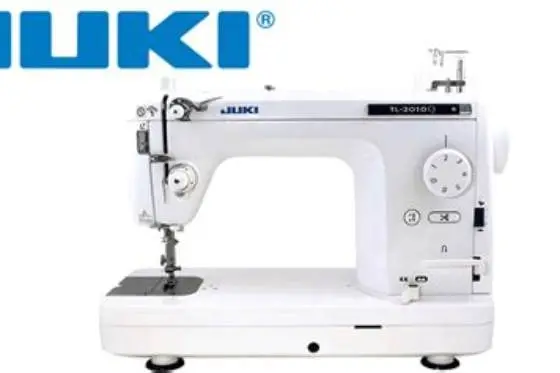
Juki began as an industrial machine maker and that heritage shows. The machines the maker describes as straight-stitch specialists run fast, hold tension evenly through thick seams and keep going for decades. For that kind of sewing, Juki sits at or near the top of its price class.
Juki home machines generally carry fewer built-in stitches than comparably priced machines from Bernette, Janome or Brother. That gap only matters if you would use the extra stitches: alphabets, decorative hemstitches and built-in embroidery designs. If your sewing never leaves straight, zigzag and buttonhole, you will never notice what is missing.
That heritage is the whole story. The rest of this page is about whether your sewing rewards those priorities.
| Sewing task | Juki verdict |
|---|---|
| Quilting and piecing | Excellent - the straight stitch is the whole job |
| Denim, canvas, leather | Excellent - handles thick seams without complaint |
| Everyday garment sewing | Very good, if you can live without fancy stitches |
| Decorative stitches | Poor choice - few built-in designs |
| Built-in machine embroidery | Wrong tool - look at embroidery-specific machines |
What Juki is built for versus what a home seamstress needs
Juki's engineering priorities come from factories: speed, stitch consistency, motor endurance and minimal adjustment. An industrial Juki is designed to run all day making the same straight seam in the same fabric. It does that better than almost anything else at any price. Every part of the design pushes toward that goal: a large motor, a generous arm, feed dogs that grip heavy cloth. The bobbin system is tuned for one thread type done perfectly. We cover how long do sewing machines last in its own article.
A home seamstress needs something different. You switch fabrics in a single session: quilting cotton, then a knit, then linen for a bag. You want a zigzag for stretch seams, a buttonhole for a blouse, maybe an automatic needle threader when your eyes are tired at 11pm. You sew for an hour, then the machine sits under a cover for two weeks. None of that is a factory workload.
Juki adapted its straight-stitch strength for consumer machines. Models like the HZL-F600, HZL-DX7, and TL-2010Q give you zigzag, buttonholes and convenient threading on an industrial-strength frame. The HZL-DX and HZL-HP series handle heavy-duty fabric while adding home-friendly features. What these machines deliberately skip is a big library of decorative stitches or built-in embroidery. So the choice comes down to one trade, and whether it is worth it depends entirely on what is under your presser foot. A quilter piecing hundreds of seams feels the difference every session. A sewist who reaches for the decorative menu every week feels the absence just as often.
Industrial versus home-line Juki: how to tell which one a listing is
This is the single most common confusion in Juki listings, and it changes everything about the purchase. An industrial Juki is a machine head sold with or without an industrial table, a stand and a large servo or clutch motor bolted underneath. It bolts to the table. It usually does one stitch: a straight lockstitch. Models like the DDL-8700 are genuinely professional equipment: heavy, fast and built for factory work. It helps to understand deciding if you need an overlocker before going further.
A home-line Juki looks like a household machine. It sits on any table. It plugs into a normal socket. It has a carrying handle, offers zigzag and buttonholes, and weighs far less than an industrial head. Both are legitimately called Juki, both are well made, and they are for completely different buyers. Juki's lineup changes over time. A model a dealer still stocks is current, and one that only appears second-hand is not, so check the maker's current list before you buy.
Industrial machines run loud: the motor hums at standby and roars at full speed. They need regular oiling, often a few drops on the hook race and other metal points before each session. Home machines are quieter and most are self-lubricating, which surprises first-time industrial buyers who expect a plug-and-go experience.
Check a listing for these tell-tale signs before you commit: There is more on kids sewing machine in a separate guide.
- The phrase 'with table and stand', or a photo showing a pedestal base, means industrial
- 'Head only' on an industrial model means you must budget for a table and motor separately
- A knee lever that lifts the presser foot often suggests industrial
- Zigzag, buttonhole or decorative stitches listed means home line
- A standard wall plug and no pedestal means home line
| Feature | Industrial line | Home line |
|---|---|---|
| Mounting | Bolted to a table and stand | Sits on any table |
| Stitches | Usually straight only | Straight, zigzag, buttonholes, utility |
| Motor | Separate servo or clutch motor | Built into the machine |
| Speed | Very high, foot-pedal controlled | Household speeds |
| Best buyer | Makers, upholsterers, serious quilters | Home sewists and quilters |

YMXFAWO Walking Foot Kit for Brother
Says outright it fits all low-shank machines - Brother, Singer and Janome included - so whatever low-shank machine you own, it feeds quilt layers, denim and knits evenly from top and bottom without the top layer sliding.
One brand name covers two completely different machines, and which Juki is 'good' depends entirely on which side of that line your projects fall.
Recommended models by need
The TL-2010Q is a straight-stitch workhorse made for quilting. The TL line is built for high-speed straight stitching on long pieced seams, and it holds tension across piecing and topstitching.
For bags, upholstery and heavy canvas, try the HZL-DX7 or HZL-DX5. You get straight and zigzag stitches, strong feed and enough presser-foot lift to clear thick seam stacks. You get heavy-duty performance with home convenience.
On a budget, the HZL-F600 offers solid construction, reliable straight stitching and basic utility features at a lower price. It skips the premium touches but keeps the core Juki strength.
The lines differ by what they leave out. The TL line sews one stitch and does it fast. The HZL-DX models add zigzag and utility stitches for home sewing. The HZL-F600 keeps the straight-stitch strength with fewer convenience features, and the HZL-HP line is aimed at heavier home work.
The projects where a Juki is the wrong buy
Machine embroidery is the clearest case. It needs a hoop system, an embroidery arm, a design screen and built-in editing, and the straight-stitch line has none of those. Buy an embroidery machine, not a Juki, for that job.
Craft and novelty sewing is the second case. If you love decorative hemstitches, scallop edges and heirloom stitches on napkins and children's clothes, Juki's limited stitch library will frustrate you within a month. Mid-range home machines from other makers carry far larger libraries at similar prices. For that kind of sewing the stitches are not frills. They are the point.
Two quieter cases deserve a mention. If you sew stretch knits constantly, remember a straight-stitch Juki does not replace a serger. It complements one. You may find your money better spent on the serger first. And if you sew only occasionally, an annual costume or a repair now and then, a full-featured budget machine does all you will ever ask. Juki's strengths would sit idle.
If heavy fabric never crosses your table, the boundary is simple: a full-featured household machine does everything you will ask of it. The Juki's strength would sit idle. Spend the difference on fabric, or on the serger that handles your knits.
What a used Juki's price tells you about its life and parts supply
The used market is where Juki's reputation does real work for you. It answers a question searchers ask constantly: is a second-hand Juki worth it? The short answer is yes. Used industrial Jukis appear frequently on the second-hand market, which suggests parts and service are widely available. Walking-foot and straight-stitch models have been made for decades in enormous quantities. Bobbins, feed dogs, needles, belts and presser feet remain easy to source from dealers and generic suppliers alike.
What a used industrial Juki sells for depends on its condition, its age and what comes with it. It may be a head on its own, a head with a table and motor, or a full setup from a closing shop. Listings vary widely, so compare several in your area before deciding what a fair figure is for the machine in front of you. Servo motors and machine heads are serviceable items. A tech can replace a worn part and return the machine to work. With home machines, age matters more because plastic gearing and discontinued electronics are harder to repair economically.
Check four things before buying used. Does the listing include the table, stand and motor, if it is an industrial model? Does the stitch length dial move and hold? Do the bobbin case and feed dogs show chewed metal? Can you sew a test seam through two layers of denim? A machine that draws an even stitch through folded jeans on the spot is telling you more than any description. Budget for a tune-up from an independent service shop even on a machine that sews: oil, a timing check and fresh needles are cheap insurance.
Which spec-sheet numbers separate a Juki from a cheaper machine
Brand names tell you little on a spec sheet. A few numbers tell you a lot. The first is sewing speed. A high top speed only helps if the machine stays steady at it. Check the figure on the spec sheet of any model you consider. A cheaper machine rated at a modest speed will feel sluggish when you are piecing a quilt top with hundreds of seams.
The second number is presser foot lift, usually given in millimetres. Think four layers of denim at a hem, or quilt top, batting and backing. The lift decides whether the machine swallows that stack or skips stitches across it. Check the figure on any machine you consider before you buy.
Third, look at the arm length and the weight. A longer arm means more quilt or curtain to the right of the needle. More weight generally means less vibration and steadier stitching at speed. Then read the stitch count with a suspicious eye: a budget machine advertising two hundred stitches is selling variety, not capability.
If you are still choosing a machine type, the site's Sewing Machine Matchmaker narrows the type first. The Needle & Thread Finder sorts the needle and thread for the fabric you sew.
- Sewing speed - high ratings only matter if the machine stays steady at speed
- Presser foot lift - millimetres of clearance decide how thick a stack you can sew
- Arm length - longer arms swallow more fabric on quilts and curtains
- Weight - heavier machines vibrate less and stitch more evenly
- Stitch count - treat a huge number as marketing, not capability
| Spec | Why it matters | Cheap-machine tell |
|---|---|---|
| Stitches per minute | Fast, steady seams on long projects | Slow rating, or unstable at top speed |
| Presser foot lift (mm) | Clears thick seam stacks | Small lift, struggles on denim |
| Arm length | Room for bulky fabric | Short arm, cramped quilting |
| Stitch count | Variety only if you use it | Big number used to hide weak basics |
When a Juki earns its place, and when it gets sold on
A Juki bought for straight-stitch work earns its place in the sewing room. The reasons are concrete, not sentimental. The tension stays set through heavy seams, so there is no fiddling. The machine sews through denim and canvas without bogging down. And the stitch quality is the kind that makes topstitching look store-bought, which is a quiet satisfaction every time you hem a pair of jeans.
That same narrow strength is what pushes some sewists away. If machine embroidery becomes your main interest, the Juki has no hoop system to grow into, so it gets sold on. Crafters who live in the decorative-stitch menu swap toward machines built around variety. And a few home sewists find a straight-stitch-only setup too spartan and miss the convenience features: automatic thread cutters, screens, needle-up-down buttons. Mid-range machines bundle those in.
If heavy fabric is your regular work, one inexpensive tool earns its keep alongside any machine: a walking foot attachment for your model. It pulls the top layer through at the same rate as the feed dogs, so slippery or thick stacks stop shifting. The difference is between a quilt binding that lines up and one that ripples. Make sure any foot you buy matches your machine's shank type.
A superb brand for straight-stitch, heavy-fabric and quilting work; the wrong brand for embroidery and decorative sewing.
Still wondering?
Is Juki better than Singer or Brother?
For straight stitching and heavy fabric, usually yes. For stitch variety and beginner-friendly screens, usually no. The table at the top of this page is the comparison: match it to your projects, not the brand logos.
Can a Juki sew stretch fabrics and knits?
Yes. Home-line Juki machines offer zigzag and stretch settings, so you can sew knits with a ballpoint needle (EU/US 80/12) and a stretch stitch. An industrial straight-stitch Juki, however, does only straight seams and is not the tool for knitwear.
Is a used industrial Juki suitable for a beginner?
It can be, with caveats. You need space for the table and stand. The speed takes practice to control, and there are no built-in convenience features. A home-line Juki or a full-featured household machine is usually friendlier as a first machine.
Does a Juki need special needles or thread?
No. Juki machines use standard household needles and common thread weights like 50 wt for general sewing. Size the needle to the fabric, such as 90/14 for denim. Industrial heads use specific needle systems, so check the manual before buying needles for one.
Why are Juki machines so much more expensive than others?
You are paying for motor strength, metal gearing and industrial-grade stitch consistency rather than decorative features. What a new home-line model or a used industrial setup costs depends on the model, its condition and what comes with it. Compare current listings before you judge the figure. The second-hand market for them stays strong because the machines last.
What warranty and dealer support does Juki offer on home machines?
Warranty length varies by model and dealer - check before purchase. An authorized dealer network handles service, though independent sewing-machine techs can also work on them. Parts remain widely available.