How to Sew a Rolled Hem: Three Methods for a Neat Edge
A rolled hem hides the raw edge inside a narrow double fold, usually 1/8 inch (3 mm) wide. Press the edge under twice and stitch close to the inner fold, or let a rolled hem foot fold it for you.
On this page (8 sections)
Part of our guide on best online sewing classes for beginners
Key figures
- Finished hem width
- 1/8 to 1/4 inch (3-6 mm)
- Stitch length
- 2.0 to 2.5 mm straight stitch
- Best needle, sheers
- Microtex sharp 60/8 or 70/10
- Best needle, light cotton
- Universal 80/12
- Thread weight
- 50 wt all-purpose thread
- Practice first
- Always test on a scrap
The short version
- Test every setting on a folded scrap of the project fabric first.
- A 1/8 inch (3 mm) double fold suits sheers and light cotton best.
- Feed slowly and let the foot fold; pulling stretches the edge into a wave.
- Curves, corners and seam crossings need the pressed method, not the foot.
How to sew a rolled hem: the short version
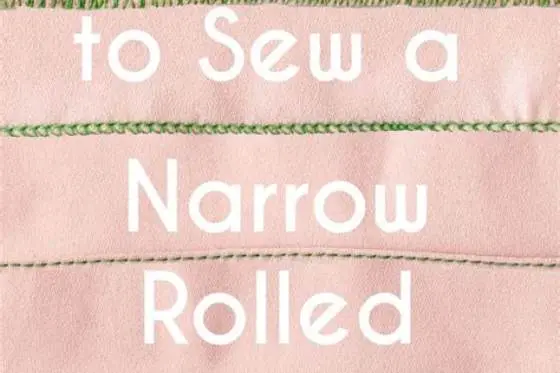
Every rolled hem starts with the same idea: fold the raw edge under twice, so no cut threads show on either side. The finished hem usually measures 1/8 inch (3 mm) to 1/4 inch (6 mm) wide. That small size suits sheer and lightweight fabric best. It keeps a scarf edge light, a blouse hem soft and a ruffle edge clean.
Three methods make the same hem, and the right one depends on the edge in front of you. The pressed double fold needs no special foot and gives you full control over every inch. The rolled hem foot folds the edge for you and suits long straight edges. A serger makes the fastest and tightest version with a three-thread stitch. The table below matches each method to its best edge.
Sew a scrap of the project fabric first, before the garment edge goes under the needle. A scrap shows whether the fold holds, the stitch length suits the fabric and the needle size is right. It costs two minutes and saves a ruined edge. Press the scrap and look at both sides, then sew the real hem with the same settings.
| Method | Best for | Trade-off |
|---|---|---|
| Pressed double fold | Short edges, curves, seam crossings | Slow to prepare, full control |
| Rolled hem foot | Long straight edges on light fabric | Fast once learned, needs practice |
| Serger rolled hem | Sheers, ruffles, many metres of edge | Needs a serger and a settings change |
Setup: needle, thread and stitch length
Fit a fresh needle before you sew, and match it to the fabric. A Microtex sharp needle in 60/8 or 70/10 pierces sheer fabric and silk-like weaves cleanly. A universal 80/12 suits light cotton, linen and lawn. A blunt needle pushes fine threads aside instead of piercing them, and the holes it leaves do not close. It is the cheapest fix in sewing, and it solves more hem problems than any setting. People in this spot often ask about creating invisible hems at home as well.
Match the thread weight to the fabric, and keep the colour close to the cloth. 50 wt all-purpose thread suits most light fabrics and disappears into the fold. Very sheer fabric takes a finer thread, while a heavy thread shows as a ridge along the hem. Re-thread with the presser foot up, so the thread seats in the tension discs. A thread that was never seated properly loops and nests under the fabric.
Set a straight stitch at 2.0 to 2.5 mm and test it on a folded scrap. Shorter stitches grip the fold better, while longer ones let the edge creep out of the roll. Brush lint out of the hook area first. Sew the scrap, press it, and look at both sides. The settings that make the scrap look clean are the settings for the garment.

SCHMETZ Microtex Sharp Sewing Machine Needles
Puts a fresh Microtex 60/8 sharp point in your machine so the needle pierces sheer fabric cleanly instead of shoving the weave aside while you sew the rolled hem.
Method 1: the pressed double fold
This method is the slowest of the three and the most forgiving. You press each fold yourself, so you see the edge the whole time and can fix a wobble before the needle reaches it. It needs no special foot and no serger, only an iron and a straight stitch. Curves, corners and seam crossings all work here, because you control the fold inch by inch. People in this spot often ask about make a pillowcase with cuff as well.
Pressing decides the result more than stitching does. A fold pressed flat stays put under the needle, while a fold held by pins alone shifts as the foot pushes it. Press the first fold, then the second, and let the iron do the work. Hold the iron still for a few seconds instead of sliding it, so the fold sets without stretching the edge.
Corners and seam crossings are where this method earns its keep. Stop half an inch before a bulky seam, stitch the flat fold down with the standard foot, and start again on the other side. At a corner, sew to the end, lift the needle, turn the work and fold the next edge by hand. The result will not match a foot-made hem for speed, but it will match it for neatness.
- Trim the raw edge straight, then press it under 1/8 inch (3 mm) to the wrong side.
- Press the fold under a second 1/8 inch (3 mm), so the raw edge sits inside the fold.
- Pin the fold every few inches on long edges, with the pins at right angles to the fold.
- Set a straight stitch at 2.0 to 2.5 mm and sew a test fold on a scrap.
- Stitch close to the inner fold, with the needle just inside the folded edge.
- Press the finished hem from the wrong side and check both sides before you move on.
Most rolled hems fail at the first inch, not the last, and the fix is in how you start the fold.
Method 2: the rolled hem foot
Inside the foot, a curled metal scroll folds the raw edge twice as the fabric feeds through. The needle stitches close to the inner fold while the scroll holds the roll in shape. Feet come in several widths. The width marked on the foot is the hem it makes. A 1/8 inch (3 mm) foot suits most light fabrics. Makers sell narrow hem feet in a few widths, so check the foot's own listing for its width and the fabrics it suits. We cover how to sew an invisible zipper in its own article.
Starting the hem is the part that trips most people up. Fold the first inch of the edge under twice and press it flat. Place the fold under the foot, lower the needle into the fabric, and sew a few stitches. Lift the foot with the needle still down, then use tweezers or a pin to feed the fold into the scroll. Sew slowly, and the rest of the edge follows once the roll is running.
Feeding takes a light touch and a steady pace. Guide the raw edge into the scroll with your left hand and let the feed dogs move the fabric. Do not pull the fabric through the foot, because pulling stretches the edge into a wave. If the fabric slips out of the scroll, stop with the needle down, lift the foot, and feed the fold back in.
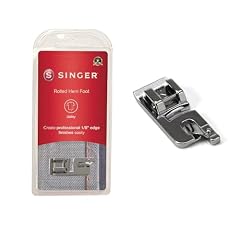
SINGER® Narrow Rolled Hem Presser Foot for Low-Shank Sewing Machines
Its curled scroll double-folds the raw edge to a 1/8 inch hem as the fabric feeds, so your rolled hem stays narrow and even without pressing every inch of it.
Method 3: the zigzag wrap and the serger rolled hem
The zigzag wrap needs no special foot at all, only a machine that sews a zigzag. Fold and press the edge under 1/8 inch (3 mm) to the wrong side. Set a wide zigzag stitch and a short stitch length. Place the folded edge against the needle. One side of the zigzag should land on the fold, and the other side should fall just past the raw edge. The thread wraps the edge as you sew, and the result looks like a tiny corded hem. We go through table runner sewing step by step elsewhere on the site.
A serger makes the fastest rolled hem of all, with a three-thread stitch that wraps the edge in looper thread. Switch the serger to its rolled hem setting, which usually means removing one needle and moving a lever or dial. Your serger manual shows the exact steps, because the setting differs from one machine to the next. If the hem pulls away from the fabric, widen the stitch and lengthen it a little. The serger suits long edges on sheers and ruffles, where a sewing machine hem would take all afternoon.
Choose the zigzag wrap when you have no foot and no serger, and the serger when you have metres of edge to finish. The zigzag hem is the most visible of the three, so it suits edges where a thread-wrapped finish looks right. The serger hem is the neatest and the quickest, and it trims the edge as it sews.
Troubleshooting: wavy hems, skipped stitches and bulky seams
Waves in the hem usually mean the fabric was pulled or stretched while it fed through. Slow down, guide the edge without pulling, and let the feed dogs move the cloth. Shorten the stitch a little and press the hem again from the wrong side. If the wave stays after pressing, unpick the section and sew it again.
Skipped stitches point at the needle first. Fit a new needle in the right size, re-thread with the presser foot up, and check the bobbin is the right one for your machine. Brush lint out of the hook area, because lint under the bobbin changes the tension. A problem that survives a new needle, a fresh re-thread and a clean hook area belongs to a technician, not to another settings change.
Bulky seams and sharp corners need the pressed method, not the foot. Stop half an inch before a seam, stitch the fold flat with the standard foot, and start again past the seam. At a corner, sew to the end, lift the needle, and fold the next edge by hand before you carry on. The foot scroll cannot climb a seam or turn a sharp corner, and forcing it only jams the edge.
Still wondering?
Can I sew a rolled hem without a special foot?
Yes. Press the edge under 1/8 inch (3 mm) twice, pin the fold, and stitch close to the inner fold with a straight stitch. The pressed method needs only an iron and a standard foot. It is slower than the foot method, but it gives you full control over curves, corners and seam crossings.
What stitch length should I use for a rolled hem?
Use a straight stitch at 2.0 to 2.5 mm for the folded methods and the rolled hem foot. Shorter stitches grip the fold better, while longer ones let the edge creep out. Test the length on a folded scrap first, and keep the length that holds the edge without puckering the fabric.
Why does my rolled hem look wavy?
A wavy hem usually means the fabric was pulled as it fed through the machine, or the edge was stretched while pressing. Slow down, guide the edge without pulling, and shorten the stitch a little. Press the hem from the wrong side when you finish. A bias edge waves more easily, so handle it lightly.
Can I sew a rolled hem on a curved edge?
Yes, with the pressed double fold method. Press the fold in short sections and ease the fabric around the curve instead of forcing it flat. The rolled hem foot struggles on curves, because the scroll needs a straight edge to feed evenly. Take your time and press often.
What is the difference between a rolled hem and a narrow hem?
The terms overlap, and many sewists use them for the same finish. A rolled hem usually means the edge curls into a tiny tube, while a narrow hem often means a flat double fold. Both finish at about 1/8 inch (3 mm) wide. The method matters more than the name.