Fabric paint on denim: dry to touch, dry to wash, and the gap
Wait 72 hours before washing fabric paint on denim. Thin coats feel dry in 1 to 4 hours, and you can handle the piece after 24 hours. The paint only bonds fully after three days, so heat-set first if your paint asks for it.
On this page (8 sections)
- The short version
- The wait: how long does fabric paint take to dry on denim before washing
- Denim slows drying: weight, weave, and a thirsty surface
- Coats: thin layers dry fast, thick paint waits days
- Humidity and heat: the room sets the clock
- Heat setting: when it helps, and how to do it
- The first wash: test, wash, and what early washing costs
- Still wondering?
Part of our guide on fabric markers for black fabric
Key figures
- Dry to touch
- 1 to 4 hours, thin coats
- Safe to handle
- 24 hours
- Wash-safe
- 72 hours, 48 for SoSoft
- Heat-set iron
- 3 to 5 minutes, no steam
- First wash
- Inside out, cold, gentle
- Thick paint
- A day per layer
The short version
- Thin coats feel dry in 1 to 4 hours; thick or dimensional paint needs a full day.
- Handle painted denim after 24 hours, and wait 72 hours before the first wash.
- Heat-set only after the paint feels dry right through, never while it feels cool or tacky.
- Humid or cold rooms stretch every stage, so move the piece somewhere warm and dry.
- Wash the first time inside out, cold water, gentle cycle, then line dry.
The wait: how long does fabric paint take to dry on denim before washing
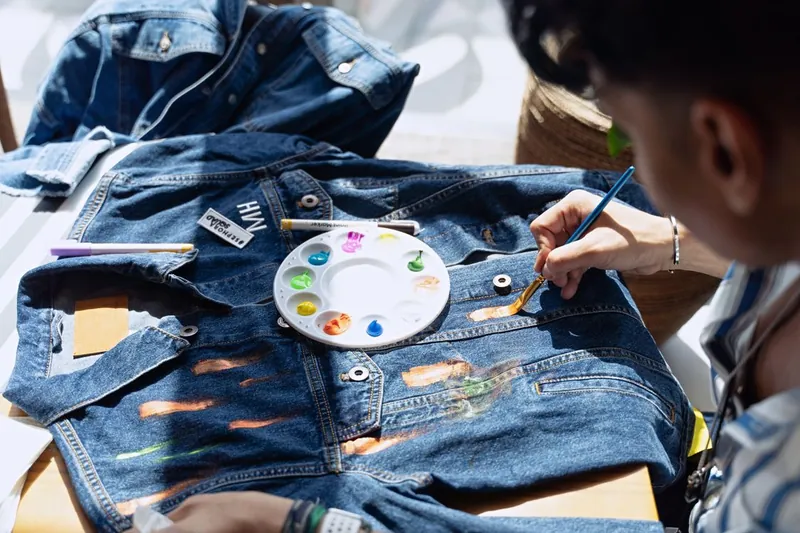
How long does fabric paint take to dry on denim before washing? Give it 72 hours from the last coat. That figure comes from Tulip, whose Soft and Dimensional paints both say to wait 72 hours before washing. Thin coats feel dry much sooner, often in 1 to 4 hours, and that early dryness fools plenty of people. Touch-dry paint still holds water deep down, and water is what a wash attacks first.
Think of drying as three separate thresholds. Dry to the touch means the surface no longer sticks to your finger. Dry to handle means you can fold the denim without leaving a mark. Wash-safe means the paint has bonded into the fibres and can take water, soap and movement. Each threshold arrives on its own clock, and the last one matters most. You can wear the piece after a day, once the paint feels dry and firm.
Your paint's own label beats any general figure. DecoArt SoSoft says its paint is washable after 48 hours. Jacquard Textile Color asks for a full day of drying before you iron it, and some of its paints cure alone in 72 hours. A soft brush-on paint made for fabric suits denim best, since it dries flexible and moves with the cloth. When two sources disagree, take the longer wait.
| Stage | Thin coat | Thick or dimensional coat |
|---|---|---|
| Dry to the touch | 1 to 4 hours | 4 to 6 hours, longer in damp air |
| Safe to handle | 24 hours | 24 hours or more |
| Ready to heat-set | 24 hours | A day per layer, then test |
| Safe to wash | 72 hours | 72 hours, then gentle cycle |

Tulip Brush-On Fabric Paint
No drying-time figure printed; 'follow package directions' only.
Denim slows drying: weight, weave, and a thirsty surface
Denim drinks paint. Its cotton yarns are thick, its twill weave packs them tight, and the cloth holds far more water than a light cotton shirt. Paint sinks into those yarns instead of sitting on top, so the surface can look dry while the inside stays damp. A thin tee dries fast because there is little cloth to hold water. Denim keeps the water and lets it go slowly. We cover best fabric to paint on in its own article.
The same weight that slows drying also helps the paint last. Thick yarns give the paint plenty of fibre to grip, and the twill ridges hold a thin coat in place. That grip is why denim takes paint so well once the paint has cured. Rushing the cure wastes that advantage, since paint that has not bonded yet lifts off the ridges first. Patience here is not fussiness, it is the step that makes the work last.
Prewash the denim before you paint. New denim carries sizing, a stiff finish from the mill, plus dye and dust that sit between paint and fibre. Tulip's own instructions say to prewash and skip fabric softener, since softener leaves a coating that blocks the bond. Wash in warm water with plain detergent, dry the piece fully, then press it flat. Skip this step and the paint may peel after the first wash, even if you waited the full 72 hours.
Coats: thin layers dry fast, thick paint waits days
One thin coat beats two thick ones. A thin coat lays a fine film over the yarns, and air reaches all of it at once. Paint goes on smooth, dries evenly and stays flexible when the denim bends. Thick paint skins over on top while the layer below stays wet. That is why a raised design can feel dry and still dent under a finger. Brush it on in light passes and let each coat dry first. We go through keeping color flexible after washing step by step elsewhere on the site.
Count the wait per coat, not per project. Tulip Soft asks for one or two coats with drying between them, then 4 hours flat before the piece moves. Dimensional or puff paint is slower. Dimensional paint needs roughly a day per layer to dry right through, so a raised line needs two days or more. Add a second thick coat before the first has dried and the clock starts again. Three thin coats will beat one heavy coat every time.
Thin coats also keep the paint from cracking. Denim bends at knees, elbows and pocket edges, and a thick film cannot bend with it. Cracks start at the thickest spots and spread with wear, while a thin film flexes with the cloth. If a design needs bold colour, build it in thin layers and let the colour deepen coat by coat.
Dry to the touch is not dry to wash, and the gap between the two is where most painted denim gets ruined.
Humidity and heat: the room sets the clock
Water leaves paint only as fast as the air can take it. Warm, dry air with a light draught pulls water out of the film hour by hour. Cold air holds less water, so a cold room slows drying even when it feels dry to you. Humid air is worse: the air is already full, so water stays in the paint. A bathroom after a shower is the worst drying room in the house. The other half of this decision is steps for translucent fabric painting.
Give the piece the driest room you have. Lay it flat in a warm room with the window cracked open or a fan running nearby. Keep it out of direct sun, which can fade colour and dry the surface too fast. Turn the piece once the top feels dry, so the underside gets air too. In a damp week, add a full day to every stage in the table above.
Heat helps only in small doses. A hairdryer on its lowest warm setting, held well back and kept moving, can speed the surface dry, but it cannot cure the paint underneath. High heat on wet paint sets the skin hard while the inside stays wet, and the design cracks later. Moving air beats a heater for this job, since it carries water away without cooking the surface. If the room feels cold and damp, wait longer rather than forcing the dry.
Heat setting: when it helps, and how to do it
Pressing melts the paint's binder into the fibres, and that bond is what survives the wash. Some paints need heat, and some cure as they dry with no iron at all. Jacquard Textile Color and most paints made for heat setting do need it, and skipping the step leaves colour that fades fast. Check your bottle and follow what it says about heat. When the label calls for pressing, press only after the paint has dried right through. When it calls for waiting only, give it the full cure time instead.
Wait until the paint feels dry right through before you press it. Ironing damp paint traps water under a hard skin, and the bond underneath stays weak. Press a hidden corner first: if it feels cool or tacky, give it another day. The iron should never touch wet paint. A pressing cloth also stops shine on dark denim, and it keeps stray paint off the soleplate. Golden Paints gives the same advice for its medium, which turns acrylic into fabric paint. Wait a day, then iron the reverse side for 3 to 5 minutes with a medium-hot iron.
- Let the paint dry flat for 24 hours, then test a hidden corner for tackiness.
- Turn the denim inside out or lay parchment paper over the painted side.
- Set the iron to the cotton setting with no steam.
- Press each part of the design for 3 to 5 minutes, keeping the iron moving.
- Let the piece cool fully, then leave it alone until 72 hours have passed since painting.
The first wash: test, wash, and what early washing costs
Test the set on a scrap first, not on the jacket. Paint a spare piece of the same denim at the same time as the real piece, and treat it the same way. When the wait is over, rub the scrap hard with a damp white cloth. If no colour comes off and the surface feels firm, the real piece is ready. If colour lifts or the paint feels soft, give both pieces another day. A scrap costs nothing and saves the piece you care about.
Wash too early and the paint pays for it. Water gets under paint that has not bonded yet, and the wash pulls colour out in pale patches. Edges lift first, then whole shapes peel or crack, and the colour can stain the rest of the load. Once paint has lifted, no amount of ironing puts it back. The fix is a fresh coat and the full wait all over again.
For the first wash, turn the piece inside out and use cold water on a gentle cycle with mild detergent. The inside-out fold shields the paint from rubbing in the machine. Hand washing works too: soak the piece briefly in cold water with mild detergent, then rinse and line dry. Skip bleach and fabric softener on painted denim, and line dry instead of tumble drying hot. Later ironing is fine on the reverse side or under a pressing cloth, once the paint has cured. If you plan to sew through the painted area later, the Needle & Thread Finder on this site picks the needle and thread for denim.
Still wondering?
Can I wash painted denim after 24 hours?
No, not if you want the colour to last. The paint feels dry after a day, but the bond underneath is still forming. Tulip labels say to wait 72 hours, and DecoArt SoSoft says 48 hours. Follow your paint label, and take the longer wait when labels disagree.
Does fabric paint need heat setting on denim?
It depends on the paint. Some paints set as they dry and never see an iron. Jacquard Textile Color and most heat-set paints do need pressing after a full day of drying. Your bottle names the iron setting to use, so follow it rather than guessing.
How can I tell if the paint is dry enough to wash?
Rub a painted scrap hard with a damp white cloth. If no colour comes off and the paint feels firm, not cool or tacky, the piece is ready. Test the thickest part of the design, since that dries last. When in doubt, wait another day.
Why did my fabric paint crack on denim?
Thick coats are the usual cause. A heavy layer skins over while the inside stays wet, then cracks as the denim bends. Paint in thin coats, let each one dry, and keep the first wash gentle. Cracking can also follow an early wash or ironing while the paint was still damp.
Should I prewash denim before painting it?
Yes. New denim carries sizing and dye that sit between paint and fibre, and fabric softener leaves a coating that blocks the bond. Wash in warm water with plain detergent, dry fully, and press flat before you paint. Clean denim grips paint far better than sized cloth.