Throw quilt size in inches: cut sizes that cover an adult lap
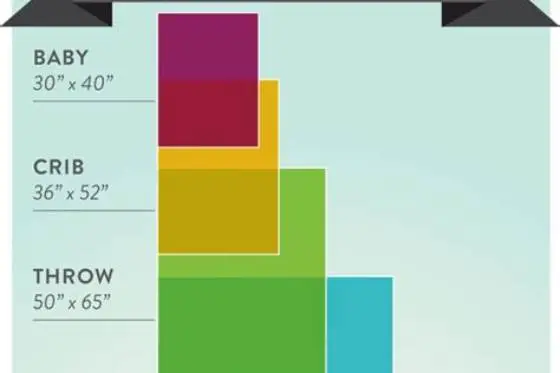
A throw quilt for an adult finishes at 50×65 inches (127×165 cm). That gives about 10 inches of overhang on each side and 15 inches down the legs while sitting. It's enough to tuck in without feeling tight. Go to 60×72 inches if you're tall or want more drape.
On this page (8 sections)
- The short version
- What counts as a throw quilt versus lap, crib or twin
- The working finished size for an adult throw and how much overhang that gives
- Why published standards range from 50×60 to 60×72 and which end suits a tall adult
- Cut sizes and seam allowance math to arrive at the finished figure
- How much fabric and batting a throw of that size needs
- Whether a throw size changes for a child, chair back or wall hanging
- Still wondering?
Part of our guide on sewing machine for quilting
Key figures
- Standard throw size
- 50×65 inches (127×165 cm)
- Tall adult throw
- 60×72 inches (152×183 cm)
- Seam allowance
- ¼ inch per seam, ½ inch total per block
- Backing overage
- 4 inches larger on all sides
- Batting for 50×65
- 58×73 inches minimum
- Yardage for backing
- 4⅛ yards at 44-inch width
The short version
- A throw quilt finishes at 50×65 inches for an adult lap with comfortable overhang on the sides and legs
- Add ½ inch per seam to your cut size: a 10-inch finished block cuts at 10½ inches square
- Buy backing and batting larger than the quilt top, with room for quilting shift
- Throw and lap quilt overlap, but throw usually means 50 to 65 inches wide, while lap quilts run smaller at 36 to 50 inches
- Choose the larger end of the range if you're tall or want extra drape
What counts as a throw quilt versus lap, crib or twin
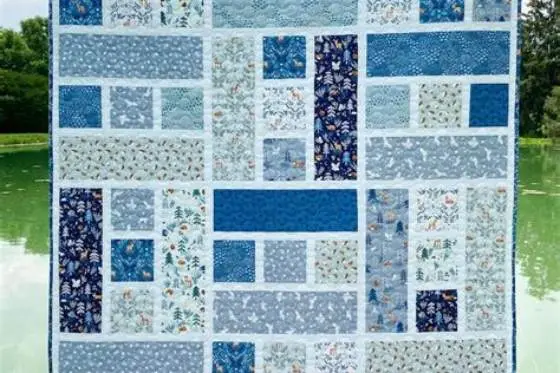
A throw quilt for an adult finishes between 50 and 65 inches wide and 60 to 72 inches long. It's sized to cover an adult sitting in a chair or on a sofa. There's enough fabric to drape over the lap and tuck around the sides. The name comes from throwing it over yourself rather than making a bed with it. It drapes rather than tucking under a mattress.
Lap quilts run smaller, usually 36 to 50 inches square or slightly rectangular. They're meant for one person sitting still, often in a wheelchair or recliner. Crib quilts finish around 36×52 inches, sized for a cot mattress with minimal overhang. Twin quilts start at 70×90 inches, so they're much larger than a throw.
Retail blankets labelled 'throw' measure 50×60 inches, the lower end of the range. Quilt patterns often call anything between a lap and a twin a throw, so the size depends on the pattern you follow, not a standard. The difference is use: a throw covers your lap and legs while sitting, and a twin covers a bed. Size follows use, not the label on the package.
The working finished size for an adult throw and how much overhang that gives
At 50×65 inches, a finished throw gives you 10 inches of overhang on each side. It gives about 15 inches down your legs past your waist while sitting. That's enough to tuck the sides against your hips. The bottom edge rests halfway down your shins. People in this spot often ask about measure frame clearance for king quilt as well.
If you're over six feet tall or want more drape, go to 60×72 inches. That adds 5 inches to the width. It adds 7 inches to the length so the bottom edge reaches your ankles. Larger quilts use more batting and take longer to quilt, but cover more when you're stretched out on a sofa.
Overhang matters because a narrow throw slides off your sides when you move. One that's too short leaves your legs cold. Quilts shrink slightly after the first wash, so allow for some shrinkage in your plan.
Measure your own hip-to-hip width while sitting, then decide how much overhang you want on each side. Ten inches per side suits most adults. Add more if you want deeper tucks around your hips. Your chair matters too: a deep armchair needs more drape than a straight dining chair. If that sounds like your situation, read up on how much fabric do I need for a quilt next.
| Finished size (inches) | Width overhang per side | Leg coverage from waist | Best for |
|---|---|---|---|
| 50×60 | 10 inches | To mid-shin | Compact lap coverage, shorter adults |
| 50×65 | 10 inches | To lower shin | Standard adult throw, most versatile |
| 60×72 | 15 inches | To ankles | Tall adults, extra drape over chair arms |
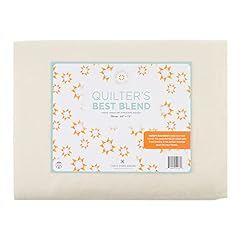
Quilt Batting for Throw Blankets
Covers a 50x65-inch throw top with room to spare: a pre-cut 65 in x 72 in batt that is low loft, so the finished throw drapes instead of standing up stiff.
Why published standards range from 50×60 to 60×72 and which end suits a tall adult
There's no single standard for throw quilts. Charts list anything from 50×60 to 60×72 inches. Different sources answer different questions. These sizes are conventions from retail blankets, guild charts and pattern designers, not a standard. Quilt patterns more often publish 50×65 or 54×72 inches, because quilters want better leg coverage than a store blanket gives.
Width reflects how much side drape you want. 50 inches covers your lap with a moderate tuck. 60 inches lets the quilt hang over chair arms or wrap around your shoulders. Length depends on height. 60 inches works for someone five feet tall, and 72 inches suits someone six-foot-two.
Over six feet tall? Start with 60×72 inches. Between five-foot-four and five-foot-ten, 50×65 inches is the working size most quilters land on. For a child over eight, drop to 45×60 inches. We go through quilt sizes chart step by step elsewhere on the site.
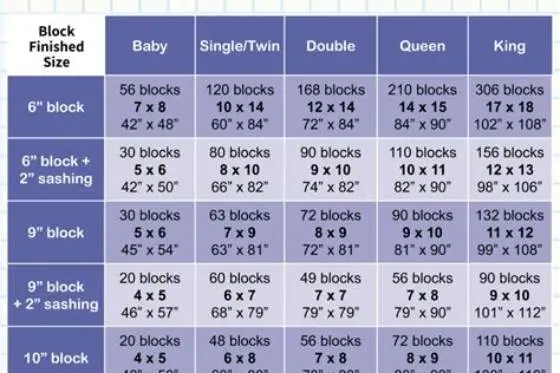
Block size drives the numbers too. Quilts from 12-inch blocks finish at different dimensions than those using 10-inch blocks. Quilters choose sizes that divide evenly rather than forcing partial blocks or filler strips. Five by six of 10-inch blocks finishes at 50×60 inches. Five by seven finishes at 50×70 inches.
- 50×60 inches: matches retail throw blankets, suits compact lap coverage and smaller adults
- 50×65 inches: most versatile for adults five-foot-four to five-foot-ten, roughly 10 inches of overhang per side
- 54×72 inches: common in guild patterns, good for taller adults or more drape
- 60×72 inches: for adults over six feet, or extra drape over chair arms
Most throw quilt patterns land between 50×60 and 60×72 inches because lap coverage depends on how much overhang you want, not a single standard size.
Cut sizes and seam allowance math to arrive at the finished figure
Every seam takes ¼ inch of fabric on each side, so a finished block loses ½ inch from its cut size. One 10-inch finished block cuts at 10½ inches square. 12-inch blocks cut at 12½ inches. That ½-inch loss applies to width, height, and any pieced units inside the block.
To build a 50×60-inch throw from 10-inch finished blocks, you need 5 blocks across and 6 blocks down, 30 blocks in total. If you're piecing blocks from smaller units, each unit needs its own seam allowance added first.
For sashing or borders, the same rule applies: 2-inch finished sashing cuts at 2½ inches wide, and 4-inch finished borders cut at 4½ inches wide. Measure the quilt top after sewing the blocks together, then cut borders to that length plus ½ inch for seam allowance. Measure through the center, not the edges, which often stretch.
Press seams as you go so each block measures true before you join it to the next one. A block that finishes even ⅛ inch small pulls the whole row short, and the error shows up at the border.
- Decide your finished and block sizes. Check the quilt size divides evenly by the block size.
- Add ½ inch to the finished block size to get the cut size.
- Multiply blocks across by blocks down for the total. A 5×6 layout needs 30 blocks.
- If piecing blocks, add ½ inch to each unit's finished size first.
- Sew the blocks into rows, then join the rows. Press seams to one side, alternating direction.
- Measure the finished top through the center, both directions.
How much fabric and batting a throw of that size needs
For a 50×65-inch throw, backing needs to be at least 58×73 inches. That allows 4 inches of overage on all sides. Batting should match or run slightly larger. The extra fabric stops the backing pulling short as you quilt.
Quilt backing comes in widths of 44 inches (standard quilting cotton), 90 inches (wide backing) or 108 inches (extra-wide backing). For a 50×65-inch throw, one length of 44-inch-wide fabric won't cover the width. Piece the backing from two lengths, or buy wide backing.
Buy 4⅛ yards of 44-inch-wide fabric for a pieced backing on a 50×65-inch throw. Cut two lengths of 73 inches each (about 4⅛ yards total). Remove the selvages, then sew them together along one long edge with a ½-inch seam. Trim the pieced backing to 58×73 inches, centering the seam down the middle of the quilt back.
With 90-inch-wide backing, buy 2¼ yards and you're done: no piecing needed. Batting is sold by the size it suits: crib, throw, twin, queen, king. Pre-cut batting is sold in throw and twin sizes: check the package dimensions against your quilt top plus 4 inches per side before buying.
| Finished quilt size | Backing size (with 4-inch overage) | Yardage at 44-inch width | Yardage at 90-inch width | Pre-cut batting size |
|---|---|---|---|---|
| 50×60 inches | 58×68 inches | 3¾ yards (pieced) | 2 yards | Throw size |
| 50×65 inches | 58×73 inches | 4⅛ yards (pieced) | 2¼ yards | Throw size |
| 60×72 inches | 68×80 inches | 4½ yards (pieced) | 2½ yards | Twin size |

ROC-lon® 100% Cotton, 108" Wide, Preshrunk, Lightweight, Quilt Backing Fabric
Backs a 50x65 throw from one 108 in wide piece — a 3 yd cut (108 in x 108 in) wide enough that no seam runs down the middle and nothing has to be pieced from 44 in goods.
Whether a throw size changes for a child, chair back or wall hanging
Throws for children under eight should be smaller, around 45×60 inches, so they don't drag on the floor or tangle around legs. Chair-back throws only need to cover the backrest. Wall hangings are sized to fit the wall space and the design, not a person.
For chair backs, measure from the top of the backrest to the seat. Add 4 to 6 inches so it hangs down slightly without touching the floor. Measure the chair-back width and add 2 inches per side for drape. Dining chairs might need 20×30 inches, armchairs 30×40 inches.
Wall hangings are judged by the space and the design. One large medallion might be 40×40 inches square. Vertical designs with stacked blocks might run 30×60 inches. Measure the wall space and subtract 6 to 12 inches on each side so the quilt doesn't crowd the wall.
Quilting density and batting loft change too. Batting makers publish a maximum quilting distance per loft. For wall pieces, staying well inside it keeps the batt from shifting. Use low-loft batting (⅛ to ¼ inch thick) so the quilt hangs flat.
- Child's throw: 45×60 inches, so it doesn't drag on the floor; high-loft batting for warmth
- Chair back: 20×30 inches for a dining chair, 30×40 inches for an armchair, with a few inches of drape
- Wall hanging: any dimension that fits the wall space and design; low-loft batting, closer quilting
Still wondering?
Do I need to prewash fabric before cutting a throw quilt?
Prewash if you're mixing fabrics that might shrink at different rates (cotton and flannel, for example), or using dark reds or blues that might bleed. If all your fabrics match and you'll wash the finished quilt in cold water, you can skip prewashing. Expect some shrinkage after the first wash.
Can I make a throw quilt without sashing or borders?
Yes. Sew blocks edge to edge and the quilt finishes at the total size of the blocks. A 5×7 layout of 10-inch blocks finishes at 50×70 inches with no sashing. Borders add size and frame the design, but they're optional. Without them, bind the quilt directly to the edge of the blocks.
What happens if my seam allowance is slightly off?
Any seam ⅛ inch wider or narrower than ¼ inch changes the finished block size by ¼ inch. Over a five-block row, that's 1¼ inches of error. Your quilt will still work, but it may finish short. Check your seam allowance by sewing two 2½-inch strips together and pressing. The pair should measure exactly 4½ inches wide.
How much binding do I need for a 50×65-inch throw?
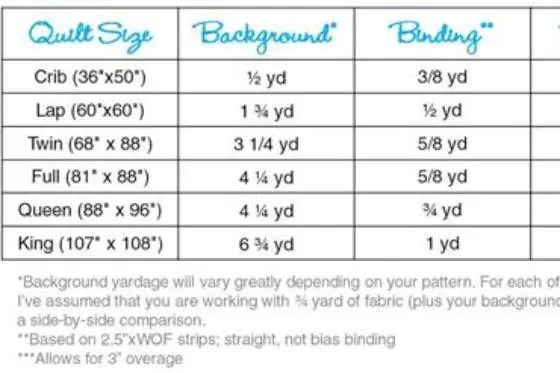
Binding runs around the perimeter: 230 inches for a 50×65-inch quilt (50+65+50+65). Add 10 inches for joining the ends and cornering, so 240 inches total. Cut 2½-inch-wide strips and join them end to end. That's about 6 strips at 44 inches each, or roughly ⅔ yard of fabric.
Can I use a throw quilt on a twin bed?
It covers the top of a twin mattress but doesn't drop over the sides. It doesn't reach the foot of the bed the way a proper twin quilt does. It works as a decorative top layer, or for a child who sleeps still. It's too small for an adult who wants full coverage. A twin quilt finishes at 70×90 inches minimum.