Which fabric markers survive washing on denim
Paint-based fabric markers stay on denim after washing. Tulip fabric markers and Posca paint pens hold their colour through gentle washes once dry, while dye-based markers fade fast. Pre-wash the denim, let the marks dry fully, and heat-set paint pens with an iron.
On this page (9 sections)
- Fit check
- The short version
- The short answer: fabric markers that stay on denim after washing
- Ink types: paint, dye and alcohol on denim
- Pre-wash: why clean denim takes marker better
- Heat-setting: the iron step that locks paint pens in
- Washing marked denim without fading it
- Testing on a hidden hem before you commit
- Still wondering?
Part of our guide on choosing fabric marker tips

Zenacolor - 40 Fabric Markers Permanent for Clothes - Fine
Your denim is washable the very next day: the maker states a 24-hour dry time with no ironing, and the ink is
Check it on Amazon
Fine-tip lettering on denim with no ironing stage at all — the ink is air-set and the maker asks for 0
See this alternative
U.S. Art Supply Super Markers 20 Vibrant Dual Tip Fabric Markers
Covers both fine outlines and broad chisel fills on denim, and the pack tells you to air-cure at least 24
See this alternative| Product | heat-set iron time (minutes) | Verdict | |
|---|---|---|---|
| Zenacolor - 40 Fabric Markers Permanent for Clothes - Fine Point | Zenacolor | 24 h stated dry time before washing vs a 24 h limit — meets it exactly, no iron needed | Meets it | View on Amazon |
| Tulip Fine-Tip Fabric Markers TULIP | no wash wait printed; no heat setting required means 0 min iron time, inside the 3 min limit | Meets it on fallback | View on Amazon |
| U.S. Art Supply Super Markers 20 Vibrant Dual Tip Fabric Markers U.S. Art Supply | at least 24 h air-cure before wearing and washing vs a 24 h limit — meets it | Meets it | View on Amazon |
| Tulip Dual Tip Fabric Markers 14 Pack TULIP | no wash wait printed; no heat setting required means 0 min iron time, inside the 3 min limit | Meets it on fallback | View on Amazon |
| TULIP-33701 Fabric Paint Markers Rainbow 15 Pack, for Permanent Color TULIP | no wash wait printed; no heat setting required means 0 min iron time, inside the 3 min limit | Meets it on fallback | View on Amazon |
Key figures
- Best ink type
- Paint-based pigment
- Tulip first wash
- Once dry, warm wash
- Posca fixing
- Iron from the reverse
- Sharpie fabric markers
- No heat setting needed
- Wash marked denim
- Cold, inside out, gentle
- Pre-wash
- Warm water, no softener
The short version
- Pick paint-based pigment markers; dye and alcohol inks fade in the wash.
- Pre-wash the denim and skip fabric softener before you mark it.
- Let marks dry fully, and iron-set Posca paint pens once dry.
- Wash marked denim on a gentle cycle and line dry it.
The short answer: fabric markers that stay on denim after washing
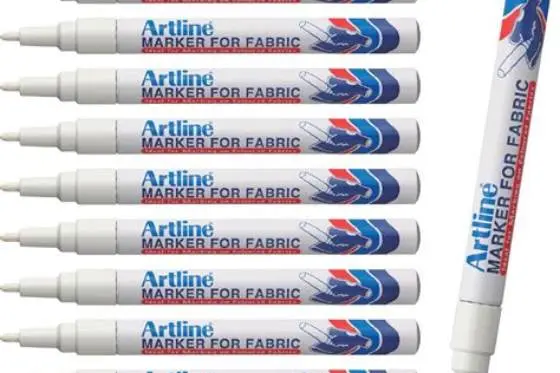
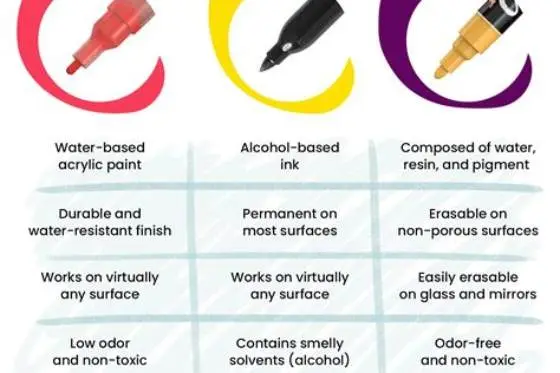
Paint-based markers stay on denim after washing. Their pigment sits on the cotton fibres, so gentle washing leaves the colour alone. Dye-based markers fade faster, since their colour lifts out in the wash. Alcohol inks look bold on day one, then lift gradually with repeated washing, faster in hot water or with harsh detergent. Pick the ink type first.
Tulip fabric markers are the pick for most denim projects. They are made for fabric and need no heat setting. Wash them in warm water on a gentle cycle once the marks have dried fully. They come in multi-colour packs with a fine tip for lettering; check the label for pack contents. On light and mid-wash denim the colours stay bright.
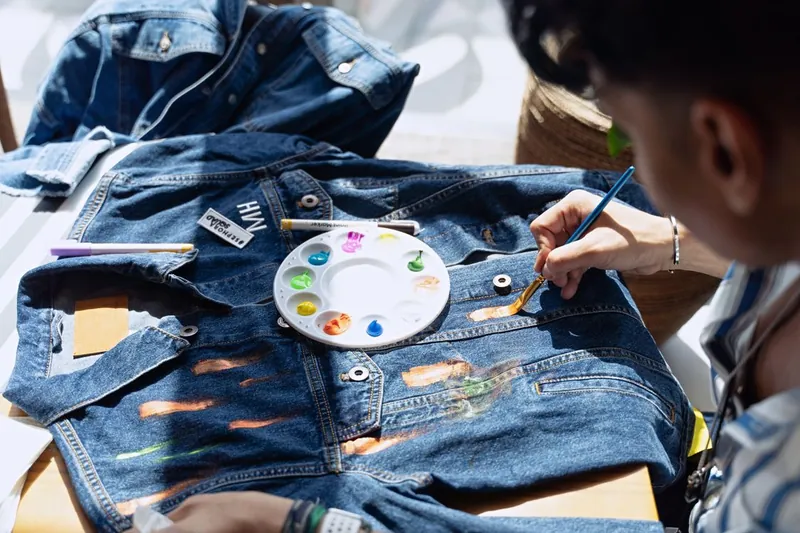
Posca paint pens are the upgrade when the denim is dark. Their acrylic paint sits on top of the cloth in an opaque layer, so white and pale colours read clearly on indigo. The trade-off is the setting step: let the paint dry, then iron-set the piece. Skip that step and the paint flakes off in the wash.
This page walks through the choices in order. You will see how each ink behaves, why a pre-wash matters, and how to set the mark so it survives the machine. A swatch test at the end saves the jacket you actually care about. For the detail, see our notes on fabric markers vs acrylic paint on felt.
Ink types: paint, dye and alcohol on denim
A paint-based marker carries pigment in a binder that dries into a thin film on the fibre. The film grips the fibre, so cold water has less to lift. No maker states a wash count, so judge by ink type and setting, not by cycles. Look for the words pigment, acrylic or opaque on the label. A pen that only says permanent tells you nothing about wash survival.
Dye-based markers work the other way. Their colour soaks into the fibre and stains it, the way tea stains a cloth. The stain looks strong at first, then lightens a little with each wash. On denim the effect is worse, since the twill weave gives the dye channels to travel along.
Alcohol markers are the third kind, and the weakest on fabric. Standard permanent markers use alcohol ink, which dries in seconds and sits on the surface. Water and detergent lift it a little at a time, so a bold line fades to grey over a handful of washes. Stained by Sharpie is the maker's fabric line, made for cloth where standard Sharpies are not. There is more on fabric paint drying stages for denim in a separate guide.
Try a water-drop test on scrap denim to see the difference without risking a project. Draw a short line with each marker, let it dry, then set one bead of water on it. Paint-based ink holds its edge while the bead sits there. Dye-based ink feathers outward from the wet spot. Test every colour you plan to use, since one shade can hold while the next one fades.
- Paint-based: pigment film grips the fibre, survives cold washes
- Dye-based: colour soaks in and lightens a little each wash
- Alcohol: dries fast, lifts off the fibre in the wash
| Ink type | How it sits on denim | After washing | Needs heat setting |
|---|---|---|---|
| Paint-based pigment | Thin film on the fibre | Holds colour in cold water | Some pens, see the label |
| Dye-based | Soaks into the fibre | Fades a little each wash | No |
| Alcohol | Sits on the surface | Fades to grey over washes | No |
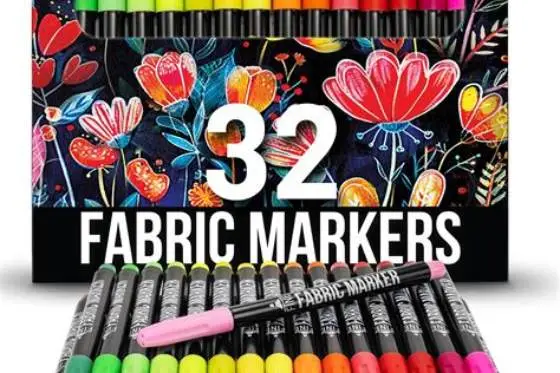
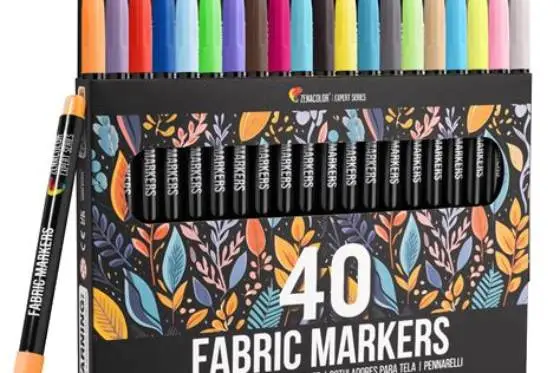
Zenacolor - 40 Fabric Markers Permanent for Clothes - Fine Point | Non Toxic
Your denim is washable the very next day: the maker states a 24-hour dry time with no ironing, and the ink is machine-washable cold, so 40 colours are ready for real wear fast.
- Weight 11 oz
- Height 0.94 inches
- Length 8.66 inches
Pre-wash: why clean denim takes marker better
New denim arrives coated in sizing, a stiff finish from the mill that keeps the cloth crisp on the shelf. Sizing sits between ink and fibre, so a marker drawn on unwashed denim bonds to the finish, not the cotton. The first wash carries the finish away and takes the mark with it.
Prewash with warm water and plain detergent, and skip fabric softener. Tulip's own instructions say to prewash fabric and leave softener out. Softener leaves a coating of its own, and that coating blocks the bond just like sizing does. Dry the denim fully, then press it flat. A smooth, clean surface takes a steadier line than a creased one. People in this spot often ask about markers that don’t fade on fabric as well.
One wash is enough for most denim. If the cloth still feels stiff or dusty after drying, wash it again. Touch the fabric and trust your fingers: clean denim feels soft and a little rough, not slick or coated. Let the cloth dry right through before you mark it, since damp cotton wicks ink sideways along the twill.
Press the piece flat, slide cardboard inside a jacket or jeans leg, and draw on a dry surface. Ten minutes of patience here saves a redraw later.
Tulip Fine-Tip Fabric Markers
Fine-tip lettering on denim with no ironing stage at all — the ink is air-set and the maker asks for 0 minutes at the iron, so nothing extra stands between the finished design and the wash.
- Is adult product False
- Weight 0.2 pounds
- Height 7.25 inches
The marker that survives the wash is decided before you draw a line: by the ink type, the pre-wash, and the set.
Heat-setting: the iron step that locks paint pens in
Heat-setting melts the paint's binder into the fibres, and that bond is what survives the wash. Not every marker needs it. Tulip fabric markers need no heat setting at all, and Stained by Sharpie markers need none either. Posca paint pens do need it: the maker's guidance is to iron the piece inside out with no steam.
Iron a Posca design like this. Let the paint dry fully, then turn the garment inside out. Lay a clean cloth between the iron and the fabric. Press with a dry iron on the cotton setting, no steam, for a couple of minutes, moving the iron slowly. Let the piece cool before you touch it.
Skipping the set is the most common reason paint flakes off in the wash. The paint looks dry within minutes, but the binder underneath is still uncured until heat reaches it. A design that was never set can look perfect on the hanger and come out of the machine in flakes. If the fabric cannot take an iron, hold a hair dryer well back and move it in slow circles instead.
Fabric paint follows the same logic with longer waits. Some fabric paints ask you to wait two to three days before the first wash; check your own bottle.
| Marker | Heat setting | First wash |
|---|---|---|
| Tulip fabric markers | None needed | Warm water, gentle cycle, once dry |
| Posca PC-5M paint pens | Iron from the reverse, no steam | Inside out, low temperature, once set |
| Stained by Sharpie | None needed | Follow the pen's label |
U.S. Art Supply Super Markers 20 Vibrant Dual Tip Fabric Markers
Covers both fine outlines and broad chisel fills on denim, and the pack tells you to air-cure at least 24 hours before wearing or washing — right at your limit.
- Is adult product False
- Length 5.5 inches
- Width 5.6 inches
Washing marked denim without fading it
Cold water is the kindest wash for marked denim. Hot water loosens the binder that holds pigment to fibre, and harsh detergents attack it too. Turn the piece inside out so the marked surface rubs against itself instead of other clothes. Use a mild detergent and a gentle cycle, and leave bleach and fabric softener out of the load.
Line dry the piece, at least for the first few washes. Dryer heat softens the ink bond you worked to set, and tumbling adds friction on top of heat. Hang the garment in shade with the marked side facing away from the sun, since direct sun fades indigo on its own. The marks will feel softer after the first wash. That is normal.
Wash a freshly marked piece on its own, or with dark clothes, for the first few cycles. Fresh ink sheds a little pigment into the water, and that pigment can tint lighter garments pink or grey. A faded mark is not always lost, either. Go over it with the same marker, let it dry, and set it again. Two thin layers hold better than one heavy pass.
Keep the wash routine gentle for the life of the design. Every hot wash takes a little more colour, and the loss adds up over months. Cold water, a gentle cycle and line drying cost nothing. Paint sits on the surface, so expect cracking at hard creases like knees, and on stretch denim.

Tulip Dual Tip Fabric Markers 14 Pack
A brush tip as well as an extra-fine one so denim lettering gets thick and thin strokes, and with no heat setting required there are 0 minutes of ironing before it can be washed.
- Weight 0.3 pounds
- Height 9.25 inches
- Length 6.25 inches
Testing on a hidden hem before you commit
Your hidden hem is the safest place to learn what your markers will do. Colours from the same brand can hold differently: a red may survive wash after wash while the yellow beside it fades. A short test on a hem answers questions no label can.
Cut a strip from the inside hem or a seam allowance. Draw every colour you plan to use, in the same line weights as the real design. Write each marker's name beside its line in pencil, so you know which one failed if one fades. Let the strip dry flat overnight, then set it exactly as you would set the project.
Compare the strip with your original drawing in daylight, not lamp light. Lamp light hides the yellowing that daylight shows. If a colour faded or bled, switch that one marker for a paint-based pen, or widen the spacing between lines. A failed test costs a scrap of hem cloth. A failed jacket costs the jacket.
Save the test strip when the project is done. Write the marker names and the wash count on the back in permanent pen, and tuck it in a bag with the garment. When a mark fades months later, the strip tells you which marker failed and which one to buy again.
- Pre-wash the strip with the garment, and dry it fully.
- Draw each colour on the strip, then let it dry flat overnight.
- Heat-set the paint pens, following the label on each pen.
- Wash the strip cold, inside out, on a gentle cycle, then line dry.
- Compare the strip with your drawing in daylight before you mark the garment.
Paint-based markers are the safest pick for denim that gets washed.
Still wondering?
Can I use a regular Sharpie on denim?
You can draw with one, but the mark will not last. A standard Sharpie uses alcohol ink, which lifts a little with every wash until the line turns grey. Sharpie's own site points fabric work to its Stained fabric markers instead. For denim, pick a marker made for fabric, or a paint pen you can heat-set. If a standard Sharpie is all you own, save it for a test swatch or a piece that rarely gets washed.
Do fabric markers work on dark denim?
Dye-based markers sink into dark denim and barely show. Opaque paint pens like Posca sit on top of the cloth, so white and pale colours read clearly on indigo. Try the colour on scrap denim first, since a shade that pops on light denim can vanish on dark.
How long must marked denim dry before washing?
Tulip's instructions say to wait 24 hours, then wash in warm water on a gentle cycle. Posca paint needs to dry fully and be iron-set before any wash. Stained by Sharpie markers need no heat setting and wash cold once dry. Your own marker's label is the final word.
Can a faded mark be fixed?
Often, yes. Redraw the faded line, let it dry fully, and heat-set it again if the pen needs it. A second thin coat grips better than one heavy coat. If the colour keeps fading, switch to a paint-based pen and test it on a scrap strip first.