Which t-shirt pattern fits your knit and your measurements
Match your bust measurement to a pattern size by adding 2-4 inches of ease and ensure your knit fabric has 30-50% stretch. Beginners should pick patterns with simple necklines and set-in sleeves for easier sewing.
On this page (8 sections)
- The short version
- How to measure bust and compare to pattern ease
- What stretch % your knit needs for each pattern type
- Which neckline and sleeve finishes suit beginners vs confident sewists
- How to choose size when between sizes or grading needed
- Which t-shirt pattern fits your knit and your measurements
- Tips for sewing your chosen t-shirt pattern successfully
- Still wondering?
Part of our guide on beginner sewing courses
Key figures
- Bust ease
- 2-4 inches
- Knit stretch
- 30-50%
- Skill level
- beginner to confident
- Neckline types
- crew, V, boat
- Sleeve styles
- set-in, raglan, flutter
- Size grading
- needed if bust is between sizes
The short version
- Measure your bust over the fullest part, keeping tape snug but not tight.
- Add 2-4 inches of ease for comfort depending on style and fabric stretch.
- Choose knit fabrics with 30-50% stretch to suit standard t-shirt patterns.
- Beginner-friendly patterns have simple necklines and sleeves like basic crew necks and set-in sleeves.
- If between sizes, grade carefully or size up for comfort and ease of sewing.
How to measure bust and compare to pattern ease
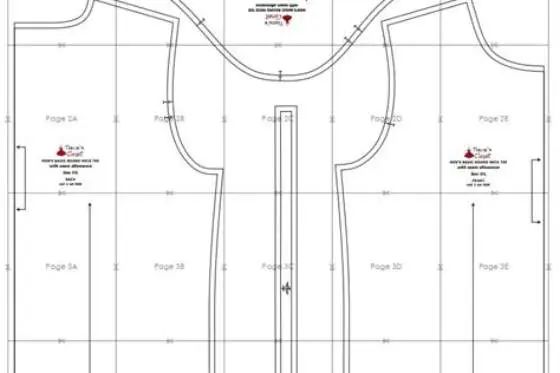
Measure your bust around the fullest part with a soft tape measure, keeping it snug but not tight. Record the number in inches first, then cm if you prefer.
Pattern ease is the extra space beyond your actual bust measurement that allows comfort and movement. Most t-shirt patterns suggest 2 to 4 inches of ease depending on the desired fit.
For a relaxed fit that isn’t baggy, 3-4 inches of ease works well with most knits. A tighter fit might use 2 inches but needs fabric with greater stretch.
Compare your bust plus ease to the pattern’s finished garment measurement at bust. If the number is close, pick that size. If between sizes, size up for comfort or grade between sizes carefully. For the detail, see our notes on finding a wrap that stays closed.
What stretch % your knit needs for each pattern type
Standard t-shirt patterns expect knit fabrics with 30-50% horizontal stretch. This means the fabric can stretch 30-50% of its width without damage.
A fabric with less than 30% stretch will feel tight and restrict movement, causing discomfort and potential seam strain.
Patterns with less ease require higher stretch fabrics, often over 50%, to fit properly without tightness. Patterns designed for more ease tolerate lower stretch knits. The other half of this decision is best sewing pattern books.
Test your fabric by stretching a 4-inch (10 cm) swatch and measuring how far it extends. This will give you the percent stretch to compare to pattern requirements.
| Pattern Ease | Recommended Knit Stretch % |
|---|---|
| 2 inches (tight fit) | 40-50% or higher |
| 3 inches (standard fit) | 30-50% |
| 4 inches (relaxed fit) | 25-40% |
Which neckline and sleeve finishes suit beginners vs confident sewists
Beginners benefit from simple necklines like crew necks that use rib knit neckbands. These require less shaping and simpler sewing techniques such as stretch stitch or twin needle hemming.
V-necks or boat necks add shaping and often need stay tape or interfacing for stability, making them better for confident sewists. For the detail, see our notes on decoding pattern envelope symbols.
Sleeve styles vary by difficulty. Set-in sleeves are straightforward for beginners, fitting into a single armhole.
Raglan sleeves involve diagonal seams from neck to underarm, requiring more precise easing and sewing experience.
Flutter or bell sleeves use lightweight knits and more fabric manipulation, best for experienced sewists.
- Beginner necklines: crew neck with rib knit band
- Confident necklines: V-neck, boat neck, bound necklines
- Beginner sleeves: set-in sleeve
- Confident sleeves: raglan, flutter, bell sleeves
Match your bust size, ease, and knit stretch to pick a t-shirt pattern that fits and sews without frustration.
How to choose size when between sizes or grading needed
If your bust measurement plus ease falls between two pattern sizes, pick the larger size for comfort and ease of sewing.
Grading between sizes means adjusting the pattern lines smoothly between bust, waist and hip measurements to fit your body shape better.
For most t-shirts, grading is only needed if the difference between bust and hip is large or if your bust is between sizes.
Use a French curve ruler or pattern grading guides to redraw seam lines between sizes, blending smoothly.
If new to grading, size up and make modifications only after testing a muslin or toile.
- Measure your bust and compare to pattern finished bust measurements
- Decide if you fall between sizes or match one exactly
- If between, choose larger size for comfort or plan to grade
- Grade by drawing a smooth line between pattern size points
- Test fit with muslin before cutting your fashion fabric
Which t-shirt pattern fits your knit and your measurements
To choose the best t-shirt pattern, start with your bust measurement plus 2-4 inches ease and match to a pattern size with a similar finished bust measurement.
Ensure your knit fabric has 30-50% stretch to suit that ease and pattern style.
Beginners should pick patterns with a crew neck and set-in sleeves for easier construction.
Confident sewists can choose more fitted styles, V-necks, raglan sleeves or fashion details.
Measure knit stretch and your body carefully to prevent fit issues and sewing frustration.
Pattern styles vary in how much ease they include, so check the finished bust measurement rather than just the size number. For example, a pattern size labeled Small might finish at 36 inches, but another brand’s Small could be 38 inches. Always compare your bust plus ease to these finished measurements.
Knit fabric weight also impacts fit. Lightweight knits drape closer to the body and may require more ease or a looser pattern. Heavyweight knits hold shape and can support more fitted styles without feeling tight. Consider fabric hand when choosing your pattern.
If you have a high bust or broad shoulders, look for patterns that offer shoulder or yoke adjustments. Some patterns include these options for a better upper body fit. Otherwise, your t-shirt might pull or bind across the chest and shoulders, causing discomfort and puckering.
| Measurement or Feature | Range or Type | Recommended Pattern Type |
|---|---|---|
| Bust ease | 2-4 inches | Standard t-shirt with moderate ease |
| Knit stretch | 30-50% | Stable, moderate stretch knits like cotton jersey |
| Skill level | Beginner | Crew neck, set-in sleeve, simple hems |
| Skill level | Confident | V-neck, raglan sleeve, decorative finishes |
Tips for sewing your chosen t-shirt pattern successfully
Use a ballpoint or stretch needle (size 80/12 or 90/14) to prevent skipped stitches on knits.
Set your machine to a stretch stitch or a narrow zigzag stitch to allow seam elasticity.
Prewash your knit fabric to relax it and avoid shrinking later.
Stabilize neckbands with clear elastic or stay tape to prevent stretching out of shape.
Press seams gently with a steam iron and use a pressing cloth to avoid damaging knit fibers.
Sew a test garment, called a muslin, in a similar knit before cutting your final fabric. This helps identify fit and construction issues early, letting you adjust pattern sizing or techniques.
Use stabilizers like clear elastic in shoulder seams to prevent stretching over time. This keeps your t-shirt’s shape and fit longer, especially with heavier knits or frequent washing.
Avoid pulling seams as you sew. Guide the fabric gently through your machine to maintain even stretch and prevent wavy or stretched-out edges. Take your time, especially sewing neckbands and sleeve hems.
- Needle: ballpoint/stretch 80/12 or 90/14
- Stitch: stretch stitch or narrow zigzag
- Prewash fabric to avoid shrinkage
- Use clear elastic on neckbands
- Press seams gently with steam
Still wondering?
How tight should the bust measurement be when taking it?
The tape should be snug but not tight. You need your natural bust circumference, not compressed, so the finished garment allows ease.
Can I use a woven fabric for a t-shirt pattern?
Most t-shirt patterns require knit fabric with stretch. Using woven fabric will result in a tight, restrictive fit and may cause the garment to pull and tear.
What if my knit fabric has less than 30% stretch?
Choose a pattern with more ease or a looser fit style. Alternatively, pick a knit with higher stretch or a woven pattern instead.
Is grading between sizes necessary for beginners?
Not usually. Beginners should select the size that fits their largest measurement or size up slightly. Grading is best attempted after gaining sewing experience.
How do I know if a neckline finish is beginner-friendly?
Simple necklines with rib knit bands, like crew necks, are beginner-friendly because they require less shaping and easier sewing techniques.