Which sewing machine for upholstery sews 4 layers of vinyl and foam
Get a walking-foot or compound-feed machine with at least 9 mm presser-foot lift. A standard home machine with 6-7 mm lift and drop feed cannot clear a 4-layer vinyl and foam stack without skipping and jamming.
On this page (9 sections)
- Fit check
- The short version
- Best sewing machine for upholstery: what 4 layers of vinyl and foam actually measures
- Failure: why home and heavy-duty home machines skip and jam on vinyl
- Feed: walking foot vs compound feed vs domestic drop feed
- Clearance: presser-foot lift, throat space and needle and thread limits
- Specs: minimum numbers to demand and when to step to industrial
- Choices: which machine type matches your stack, budget and space
- Still wondering?

Consew 206RB-5 Walking Foot Industrial Sewing Machine with
Clears your 4-layer vinyl/foam/lining stack with 14 mm of lift and the triple walking feed keeps the layers
Check it on Amazon
Walking Foot Industrial Sewing Machine with Sewing Machine
No presser-foot lift is listed so you cannot confirm it will clear your 9 mm compressed stack.
Check the specs on Amazon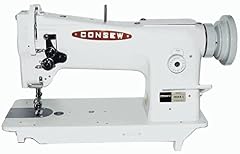
| Product | stack clearance (mm) | Verdict | |
|---|---|---|---|
| Consew 206RB-5 Walking Foot Industrial Sewing Machine with Table and CONSEW | 14 mm presser-foot lift (9/16") with walking/compound feed vs 9 mm required | Meets it | View on Amazon |
| Walking Foot Industrial Sewing Machine with Sewing Machine Table Unit KQZZIV | No presser-foot lift published (only 0.4" material thickness) | Not published | View on Amazon |
| Consew 206RB-5 Walking Foot Upholstery Machine w/Table & Motor (Table CONSEW | No presser-foot lift published | Not published | View on Amazon |
| Family Sew FS-388 9" Flat Bed Straight Stitch and 5mm Zigzag Portable Generic | No presser-foot lift published | Not published | View on Amazon |
| YQ-516 Portable Walking Foot Sewing Machine YEQIN | No presser-foot lift published | Not published | View on Amazon |
Key figures
- Typical 4-layer stack
- 9-10 mm compressed
- Home machine lift
- 6-7 mm
- Needed lift
- 9 mm minimum
- Needle for vinyl
- 100/16 to 110/18
- Thread for vinyl
- Tex 70-92
The short version
- Measure your real stack compressed under the foot, not loose on the table.
- Feed type matters more than motor power for vinyl: walking or compound feed prevents creep.
- Demand 9 mm lift, size 100/16 to 110/18 needles and Tex 70-92 thread for vinyl.
- If your stack tops 10 mm or you sew piping daily, step to a compound-feed industrial.
Best sewing machine for upholstery: what 4 layers of vinyl and foam actually measures
The best sewing machine for upholstery is the one that clears your measured stack, and a 4-layer stack of vinyl and foam is taller than you expect. Two layers of marine vinyl plus one layer of foam plus lining or piping often reads 11 to 12 mm loose, and about 9 mm compressed under the presser-foot lift. If the foot cannot rise that high, you cannot feed it. Measure first, then shop.
Furniture vinyl is usually 0.8 to 1.1 mm per layer, so two layers are 1.6 to 2.2 mm. Add 1/4 inch foam which is 6 mm (0.24 inch), plus a cotton or poly lining at 0.4 to 0.6 mm, plus a piping ridge where cord sits. That ridge adds 2 to 3 mm right on the seam. Auto and marine vinyl runs a touch thicker and stiffer, so it compresses less. The throat space does not fix this, the lift does.
You can check your own stack in one minute. Stack the exact layers you will sew, including piping, and press them with a ruler as the foot would. Measure the height with a small ruler at the edge. Write that number down. You will use it against the lift figure in the specs. That one number keeps you from buying a machine that almost fits.
Failure: why home and heavy-duty home machines skip and jam on vinyl
Home machines skip on vinyl for three linked reasons, and power alone does not fix them. The presser-foot lift on most domestic machines is 6 to 7 mm, so a 9 mm stack holds the foot up and kills pressure. The feed is single drop feed, so only the bottom moves. Vinyl grips the foot and stalls while the bottom feeds, then the needle deflects and misses the hook. We cover sewing machine skipping stitches in its own article.
Heavy-duty home machines improve the motor but keep the same feed and lift. You get more punching force, but the layers still creep and the top layer lags. You will see skipped stitches, uneven length, and nests under the work where the top thread did not catch. A larger needle like 100/16 helps pierce, but it cannot pull the top layer. That is a feed problem, not a power problem.
Vinyl also makes heat and stick. A standard steel foot drags, and the needle heats and gums with coating. Use a walking foot or Teflon foot and a sharp leather or vinyl needle sized 100/16 to 110/18 with Tex 70 to Tex 92 thread. If the foot still rides high and you must push fabric to move it, lift is the limit. That push is what breaks needles and timing.
Consew 206RB-5 Walking Foot Industrial Sewing Machine with Table and Servo
Clears your 4-layer vinyl/foam/lining stack with 14 mm of lift and the triple walking feed keeps the layers feeding evenly.
- Height 20.0 Inches
- Length 50.0 inches
- Width 45.0 inches
Feed: walking foot vs compound feed vs domestic drop feed
Feed is how the machine moves fabric, and vinyl needs help on top. Domestic drop feed moves only the bottom with feed dogs. It is fine for cotton and quilting. On vinyl it lets the top stick and shift, so seams wander and piping rolls. You can add a clip-on walking foot, which helps for one or two layers, but lift stays low. We cover best auto upholstery sewing machine for beginners in its own article.
A true walking foot machine has feed dogs plus a moving foot on top that steps with them. Both layers move together, so vinyl does not creep. It clears a 9 mm stack when lift allows, and it keeps stitch length even over foam. For most home upholstery this is the sweet spot. It still uses a flat bed and a home-style bobbin, so you can manage it in a small space.
Compound feed adds a moving needle to that system. The needle, foot and dogs all move together, so thick seams and piping stay straight under pressure. It clears the tallest stacks and sews leather well. The trade-off is size, weight and cost. If you sew piping or leather often, that extra control pays. If you sew one chair a year, it is more than you need.
| Feed type | How it moves | Typical lift | Clears 9 mm stack? |
|---|---|---|---|
| Domestic drop feed | Dogs only | 6-7 mm | No - top slips, foot rides high |
| Clip-on walking foot | Dogs + light top assist | 6-7 mm | Sometimes - helps feed, lift still limits |
| Walking foot machine | Dogs + powered foot | 9-11 mm | Yes - when lift is 9 mm or more |
| Compound feed | Dogs + foot + needle | 9-14 mm | Yes - best for piping and leather |
- Walking foot: moves top and bottom together, even length on vinyl
- Compound feed: holds piping straight on tall seams
- Domestic drop feed: simple, light, fine for cotton
- Domestic drop feed: top layer drags on vinyl
- Clip-on foot: helps feed but not lift
- Compound feed: heavier and needs table space
Walking Foot Industrial Sewing Machine with Sewing Machine Table Unit Heavy
No presser-foot lift is listed so you cannot confirm it will clear your 9 mm compressed stack.
- Width 7.87 inches
- Height 23.62 inches
- Length 47.24 inches
Most home machines lift 6 mm. Your vinyl and foam stack needs 9 mm, and that gap is why stitches skip.
Clearance: presser-foot lift, throat space and needle and thread limits
Lift is the gate. Look for 9 mm of presser-foot lift with the lever, and 11 mm or more if you sew piping often. Some sellers list lift as standard and extra-high, so read both. Throat space, the area to the right of the needle, helps you roll a cushion but does not lift the foot. A big throat with low lift still jams on a tall stack. Check lift first. Before you commit to anything, it is worth looking at best industrial sewing machine for canvas.
Needle and thread must match vinyl. Use a cutting point leather or vinyl needle in 100/16 to 110/18 for marine vinyl, and 90/14 to 100/16 for thin fashion vinyl. Pair it with Tex 70 to Tex 92 bonded nylon or polyester. Heavier thread needs a larger eye and a looser top tension, and the bobbin must be wound smooth. If thread shreds, go up one needle size and re-thread with the presser foot up.
I would choose a walking-foot machine with at least 9 mm lift and a Teflon or roller foot for a first upholstery setup at home. It handles 9 to 10 mm stacks, feeds vinyl without creep, and still fits a home table. My rule of thumb is simple: if the foam springs back, the foot must lift higher than the stack. That one check stops most bad buys.
- Lift: demand 9 mm lever lift, 11 mm extra-high if you sew piping
- Needle: 100/16 to 110/18 leather/vinyl point for marine vinyl, 90/14 to 100/16 for light vinyl
- Thread: Tex 70 to Tex 92 bonded nylon or polyester, needle eye to match
- Foot: Teflon, roller or walking foot so vinyl does not stick
- Stitch: 3.0 to 4.0 mm length, longer on thick stacks to avoid perforating vinyl
Specs: minimum numbers to demand and when to step to industrial
Demand numbers that clear your stack with margin. For four layers that measure 9 mm compressed, set the bar at 9 mm lift, walking or compound feed, and a needle system that takes 110/18. Ask the seller for extra-high lift if the listing is vague. If they cannot give lift, pass. You cannot guess clearance from motor watts or stitch count. The other half of this decision is best sewing machine for leather and denim.
Use this quick sequence before you buy or keep a machine. It takes five minutes and saves a return. You will know if you need to step up or if your current machine can handle the job with a new needle and foot. Try it on scrap from the same vinyl and foam, not on cotton. Vinyl behaves differently and that is the point.
Step to a compound-feed industrial when your stack tops 10 mm, when piping makes up most seams, or when you sew leather and vinyl daily. A domestic walking-foot machine will still sew those seams, but you will fight feeding and presser pressure. At that point a larger head and stronger feed save time and keep seams straight. The site's Sewing Machine Matchmaker can help you match lift and feed to your project if you are torn between types.
- Stack your exact layers with piping and press with a ruler to get compressed height in mm.
- Check the machine specs for presser-foot lift (mm) and feed type; extra-high lift matters for piping.
- Install a new 100/16 to 110/18 leather/vinyl needle and Tex 70-92 thread, re-thread with foot up.
- Sew a 6 inch test over the thickest cross seam; look for even length and no skipped stitches.
- If the foot rides high or you must push, lift or feed is too low for that stack.
Choices: which machine type matches your stack, budget and space
Match the machine to your stack, not to a brand story. If your compressed stack is 9 mm and you sew a chair or bench now and then, a semi-industrial walking-foot machine is the fix. It gives the lift and feed you need without taking over the room. Look for 9 mm lift, walking foot feed, and support for 100/16 to 110/18 needles. The other half of this decision is features that handle sticky vinyl smoothly.
If you sew piping all day or work in auto and marine vinyl, choose compound feed. The moving needle keeps long seams straight and holds the ridge. If your stack stays under 8 mm and you want a lighter home unit, a heavy-duty domestic with a clip-on walking foot can work, but know its limit. It will not clear 9 mm piping stacks, and that is where it fails.
This advice is wrong for a few readers. If you sew only quilting cotton, apparel or light bags, you do not need this lift. A standard home machine is lighter and easier. If you sew thick leather belts or harness over 10 mm, you need a cylinder-arm compound feed, not a flat bed. Measure your stack again, then pick the smallest machine that still clears it with a little room to spare.
- Pick walking foot semi-industrial: fits most 9-10 mm furniture and marine stacks at home
- Upgrade to compound feed: for daily piping, thick seams and leather, best control
- Budget heavy-duty domestic: only for light vinyl under 8 mm, short seams and repairs
For a true 9 mm vinyl and foam stack, choose walking or compound feed with 9 mm lift; home drop-feed machines will jam.
Still wondering?
Can I sew 4 layers of vinyl and foam on a regular home machine?
Sometimes on thin vinyl under 8 mm compressed, with a new 100/16 needle, Teflon foot and longer stitch. On a 9-10 mm stack with piping most home machines ride high and skip, because lift is 6-7 mm and feed is single drop feed.
What presser-foot lift do I need for upholstery vinyl?
At least 9 mm lever lift for a 4-layer vinyl and foam stack. If you sew piping often, look for 11 mm extra-high lift. Throat space helps you maneuver but does not add clearance.
Is a clip-on walking foot enough for vinyl?
It helps the top layer move and reduces creep on short seams. It does not raise lift, so a tall stack still holds the foot up. A built-in walking foot machine with higher lift solves both feed and clearance.
What needle and thread for marine vinyl?
Use a leather or vinyl cutting point 100/16 to 110/18 and bonded nylon or polyester Tex 70 to Tex 92. Re-thread with the presser foot up and set stitch length to 3.0-4.0 mm so you do not perforate the vinyl.
When should I move to an industrial compound-feed machine?
When your compressed stack tops 10 mm, when piping is on most seams, or when you sew vinyl or leather daily. Compound feed moves needle, foot and dogs together and keeps tall seams straight.