Will a home machine sew swimwear Lycra without skipped stitches?
A home sewing machine can sew swimwear Lycra without skipped stitches if it uses a stretch or zigzag stitch, paired with a ballpoint needle and appropriate presser foot for even fabric feed. Straight stitches tend to pop on Lycra due to limited stretch.
On this page (8 sections)
- Fit check
- The short version
- Which stitches swimwear needs and why straight stitch pops on Lycra
- What needle, presser foot and feed keep 4-way Lycra from skipping
- When a regular machine is enough versus needing a serger or coverstitch
- How to test any machine on swim Lycra scraps before you buy
- Best sewing machine for swimwear
- Still wondering?
Part of our guide on beginner sewing machine

YEQIN YQ-518 Portable Walking/Zigzag Foot Sewing Machine
Keeps your Lycra swimwear seams elastic with 5 mm zigzag width giving 2 mm to spare so stitches stretch
Check it on Amazon
Brother 2340CV Coverstitch Serger Sewing Machine
Handles frequent Lycra swimwear production with 6 mm cover stitch and differential feed that moves stretch
See the heavy-duty one
YQ-516 Portable Walking Foot Sewing Machine
No stitch width is shown so we cannot confirm it will stretch with Lycra without popping.
Check the specs on Amazon| Product | stretch stitch capability | Verdict | |
|---|---|---|---|
| YEQIN YQ-518 Portable Walking/Zigzag Foot Sewing Machine YEQIN | 5 mm zigzag width published vs 3 mm needed | Meets it | View on Amazon |
| Brother 2340CV Coverstitch Serger Sewing Machine Brother | 3 mm to 6 mm cover stitch width published vs 3 mm needed | Meets it | View on Amazon |
| YQ-516 Portable Walking Foot Sewing Machine YEQIN | No stitch width printed vs 3 mm needed | Not published | View on Amazon |
| SINGER® Heavy Duty 4552™ Next Evolution Sewing Machine SINGER | No stitch width printed vs 3 mm needed | Not published | View on Amazon |
Key figures
- Stretch stitch width
- 3-5 mm
- Recommended needle size
- 80/12 ballpoint
- Presser foot type
- walking/even-feed
- Skip stitch risk
- High with straight stitch
- Feed dog setup
- Normal or adjustable
The short version
- Use stretch or zigzag stitches to hold Lycra’s four-way stretch.
- Ballpoint needles prevent fabric damage and skipped stitches.
- A walking or even-feed presser foot improves stitch consistency.
- Test stitch and feed settings on scrap Lycra before starting.
- Regular machines can work if properly set; sergers offer ease but aren’t essential.
Which stitches swimwear needs and why straight stitch pops on Lycra
Swimwear Lycra needs stitches that stretch with the fabric. A straight stitch does not stretch, so it breaks or pops when the fabric moves or stretches.
Use zigzag or specialized stretch stitches with a width between 3 to 5 mm and a shorter stitch length (1.5 to 2 mm). These stitches expand as the fabric stretches, preventing breaks.
Some home machines offer preset stretch stitches designed to handle four-way stretch fabrics like Lycra. These provide more reliable seam strength than a straight stitch.
Heavier swim Lycra changes the stitch you need. A 3 mm wide zigzag holds on single-layer 180 to 200 GSM Lycra, but it pops on 250 GSM double-lined seams. You'll hear a faint tick as the needle hits, then see straight thread tails sticking up after you stretch the seam 30%. Fix it with a wider 4 to 5 mm zigzag or a triple stretch stitch and test again until the seam snaps back smooth. If that sounds like your situation, read up on avoiding skipped stitches next.
Do the math on stitch density before you sew a full suit. A 10-inch leg opening sewn at 2 mm length gives you about 127 stitches (254 mm divided by 2 mm). Drop to 1.5 mm and you get 169 stitches, so the seam stretches farther before any one thread bears the load. That's the check: stretch your sample to 50% elongation and watch, no white threads showing means the density holds.
- Straight stitch: prone to breaking on stretch fabrics
- Zigzag stitch: stretches sideways with fabric movement
- Stretch stitches: optimized to expand and contract with Lycra
What needle, presser foot and feed keep 4-way Lycra from skipping
A ballpoint or stretch needle size 80/12 is essential because it slides between the fabric’s knit loops instead of piercing and damaging yarns.
Using a walking foot or even-feed foot reduces fabric slippage and puckering by feeding top and bottom fabric layers evenly. Before you commit to anything, it is worth looking at sewing machine or serger.
Feed dogs should be set to normal or slightly increased height to grip slippery Lycra without stretching or distorting it during sewing.
Needle size shifts with fabric weight and lining. Use 75/11 stretch for single-layer 180 GSM Lycra and 90/14 stretch for double-layer or swim lining with brushed back. A needle too small flexes and skips, you'll see a missed loop every 8 to 10 stitches on the underside. Change the needle after 6 to 8 hours of Lycra sewing, a dull point pushes loops instead of slipping between them.
Presser foot pressure decides whether Lycra feeds or waves. Set pressure to 2 to 3 on a 0 to 6 dial for slippery Lycra, higher pressure stretches the seam as you sew. You'll know it's wrong when the edge ripples like lettuce and the seam length grows half an inch longer than you cut. Lower pressure one notch, sew a 6-inch strip, then measure it flat to match your cut length within 1/16 inch.
- Needle: 80/12 ballpoint or stretch
- Presser foot: walking or even-feed recommended
- Feed dogs: normal height, clean and functional
YEQIN YQ-518 Portable Walking/Zigzag Foot Sewing Machine
Keeps your Lycra swimwear seams elastic with 5 mm zigzag width giving 2 mm to spare so stitches stretch instead of popping.
- Height 14.0 inches
- Length 14.0 inches
- Weight 34.0 pounds
When a regular machine is enough versus needing a serger or coverstitch
A regular home sewing machine with stretch stitches, a ballpoint needle, and even feed can sew swimwear Lycra without skipped stitches.
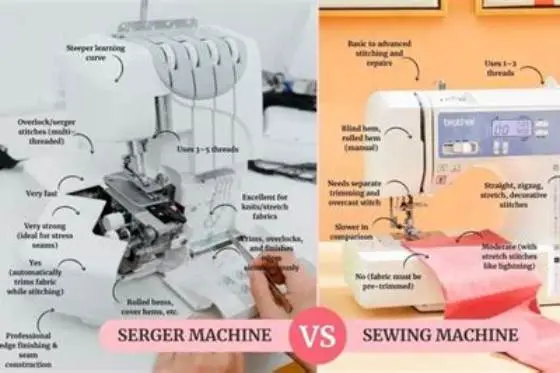
A serger or coverstitch machine trims fabric, encases seams, and sews simultaneously, speeding swimwear production and improving seam stretch.
However, sergers cost more and take space. If your projects are occasional or small-scale, your home machine suffices if set up right.
Sergers excel when producing swimwear regularly or in bulk, thanks to their speed and stretch seam strength.
Volume decides if you need a serger. A home machine handles one to three suits a month fine if you finish seams with a zigzag and trim close to 1/8 inch. Past that, a 4-thread serger cuts sewing time from 90 minutes per suit to about 45 minutes and seals edges in one pass. You'll feel the limit when seams fray after three washes or leg holes ripple because your zigzag can't recover fast enough.
A coverstitch matters most at hems and elastics. It lays two needles with 4 to 6 mm spacing on top and a looper chain below. That chain stretches 40 to 60% and snaps back, while a single zigzag hem often pops when you pull the leg opening wide. Test it: fold a hem, sew, then pull it to double width. If you see broken loops, you need the coverstitch.
| Feature | Home Machine | Serger/Coverstitch |
|---|---|---|
| Stitch stretch | Dependent on stitch settings | Built-in stretch stitches |
| Seam finishing | Needs separate step | Integrated trimming and finishing |
| Cost | Lower, mid-range price | Higher, professional investment |
| Learning curve | Beginner-friendly | Requires practice |
| Speed | Slower | Faster for bulk |
- More affordable
- Easier for beginners
- Slower for bulk
- Needs careful stitch setup
Brother 2340CV Coverstitch Serger Sewing Machine
Handles frequent Lycra swimwear production with 6 mm cover stitch and differential feed that moves stretch fabric without skipping.
- Is adult product False
- Height 12.9 inches
- Length 15.0 inches
This guide reveals which stitch and feed setups let home machines sew stretch Lycra swimwear without skipped stitches or breaks.
How to test any machine on swim Lycra scraps before you buy
Testing helps confirm if your machine handles Lycra without skipped stitches or puckering.
Cut a scrap piece of your swimwear fabric and set your machine to a stretch or zigzag stitch with a ballpoint needle installed.
Sew at least 4 inches (10 cm) of fabric and stretch the seam gently to check if stitches hold without popping or breaking.
Try different stitch widths and lengths to find the best settings for your machine.
Also, check if the fabric feeds evenly without slipping or puckering by adjusting presser foot pressure or trying an even-feed foot.
Run the same scrap at two speeds to catch skipped stitches. Sew one 4-inch line slow at 400 to 500 stitches per minute and one fast at 800 to 1000 with tension at 3 to 4. Cheap feed systems skip only at speed, you'll see one blank spot every inch on the fast sample while the slow one looks perfect. That's your fail sign: if either sample skips, try a fresh 80/12 stretch needle before you blame the machine.
Stretch alone won't tell the whole story, wash it. Soak your test seam in warm water with a teaspoon of chlorine for 10 minutes, then stretch it to 30% elongation again. Weak thread or a tight straight-stitch remnant will snap now and show tiny white breaks along the ridge. Good polyester woolly nylon thread holds, the seam stays flat and returns to length without puckering.
- Cut 4-6 inch Lycra scrap.
- Install ballpoint size 80/12 needle.
- Set stitch to zigzag or stretch stitch (3-5 mm width).
- Sew at least 4 inches slowly.
- Stretch seam to test stitch recovery and strength.
Best sewing machine for swimwear
The best home sewing machine for swimwear is one with a stretch stitch capability, adjustable stitch length and width, a walking foot or even-feed foot, and accepts 80/12 ballpoint needles.
Look for brands that clearly offer these features bundled or as optional accessories. A mid-range machine with these features is enough; you don’t need a dedicated serger to start.
Avoid machines that only offer straight and basic zigzag stitches without stretch stitch options, as they risk skipped stitches on Lycra.
The walking foot accessory is often sold separately but is crucial for slippery Lycra fabrics to feed evenly.
If your budget allows, a serger or coverstitch machine is an upgrade, but many home machines meet swimwear Lycra’s demands with the right setup.
Check the machine's throat and motor before you decide. A 7-inch throat and 70-watt motor handle folded swim layers without stalling, smaller throats bunch Lycra at the plate. You'll hear the motor strain and see skipped stitches where four layers cross. Bring a folded scrap with elastic inside, sew over the bump slowly, and look for even stitches on both sides.
| Feature | Must-Have | Why It Matters |
|---|---|---|
| Stretch stitch | Yes | Allows seams to stretch with Lycra |
| Adjustable stitch length/width | Yes | Customizes stitch to fabric stretch |
| Needle type | Ballpoint 80/12 | Prevents fabric damage and skipped stitches |
| Presser foot | Walking or even-feed | Feeds layers evenly without slipping |
| Feed dog | Normal height, adjustable | Grips slippery fabric effectively |
A well-set home sewing machine with stretch stitches and a walking foot sews swimwear Lycra without skips.
Still wondering?
Why does straight stitch pop on Lycra swimwear fabric?
Straight stitches don’t stretch and break when fabric stretches. Lycra moves in four directions, so stitches must stretch too or they’ll pop.
Can I use a regular needle for Lycra swimwear?
No. A universal needle pierces Lycra’s knit loops causing runs or skipped stitches. Use a ballpoint (80/12) or stretch needle to avoid this.
Is a serger necessary to sew swimwear Lycra?
No. Regular home machines with stretch stitches and even-feed feet can sew Lycra well. Sergers speed up finishing but aren’t required.
How do I test if a machine will sew swimwear without skipped stitches?
Sew a scrap of Lycra using a zigzag or stretch stitch with a ballpoint needle. Stretch the seam and check for skipped stitches or breaks.
What presser foot works best for slippery Lycra fabric?
A walking foot or even-feed foot feeds fabric layers evenly, reducing slipping and puckering, helping maintain stitch quality on Lycra.