Which sewing machine fits your fabric weight and quilting space
Buy the machine that clears your heaviest fabric and your biggest quilt, then choose feed, motor, throat space and feet within budget. If it struggles on four layers of denim or cannot roll a lap quilt through the harp, no stitch count fixes it.
On this page (8 sections)
- The short version
- Filter first: what to look for when buying a sewing machine starts with fabric and space
- Heaviest fabric: how quilting cotton vs denim, leather and knits dictates motor and feed
- Stitches and feet: which ones you actually need for quilting, mending and embroidery
- Throat and bed: how much harp space you need for quilts and bulky projects
- Bobbin and tension: what causes skipped stitches and thread nests to check before buying
- Test and budget: how to audition a machine on your fabric and weigh dealer vs big-box price
- Still wondering?
Part of our guide on best sewing machine for beginners
Key figures
- Quilting cotton
- light, feeds easy, 80/12 needle
- Denim/leather limit
- needs stronger feed + 90/14-100/16
- Throat for quilts
- 7-8 in (18-20 cm) for lap quilts
- Must-have stitches
- straight, zigzag, stretch, buttonhole
- Test swatch
- 4 layers denim + quilt sandwich
- Skipped stitches fix
- new needle, rethread foot up first
The short version
- List your heaviest fabric first: that decides motor, feed and needle system, not brand.
- You need straight, zigzag, buttonhole and stretch stitches plus four feet; the rest is optional.
- For quilts, throat space decides comfort: measure your rolled quilt, not the spec sheet.
- Test any machine on your own fabric sandwich and listen for even feeding and steady tension.
Filter first: what to look for when buying a sewing machine starts with fabric and space
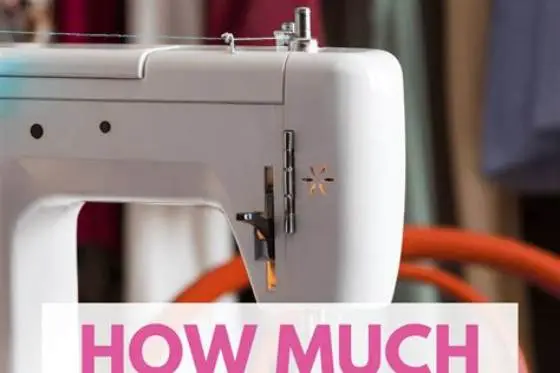
What to look for when buying a sewing machine is whether it handles your heaviest fabric and your largest quilt without fighting you. Everything else (stitch count, brand, screen size) matters only if those two clear. Start with a short list of what you actually sew, then filter machines that meet that list inside your budget.
Write down three things before you shop. One, your heaviest fabric stack you will sew more than once, like four layers of denim or two layers of leather at 12 oz. Two, your widest quilt or bulky project rolled up. Three, the stitches and feet you use weekly. Bring those notes and a fabric sandwich to any test. You will save hours of comparing specs that do not apply to you.
This order flips the usual mistake. Shoppers compare 150 stitches and a low price, then learn the feed slips on knits or the 6 inch (15 cm) harp will not pass a twin quilt. Check fabric and space first and you avoid that trap. The next sections show how each choice maps to a part you can see and test.
Heaviest fabric: how quilting cotton vs denim, leather and knits dictates motor and feed
Your heaviest fabric decides the motor power, feed system and needle you need. Quilting cotton is light and stable, so almost any machine feeds it with an 80/12 universal needle and 50 wt thread. Denim, canvas, leather and multiple quilt layers need more torque, a steadier feed and a larger needle, and that changes which machines stay on your list. For the detail, see our notes on handling denim quilts and hems.
Feed matters as much as power. A basic four-point feed moves cotton fine, but thick seams and stretch knits slip or wave without help. Look for a longer feed dog, adjustable presser foot pressure, and the option to add a walking foot or built-in dual feed. Those features keep layers from shifting and let the needle penetrate without deflection, which also cuts skipped stitches.
Match the needle system to the fabric, not the marketing. For denim use 90/14 to 100/16 jeans needles, for leather use a 100/16 leather cutting point, for knits use 80/12 to 90/14 ballpoint or stretch. A machine that offers adjustable speed control and a needle that stays centered under pressure will hold a straight line on heavy stacks. If you sew leather more than occasionally, you want a machine the maker rates for heavy fabric, not just a claim of heavy duty.
| Your heaviest sewing | What to require | Needle and thread to plan for |
|---|---|---|
| Quilting cotton, poplin | Standard motor, 4-point feed, foot pressure control | 80/12 universal, 50 wt cotton/poly |
| Stretch knits, jersey | Walking foot option, adjustable pressure, stretch stitch | 80/12 ballpoint/stretch, 50-60 wt |
| Denim, canvas, 4+ layers | Stronger motor, longer feed dog, slow-speed control | 90/14 - 100/16 jeans, 40-50 wt |
| Leather, vinyl, 2 layers | Heavy-rated machine, walking foot, leather foot | 100/16 leather, 40 wt bonded nylon |
Stitches and feet: which ones you actually need for quilting, mending and embroidery
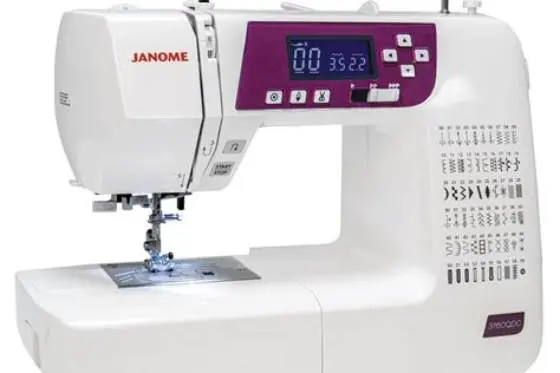
You use fewer stitches than the box advertises. For most home sewing you need straight stitch, zigzag, a stretch stitch for knits, and a one-step buttonhole. Quilters add a quarter-inch seam and the ability to lower or cover feed dogs for free-motion. If a machine does those well, you are covered for mending, piecing and garment fixes. For the detail, see our notes on Janome sewing machine review.
Feet decide results more than stitch count does. Plan for four: an all-purpose foot, a quarter-inch foot with guide for quilting, a walking foot for layers and plaids, and a zipper foot. Add a free-motion or darning foot if you quilt, and a buttonhole foot that fits your buttons. Extras like alphabet stitches or 200 decorative patterns look fun, but you will reach for the same five again and again.
Embroidery is a separate path. A sewing machine that also embroiders needs a hoop, embroidery unit and software, and its value depends on hoop size like 4x4 inch (10x10 cm) vs larger, not on sewing stitch count. If you want true embroidery, compare hoop size, stabilizer needs and design transfer. If you only want to mend and quilt, skip the combo and put budget into feed and throat space instead.
- All-purpose foot: daily seams, topstitching, stays on the machine most of the time.
- Quarter-inch foot: accurate piecing, keeps seam allowance at 0.25 inch (6 mm) without marking.
- Walking foot: feeds thick or slippery layers evenly, prevents creep on quilts and knits.
- Zipper foot: gets close to teeth and piping, essential for bags and home decor.
- Free-motion foot: hops or floats for quilting when feed dogs are down.
Most returns happen because the machine cannot feed the heaviest fabric or swallow the quilt you already planned to make.
Throat and bed: how much harp space you need for quilts and bulky projects
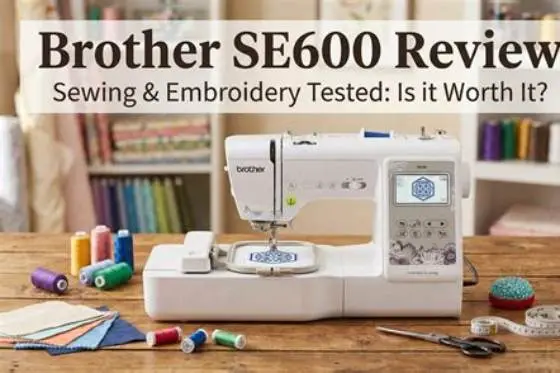
Throat space, also called harp space, is the area to the right of the needle. It decides how much quilt you can roll and still steer. A compact 6 inch (15 cm) throat handles piecing and small crafts, but a rolled lap or twin quilt quickly fills it. For quilting, 7 to 8 inch (18 to 20 cm) feels far easier, and larger harps help with free-motion work and bulky coats or bags. We cover se600 hoop size limits in its own article.
Measure your project, not just the spec. Roll your quilt as you would to quilt it and measure the roll diameter. Then compare that to the harp height and depth at the shop. Bed size matters too. An extension table or large flat bed supports weight so the quilt does not drag, which pulls stitches and tires your arms. Weight support is comfort and accuracy.
More space usually means a larger, heavier machine and a higher price. That is the trade-off to accept if you quilt often. If you sew garments and small quilts, save money and pick a smaller harp with a good extension table. If you plan to quilt queen size or do lots of free-motion, hold out for the larger throat. You will feel the difference on the first pass.
Bobbin and tension: what causes skipped stitches and thread nests to check before buying
Skipped stitches and thread nests, those tangled bird nests under the fabric, usually come from setup, not a bad machine. Check bobbin type, threading path and tension control before you blame the motor. A machine that is easy to thread correctly will cause fewer problems at home.
Bobbin type affects ease and consistency. Drop-in (top-loading) bobbins with a clear cover are easy to monitor and change. Front-loading bobbins in a bobbin case can handle thicker threads well but need correct insertion every time. Either works if the manual shows the thread path clearly and the bobbin is the correct size and class for that model. Wrong bobbins cause tension swings and jams, so ask for the exact class in the manual.
Tension control should be simple and repeatable. Look for a clearly marked dial or digital setting and a way to return to auto or default. Test it on your fabric: sew a straight line, then a zigzag, and check the underside. Balanced tension shows no loops on top or bottom. If you see loops or nests, re-thread with the presser foot up, insert a new 80/12 or 90/14 needle, and clean lint from the bobbin area. That sequence fixes most issues without service.
- Skipped stitches: check needle size and type first, then re-thread, then feed and speed.
- Thread nests: re-thread with foot up, seat bobbin fully, hold tails at start.
- Uneven tension: use matching 50 wt thread top and bobbin for the test, then adjust one step at a time.
Test and budget: how to audition a machine on your fabric and weigh dealer vs big-box price
Bring your own fabric to the shop and sew the sandwich you actually make. Include four layers of denim on a seam cross, a quilt sandwich of cotton, batting and backing, and a double-layer knit. Set the machine to straight stitch length 2.5 to 3.0 mm, then zigzag width 3 to 5 mm. Watch and listen for steady feeding without pushing, no needle deflection, and a consistent sound. Check the underside for balanced tension and no loops.
Run a short checklist on each machine. One, does the walking foot feed all layers without creep? Two, can you sew slowly over the thick cross without skipped stitches? Three, does the throat pass your rolled quilt without wrestling? Four, can you wind and insert the bobbin without a struggle? If a machine hesitates on your heaviest stack, that hesitation will show up at home under the same conditions.
Budget and where you buy change support. A dealer usually offers setup, lessons, and service, plus correct bobbins, needles and feet matched to that model. A big-box price can be lower but often leaves you to find service and parts yourself. For beginners and quilters, dealer support often saves money later on tension and timing fixes. For a simple backup machine, price may win. Choose based on how much help you want after the sale.
- Bring swatches: denim cross-seam, quilt sandwich, knit, plus matching 50 wt thread.
- Thread with presser foot up, insert new 90/14 jeans needle for denim, 80/12 ballpoint for knit.
- Sew slow over thick cross, then faster on flat; check underside for loops or nests.
- Fit walking foot and quarter-inch foot; confirm they sit level and feed straight.
- Roll your quilt through the harp; confirm you can still steer and see the needle.
| Option | You get | Watch for |
|---|---|---|
| Local dealer | Setup, lessons, service, correct parts | Higher upfront price, fewer models on floor |
| Big-box / online | Lower price, wide selection | Self-setup, find your own service, verify bobbin class |
- Dealer: hands-on help and fast fixes when tension or timing slips
- Dealer: correct bobbins and feet on day one, fewer mismatched parts
- Dealer: pay more upfront for service you may not use often
- Big-box: you source service and troubleshoot nests alone
Pick fabric and space first, then feet and tension: brand last.
Still wondering?
Do I need a heavy-duty machine for jeans and quilts?
Not always. If you only hem jeans occasionally, a standard machine with a 90/14 to 100/16 jeans needle, walking foot and slow speed can manage. For frequent denim, canvas or leather, choose a machine the maker rates for heavy fabric with stronger feed and adjustable foot pressure.
How many stitches do I really need?
Four cover most work: straight, zigzag, stretch and buttonhole. Quilters add the ability to lower feed dogs and a quarter-inch foot. Decorative stitches are nice but rarely decide quality; feed, tension and throat space do.
What throat size is enough for quilting?
For piecing, 6 inch (15 cm) works. For quilting lap and twin quilts, 7 to 8 inch (18 to 20 cm) is far more comfortable because your rolled quilt must pass and still turn. Measure your rolled quilt and test it in the harp before you buy.
Why does my machine skip stitches or make nests under the fabric?
Start cheapest first: put in a new needle of the right size and type, re-thread with the presser foot up so thread seats in the tension discs, and clean lint from the bobbin area. Use the correct bobbin class. If nests persist after that, ask for service.
Is a combo sewing and embroidery machine worth it?
Only if you will embroider often and the hoop size fits your designs, like 4x4 inch (10x10 cm) vs larger. For sewing and quilting, a sewing-only machine with better feed and throat often gives more value than a small embroidery unit.