Quilt Sizes Chart: Crib to King, With the Drop That Fits
A queen quilt usually finishes at 88 by 92 in to 96 by 108 in, a king at 104 by 92 in to 110 by 108 in, and a throw at 50 by 60 in to 60 by 70 in. Quilt sizes follow no fixed standard. Every number below is a range, and the drop you pick sets where your quilt lands in it.
On this page (8 sections)
- The short version
- Quilt sizes chart: finished sizes for every bed
- Measure your mattress first: the two numbers that matter
- Drop: how far down the sides should a quilt hang
- Backing, batting and binding: how much each size takes
- Throws, baby quilts and odd beds: sizes with no mattress
- Pick your size: the rule that settles it
- Still wondering?
Part of our guide on sewing machine with quilting features
Key figures
- Queen, typical
- 90 x 108 in (229 x 274 cm)
- King, typical
- 108 x 108 in (274 x 274 cm)
- Throw, typical
- 50 x 65 in (127 x 165 cm)
- Drop per side
- 10 to 18 in (25 to 46 cm)
- Backing overage
- 4 in extra each side
- Binding strips
- 2.5 in wide, joined
- Pillow tuck
- 10 to 15 in (25 to 38 cm)
The short version
- Pick from a range and let your drop decide the exact number.
- Measure your own mattress, depth included, before you cut a single strip.
- A 10 to 12 in drop looks neat, 14 to 18 in looks generous, and the formula works the same either way.
- Cut backing and batting 4 in larger than the top on every side, then trim after quilting.
Quilt sizes chart: finished sizes for every bed
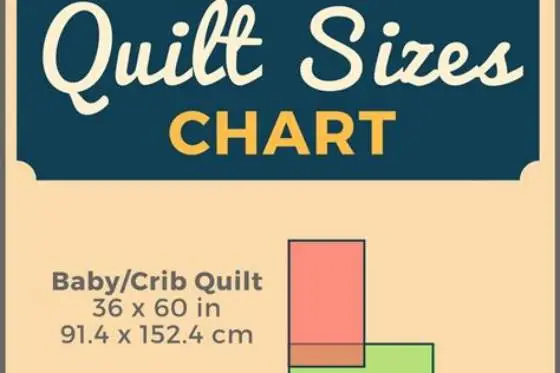
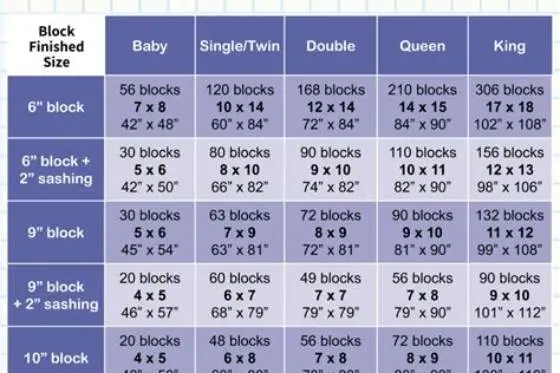
No body sets quilt sizes. No standards group publishes them, and no two charts on the web agree. One search for a queen quilt returns half a dozen numbers. What is fixed is the bed underneath. Mattress sizes are standard, and the quilt is built from them. The chart below gives the finished sizes most patterns and quilt shops use. They are ranges, not single numbers. Treat every number as a typical size, not a law.
At the small end, a quilt hangs neatly and shows the bed skirt. At the large end, it covers more of the sides and feels generous. Your pattern may ask for a size outside the range. It can still be right.
Two footnotes save confusion later. Full mattresses are published as both 53 in and 54 in wide. Either number still fits a full quilt. Crib mattresses run about 28 by 52 in. The crib quilt lies flat on top with no drop at all. Its finished size starts at the mattress size itself. Check which width your pattern means before you cut the backing.
| Quilt | Mattress (in) | Finished quilt (in) | Drop per side (in) |
|---|---|---|---|
| Crib | 28 x 52 | 36 x 52 to 45 x 60 | Lies flat, no drop |
| Throw / lap | No mattress | 50 x 60 to 60 x 70 | Sized to the person |
| Twin | 38 x 75 | 68 x 86 to 72 x 90 | 10 to 18 |
| Twin XL | 38 x 80 | 68 x 92 to 72 x 96 | 10 to 18 |
| Full / double | 53 x 75 | 76 x 87 to 84 x 90 | 10 to 18 |
| Queen | 60 x 80 | 88 x 92 to 96 x 108 | 10 to 18 |
| King | 76 x 80 | 104 x 92 to 110 x 108 | 10 to 18 |
| California king | 72 x 84 | 100 x 104 to 108 x 110 | 10 to 18 |
Measure your mattress first: the two numbers that matter
Five minutes with a tape measure beats any chart. Mattresses vary by maker. A pillow-top can add several inches of depth that a chart never sees. Measure your own bed before you cut. The other half of this decision is picking quilt dimensions that actually fit.
Measure the width across the top. Then measure the length from head to foot. Then measure the depth, from the top of the mattress to the bottom edge. Note the depth twice: once for the mattress alone, and once with any topper you sleep on. The topper counts, because the quilt has to hang past it.
Now choose your drop. That is the distance the quilt hangs below the mattress edge on each side. A 10 to 12 in drop looks neat and shows the bed skirt. A 14 to 18 in drop covers most of the box spring and reads as traditional. Add twice the drop to the width. Add the drop at the foot plus a pillow tuck of 10 to 15 in to the length.
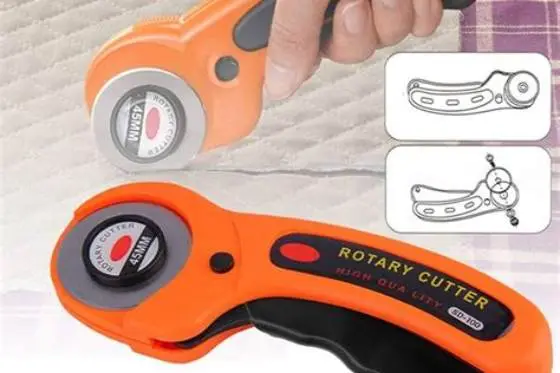
Marking is far easier with a long quilting ruler than with a tape measure alone. The ruler holds a straight edge across the full width of the fabric while you mark. A long non-slip rectangle covers most cuts, from squaring yardage to trimming blocks. It helps to understand rotary cutter for quilting cotton layers 6 thick before going further.
- Lay the tape across the mattress top and read the width, then the length from head to foot.
- Measure the depth at the side, topper included, and write all three numbers down.
- Pick your drop, then work out the finished width and length with the formula in the next section.

OLFA 6x24 Non-Slip Frosted Acrylic Ruler (QR-6x24)
Gives you a 6 by 24 in edge to run across the full fabric width, with a frosted non-slip acrylic body and a 1/8 in grid so you can square up and mark a quilt to size before cutting.
Drop: how far down the sides should a quilt hang
Drop is the part of the quilt that hangs over the edge of the mattress. It is the one choice that explains why charts disagree. Every chart writer picked a different drop and published the sizes that followed. The chart gives the same 10 to 18 in drop for every bed, because each finished range comes from the drop you pick. Once you pick yours, the rest is arithmetic.
The sums are simple. Finished width equals mattress width plus twice the drop. Finished length equals mattress length plus the drop at the foot plus the pillow tuck. A 10 to 15 in tuck lets the quilt fold over the pillows. That fold is the classic made-bed look. No tuck at all suits a quilt that starts below the pillows.
Work one example through. A queen mattress measures 60 by 80 in. A 12 in drop and a 10 in tuck give a quilt 84 in wide and 102 in long. At a 14 in drop the same mattress gives an 88 in width, which is where the chart's queen range begins. Most charts list a queen a little larger than that. They assume a deeper mattress or a longer drop. Your numbers are right for your bed. The chart is a check, not a verdict.
Mattress depth changes the answer more than most quilters expect. Pillow-tops and toppers can add several inches of depth, so the same drop looks very different on a thick mattress than on a thin one. Measure the depth instead of trusting a number, and never trust a chart that ignores it.
No one sets quilt sizes, so this chart gives you the ranges and the drop maths to size any quilt yourself.
Backing, batting and binding: how much each size takes
Backing and batting are cut larger than the quilt top. The layers shift while you quilt. Cut both 4 in larger than the finished top on every side. For a 90 by 108 in queen top, that means backing and batting of about 98 by 116 in. Trim the extra away after quilting, not before.
Yardage depends on the fabric width. Standard quilting cotton runs 42 to 44 in wide on the bolt. A backing is pieced from two or three lengths sewn together. Wide backing fabric at 108 in covers most quilts in one piece and leaves no seam. The table below gives yardage for standard-width fabric. Wide backing needs roughly a third of the length.
Binding is cut in 2.5 in strips, joined end to end. The joined strip must run around the whole quilt. Work out the length first. Add twice the width to twice the length, then add 12 in for joins and corners. A queen at 90 by 108 in needs about 408 in of binding. That works out to roughly seven-eighths of a yard of fabric.
Cotton shrinks a little in the first wash, commonly 3 to 5 percent. A quilt that must finish at an exact size deserves an extra inch or two in the cutting. The Quilt Calculator on this site runs the same sums for any size you type in. Backing, batting and binding are all included.
| Quilt | Backing (yd) | Binding (yd) |
|---|---|---|
| Crib | 2 3/4 | 1/2 |
| Throw / lap | 3 1/2 | 5/8 |
| Twin | 5 1/2 | 3/4 |
| Full / double | 7 1/2 | 7/8 |
| Queen | 8 1/2 | 7/8 |
| King | 9 to 10 | 1 |
| California king | 9 to 10 | 1 |
Throws, baby quilts and odd beds: sizes with no mattress
Some quilts have no mattress to measure. Those sizes come from the person instead. A throw is sized to the body it warms. A 50 by 60 in throw covers a lap. A 60 by 70 in throw reaches the shoulders of a tall reader on a sofa. Pick the size that covers the person, not the furniture.
Baby quilts run smaller still. A square 36 by 36 in quilt suits tummy time and the stroller. A crib quilt of 36 by 52 in fits the mattress and doubles as a throw later. A crib quilt is for play and display, not for sleep. Keep loose bedding out of the cot while the baby sleeps, and check the current safe-sleep guidance first. Keep baby quilts light and flat, with no loose trims.
Odd beds need the same measuring habit as ordinary ones. A twin XL mattress runs 38 by 80 in, five inches longer than a twin. That is why dorm quilts run long and narrow. A California king is longer and narrower than a standard king: 72 by 84 in against 76 by 80 in. A king quilt hangs short at the foot of one. Measure first, then trust the tape over the label.
Patterns sometimes name a size the chart does not list. A nap quilt or a picnic quilt are two examples. Treat the name as a hint and the finished size as the fact. If the pattern gives dimensions, use those. If it gives only a name, measure the job it has to do. A quilt that fits its use is the right size, whatever the label says.
Pick your size: the rule that settles it
Choosing comes down to three questions in order. Which bed will it cover? How far should it hang? Does the pattern agree? Answer those and the chart narrows to one row. The drop sets the exact size inside the range. Skip any one of them and you are guessing.
A 90 by 108 in queen is a sensible first bed quilt. It sits mid-range, and most patterns and batting packs are built around it. It covers a queen mattress with a generous drop. If your bed is a king, scale up the same way. Never stretch a queen pattern.
Check the pattern before you buy fabric. Some patterns finish a little outside the chart. Their blocks only work in whole numbers. A block count that lands two inches short is still the right quilt. Buy the backing after the top is pieced, when you know the true finished size. Then the yardage in the table above will match.
Carry one sentence away. Work from your own mattress, pick your drop, and let those two numbers set the size. Write them on the pattern envelope. Then the next quilt sizes itself.
Still wondering?
What size is a standard queen quilt?
Most charts put a queen quilt at 88 by 92 in to 96 by 108 in. The size most patterns use is 90 by 108 in. The range exists because charts assume different drops. Pick your drop first and the size follows.
How much bigger should a quilt be than the mattress?
Add twice your drop to the width. Add the drop plus a pillow tuck to the length. With a 12 in drop and a 10 in tuck, a queen grows from 60 by 80 in to 84 by 102 in. A neat look needs a 10 to 12 in drop.
How much backing fabric do I need for a queen quilt?
About 8.5 yd of standard 42 in fabric, pieced from three lengths. One piece of 108 in wide backing cut to length works too. Cut the backing 4 in larger than the top on every side.
What size quilt fits a twin bed?
A twin quilt usually finishes at 68 by 86 in to 72 by 90 in for a 38 by 75 in mattress. A twin XL mattress is five inches longer, so its quilt runs about 68 by 92 in to 72 by 96 in. Dorm beds are twin XL.
Do quilt sizes include the drop?
Yes. Finished quilt sizes include the drop, which is why a queen quilt measures far more than its 60 by 80 in mattress. The chart numbers are the quilt itself, edge to edge after binding.
How wide should binding strips be?
Most quilters cut binding strips 2.5 in wide and join them until the strip runs around the quilt. Add 12 in for joins and corners. A queen needs about 408 in of joined binding, or roughly seven-eighths of a yard.