Mechanical vs computerized sewing machine pick by sewing and control
Pick mechanical if you sew simple seams, want lower cost and to fix more yourself; pick computerized if you want push-button stitch choice, one-step buttonholes, needle up/down and speed control for quilting, frequent sewing or decorative work. Match by tasks, not brand.
On this page (8 sections)
- The short version
- Inside the Case: what mechanical, electronic and computerized really means
- Controls: stitch choice, buttonholes, tension and speed
- Price, Weight and Fixes: what fails and how you service each type
- Match to Your Sewing: beginners, quilters, heavy fabric and frequency
- Try Before You Choose: a 10-minute test that shows which type fits you
- Still wondering?
Part of our guide on best sewing machine for beginners
Key figures
- Stitch choice
- dial vs push-button
- Buttonhole
- 4-step vs 1-step
- Needle control
- manual vs up/down button
- Service path
- mechanical = local shop friendly
- Best simple test
- sew denim + cotton
- Needle to test
- 80/12 and 90/14, 50 wt thread
The short version
- Test buttonholes and speed control on your own fabric before you decide.
- Mechanical gives direct dials and easier home care; computerized gives memory, needle position and automation.
- Quilters and daily sewists gain most from computerized features; mending and simple garment sewists often do not.
- Check throat space in inches (cm), presser foot lift height, and bobbin type you can find locally.
Inside the Case: what mechanical, electronic and computerized really means
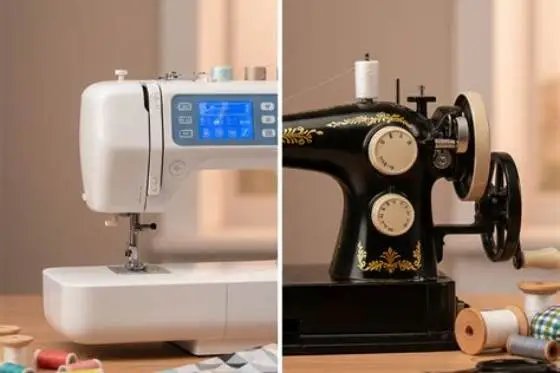
A mechanical machine moves with gears, cams and levers you turn by hand. You select a stitch with a dial that physically shifts the cam stack. You set length and width with separate dials. No screen sits between you and the motion. That direct link gives you tactile feedback you can feel when the dial clicks. It keeps the inside simpler with fewer circuit boards to fail. You can often oil points you reach yourself, depending on the manual.
An electronic machine still uses dials but adds a circuit board to regulate motor speed and needle power. The board helps keep stitches more even at low speed on this type when fabric, feed and needle conditions are right. It lets the motor punch through thicker layers with less foot pressure. You still choose stitches by dial or button, but the machine holds speed steadier.
A computerized machine adds a microprocessor, memory and often a screen. It stores stitch patterns, steps through a one-step buttonhole automatically, and remembers needle position and settings after you switch off. Sensors watch for thread or bobbin issues and beep or pause. That adds automated sequences you start with a button. The extra sensors and displays can fail. When it works, it saves setup time. Some models are sealed or self-oiling per manual, so check before oiling yourself.
Controls: stitch choice, buttonholes, tension and speed
Stitch selection feels distinct. A mechanical machine uses a dial with pictures. You turn it to select the stitch, then adjust length and width manually with two more dials. This process takes longer but offers tactile feedback and simplicity. A computerized machine uses buttons or a touch screen. It shows stitch length and width on screen, ready for quick nudges. This speeds up stitch swapping when you sew a variety of projects. If that sounds like your situation, read up on handling thick seams affordably next.
Buttonholes differ clearly. Mechanical machines require a four-step manual sequence: front bar, side, back bar, side again. You control length by eye, which takes care to match rows. Computerized machines handle buttonholes in one automatic step. They use a special foot with a sensor or a button that measures the button, then sews the rectangle in one go. This feature reduces time and improves repeatability for shirts with many buttons.
Tension works similarly but with some differences. Both machine types have a manual dial to adjust top thread tension, often numbered 0 to 9. Computerized machines may add automatic tension adjustment per stitch, with manual override on screen. Both need re-threading with the presser foot up so the thread seats correctly. This habit fixes many thread nest problems. You can check tension by sewing test swatches and observing loops on top or bottom; loops on top suggest top tension is too loose or bobbin tension too tight, and vice versa.
Speed control also varies. Mechanical machines usually respond only to the foot pedal, needing practice to keep speed slow and even. Computerized machines often add a speed slider or buttons and a start/stop function. These let you cap the top speed while you learn and sew curves or topstitching more steadily. They may also have a needle up/down button, which stops sewing with the needle down to pivot corners easily. This helps quilters and those who sew frequent curves. If you don’t pivot often, you may not miss this feature. It helps to understand features for mid-range machines before going further.

SINGER Regular Point Sewing Machine Needle
Lets you run the 10-minute test on any machine with the correct 80/12 for cotton and 90/14 for denim/canvas before you choose.
Price, Weight and Fixes: what fails and how you service each type
Price tags overlap, but the spread is real. Mechanical machines usually start lower because they carry fewer boards and screens. Computerized machines add cost for the processor, display and sensors. This reflects in the price and parts cost later. Neither type guarantees better stitch quality. Check what is included: presser feet, bobbins, cover, and the presser foot lift height to handle thick seams. You can measure lift height by raising the foot and noting clearance in inches (cm).
Weight matters when you carry the machine or store it high. Mechanical models often weigh a bit less and feel boxy and solid. Computerized models vary: some are heavier due to electronics and frame, others lighter with plastic parts offsetting the board weight. Lift the machine or roll it on a cart to see if you can manage one-handed. A heavy machine you dread moving will see less use.
Failures differ by type. Mechanical issues often come from lint, dull needles, worn belts or timing slipped after a jam. You can usually fix these at home: replace needles, clean bobbin area, re-thread with foot up, check bobbin class (which you find in the manual or on the bobbin). Computerized machines add faults like board or sensor failures, screen glitches and error codes. These need a shop with parts and software. Before buying, ask which shops service your model locally and how long parts take to arrive.
Most sewists blame tension when the real split is a dial versus a circuit board.
Match to Your Sewing: beginners, quilters, heavy fabric and frequency
Beginners often benefit from fewer choices and clear feedback. Mechanical machines teach you to set length, width and tension manually and listen when the motor strains. This builds habits useful on any machine. If you want speed control while learning, some simple computerized models with sliders and screens feel calmer. Either way, use a fresh 80/12 needle and 50 wt thread for learning on quilting cotton.
Quilters and embroiderers find computerized machines helpful. Needle up/down for pivots, speed sliders for free-motion, and a wider range of decorative and utility stitches save setup time. Look for larger throat space, measured from needle to machine arm in inches (cm). More space helps maneuver quilts. For piecing, a consistent quarter-inch foot and reliable seam matter more than stitch count. If you quilt weekly, automation pays off.
Heavy fabric and leather demand power, lift and the right feet more than computer features. Check if the machine’s presser foot lifts high enough for layers. Measure lift height in inches (cm). Feed dogs must handle thick layers without slipping. Use needles sized 90/14 or 100/16 with appropriate thread. Some mechanical machines gear for power, while some computerized models use electronic controls to boost torque. For occasional heavy work, either type works if lift and feed are right. For daily heavy-duty sewing, pick a model made for that purpose.
Try Before You Choose: a 10-minute test that shows which type fits you
Bring two swatches: quilting cotton about 8 inches (20 cm) square and denim with a flat-felled seam. Fit new needles (80/12 for cotton and 90/14 for denim) both with 50 wt thread. Use the correct bobbin class for each machine, found in the manual or on the bobbin. Ask to clean lint and oil only as the manual specifies. This small test reveals more than specs.
Sew a straight seam, a zigzag over the seam hump, a pivot with needle down if available, and one buttonhole on each fabric. Keep the presser foot up when threading, then lower it to sew. Listen for even feeding without pushing. Watch for skipped stitches or loops on the bobbin side. Note how long buttonholes take and if they match. Sew a slow curve with the speed slider capped, then again using only the pedal. See which method lets you stay smooth. Lift the machine and measure throat space and presser foot lift in inches (cm). Ask the shop about service cost and part availability.
- Thread with presser foot up, new needle, correct bobbin: sew straight seam on cotton
- Sew zigzag across seam hump on denim: check for skips and loops
- Make one buttonhole on each fabric: compare time and match
- Try slow curve with slider capped, then pedal only: note control
- Measure throat and lift in inches (cm), lift and carry the machine
Choose by tasks and time at the machine: mechanical for simple, occasional sewing and easy care; computerized for quilting, frequent sewing and push-button control.
Still wondering?
Is electronic the same as computerized?
Not exactly. Electronic machines usually have a board that steadies speed and power but still use dials for stitch choice. Computerized machines add a processor, memory and often a screen for stitch selection, one-step buttonholes and needle position control. Shops sometimes mix terms, so check the control panel.
Do computerized machines need more servicing?
They require the same cleaning and needle changes as mechanical machines. However, faults in boards or sensors need specialist repair with parts and diagnostics. Mechanical issues like lint, dull needles or worn belts are often home-fixable. Check local service options before buying.
Which is better for thick denim or leather?
Choose based on presser foot lift height, feeding system and needle compatibility rather than computer features alone. Test sewing over a seam hump with a 90/14 or 100/16 needle and the foot you plan to use. For frequent heavy work, consider a machine designed for heavy-duty sewing.
Will a beginner outgrow a mechanical machine fast?
Not if your projects stay within simple straight seams, hems and basic crafts. You might outgrow it if you want features like one-step buttonholes, speed limiting and needle down for pivots often. Those features help quilters and sewists who work weekly.
Can I fix tension myself on either type?
Yes. Start with a new needle, clean lint, re-thread with the presser foot up, and use the correct bobbin. Adjust top tension gradually and test on your fabric. If loops persist, ask a shop to check bobbin tension and timing.