Knit vs woven: which fabric stretches and what your pattern needs
Knit fabric stretches because its yarns form interlocking loops, while woven fabric’s yarns run straight and resist stretch. Test fabric stretch by gently pulling and check if edges curl (knit) or fray (woven). Adjust your needle and stitch to suit each fabric type.
On this page (8 sections)
- The short version
- How knit loops vs woven warp/weft are made and why only knit stretches
- How to tell what you have: stretch test, look at yarns, edge curl vs fray
- Knit cotton vs woven cotton: same fiber, different behavior and use
- What needle, stitch length, and presser foot each fabric needs on a home machine
- If you can substitute one for the other and what goes wrong when you do
- Knit vs woven fabric: how to identify and handle each for your pattern
- Still wondering?
Part of our guide on best fabric for hot humid weather
Key figures
- Knits stretch
- varies by knit type, test your fabric
- Wovens stretch
- minimal along grain; some bias stretch
- Ballpoint needle
- for knits
- Sharp needle
- for wovens
- Edge behavior
- curl vs fray (unless finished)
- Typical stitch length
- longer for knits
- Typical stitch length
- shorter for wovens
The short version
- Stretch test shows knit fabrics usually stretch noticeably; woven fabrics stretch very little along the grain.
- Edges curl on knit fabric and fray on woven fabric after cutting, except when fabrics are heavily finished.
- Use ballpoint needles and longer stitch lengths for knits; sharp needles and shorter stitches for wovens.
- Substituting one fabric type for another often causes fit and sewing problems.
- Check yarn structure and stretch before cutting to pick the right pattern and machine settings.
How knit loops vs woven warp/weft are made and why only knit stretches
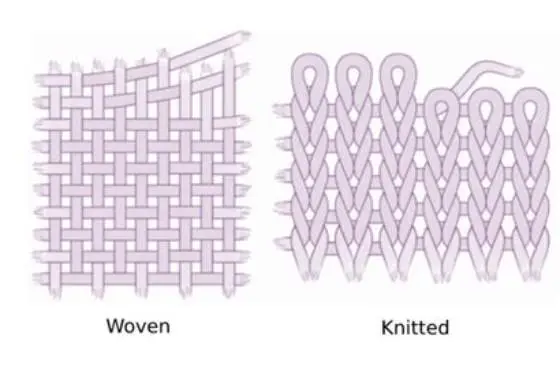
Knit fabrics form yarn loops that interlock, allowing them to stretch mainly sideways and sometimes lengthwise without damage.
Woven fabrics have two sets of straight yarns (warp and weft) interlaced at right angles, creating a stable grid that resists stretch.
Wovens may stretch slightly on the diagonal (bias) because of yarn angle shifting, but this stretch is limited and not a substitute for knit stretch.
Knit fabrics generally return to their original shape after stretching, while woven fabrics hold their shape unless overstretched, which can cause damage. It helps to understand non stretching beginner fabrics before going further.
How to tell what you have: stretch test, look at yarns, edge curl vs fray
Gently stretch the fabric sideways and lengthwise. Noticeable stretch usually indicates knit; little stretch along grain points to woven.
Look closely at the yarns: knits show loops; wovens have straight yarns crossing over and under.
Cut a small square and check the edges. Knit edges tend to curl due to loop tension; woven edges usually fray as yarns separate.
Some stable knits stretch less and may feel like woven fabrics initially. Test by stretching a measured length and compare to your pattern's required stretch.
Fabrics containing elastane stretch more and recover better than 100% cotton knits, but the exact amount varies by knit type and finishing. Check the bolt label and test your swatch.
Spray the edge with water: knit edges curl tighter when damp, while woven edges may fray more. This helps identify fabrics that appear stretchy due to finishes but lack true knit stretch.
Note that this edge curl/fray test may fail if the fabric is bonded, coated, or heavily finished.
- Pinch the fabric and stretch sideways about 2 inches (5cm).
- Observe how much it extends and if it springs back.
- Look at the fabric edge after a fresh cut for curling or fraying.
- Examine yarn loops or straight yarn lines under magnification if needed.

Knit cotton vs woven cotton: same fiber, different behavior and use
Cotton fiber feels soft and breathable whether knit or woven, but their behavior differs.
Knit cotton, like jersey, stretches and fits close to the body; woven cotton is stable and keeps its shape.
Patterns designed for knit cotton expect fabric stretch and shaping by the fabric; woven cotton patterns rely on darts or seams for shaping.
Using the wrong cotton type can cause fit and sewing issues, such as tightness when substituting woven for knit.
Jersey and poplin come in several weights; always check your pattern's fabric weight recommendation and handle the fabric to judge drape.
| Aspect | Knit cotton | Woven cotton |
|---|---|---|
| Stretch | noticeable stretch, varies by knit | minimal stretch |
| Edge | edges tend to curl | edges tend to fray |
| Typical use | t-shirts, casual wear | shirts, dresses, quilting |
| Shaping | by fabric stretch | by darts or seams |
- Knit cotton stretches with body movement
- Woven cotton holds sharp lines and seams
- Knit cotton requires stretch stitches for sewing
- Woven cotton needs shaping for fit
You can identify knit vs woven fabric by simple stretch and edge tests, then adjust your machine settings to match their unique structure.
What needle, stitch length, and presser foot each fabric needs on a home machine
Use a ballpoint needle for knit fabrics. Its rounded tip slides between loops without cutting yarns, preventing runs and skipped stitches.
Set a longer stitch length (around 3.0 to 4.0 mm) for knits. Choose a stretch or zigzag stitch to accommodate fabric stretch and avoid thread breakage.
For woven fabrics, use a sharp needle to penetrate crisp yarns cleanly.
Select a shorter stitch length (around 2.0 to 2.5 mm) and a straight stitch for wovens. A standard presser foot works well for wovens, while knits benefit from a walking or stretch foot to feed fabric evenly.
- Knit fabric: ballpoint needle, longer stitch length, stretch or zigzag stitch
- Woven fabric: sharp needle, shorter stitch length, straight stitch
- Presser foot: walking or stretch foot for knits; regular foot for wovens
- Always test stitches on fabric scraps before starting
If you can substitute one for the other and what goes wrong when you do
Substituting woven fabric where knit is required usually causes stiffness, tight fits, and seam stress because woven fabrics lack the needed stretch.
Using knit fabric in a woven pattern often results in sagging, baggy fit, and seam instability since knits stretch unpredictably.
Adjusting pattern ease or adding stabilizers may help but rarely achieves the intended fit or durability.
Patterns specify fabric type based on expected stretch and fit; ignoring these leads to poor results.
For example, a knit pattern expecting 30% stretch won’t fit properly when sewn in woven fabric with minimal stretch, causing pulling and popping seams.
If you must use knit fabric for a woven pattern, size down and add stay tape at stress points to reduce sagging, but expect differences in drape and fit.
Testing fabric stability by hanging a scrap can help; significant growth suggests the fabric may stretch out and bag in the garment. However, this test does not work reliably on finished fabrics.
| Substitution | Fit issues | Sewing issues |
|---|---|---|
| Woven instead of knit | Too tight, no stretch | Seam stress, fabric tearing |
| Knit instead of woven | Loose, sagging seams | Puckering, seam distortion |
Knit vs woven fabric: how to identify and handle each for your pattern
Patterns specify knit or woven fabric based on expected stretch and shaping. Always check your fabric’s stretch and yarn structure before cutting.
Adjust your machine settings accordingly: ballpoint needle and stretch stitches for knits; sharp needle and straight stitch for wovens.
Handle knit fabric gently to avoid distorting loops; support woven fabric edges to prevent fraying.
Prewash fabrics before cutting since shrinkage varies by fiber, knit type, finishing, and wash conditions. Knits often shrink more and differently than wovens.
Measure and record fabric shrinkage by washing and drying a swatch before cutting. This helps avoid surprises like garments shrinking or losing fit after the first wash.
Pin knit fabric every few inches and support its weight to prevent stretching while sewing. For woven fabrics, clip loose threads, finish edges promptly, and press seams flat to reduce fraying and puckering.
Sew test seams on scraps and check for seam stretch on knits and smooth seams on wovens before starting your project.
- Check fabric stretch by hand before cutting.
- Examine yarn structure under good light.
- Select needles and stitch types based on fabric type.
- Use appropriate presser foot and adjust stitch length.
- Test all settings on fabric scraps.
- Cut carefully and handle edges considering curl or fray.
- Prewash and measure fabric shrinkage before cutting.
For most home sewing projects, identifying fabric type by stretch and yarn structure first saves hours of frustration.
Still wondering?
Can I use a sharp needle on knit fabric?
Sharp needles can cut knit fabric loops, causing runs. Use a ballpoint needle instead to slide safely between loops.
Why does knit fabric curl after cutting?
Knit fabric curls because its yarn loops pull unevenly without a stable edge, unlike woven fabrics where yarns are fixed.
How do I know if my fabric is a knit or woven cotton?
Test by stretching: knits stretch noticeably and edges curl; wovens stretch little and edges fray. Also check yarn structure under light.
What stitch length is best for sewing woven fabric?
Shorter stitches, around 2.0 to 2.5 mm, work best for woven fabric to secure seams without puckering.
Is it possible to substitute woven fabric for knit in a pattern?
Substitution usually causes fit problems because woven fabric lacks stretch. Adjustments seldom fix this fully.