Fabric Medium for Acrylic Paint on Fabric: How to Mix and Set It
Fabric medium mixed into acrylic paint keeps the paint flexible, so it moves with the fabric instead of cracking. Mix it in before you paint, test the mix on a scrap, and heat-set the dry design if the label calls for it.
On this page (8 sections)
- The short version
- Fabric medium to mix with acrylic paint: what it is and why paint needs it
- How much fabric medium to mix with acrylic paint: the ratio that works
- Mixing and painting: the steps that keep fabric soft
- Heat-setting acrylic paint on fabric: iron or dryer
- Which fabric takes acrylic paint best: cotton, blends and synthetics
- Buying fabric medium: what to check before you pay
- Still wondering?
Part of our guide on choosing fabric marker tips
Key figures
- Mix
- each colour on its own
- Dry before heat-set
- fully dry, no tack
- Iron heat-set
- dry iron, cloth, per label
- First wash
- after a full cure, cold
- Best fabric
- cotton and cotton blends
The short version
- Follow the label on the bottle you buy.
- Pre-wash the fabric so sizing does not block the paint.
- Paint in thin layers and let each one dry before the next.
- Heat-set the dry design with an iron before the first wash.
- Wash painted fabric cold, inside out, and gentle.
Fabric medium to mix with acrylic paint: what it is and why paint needs it
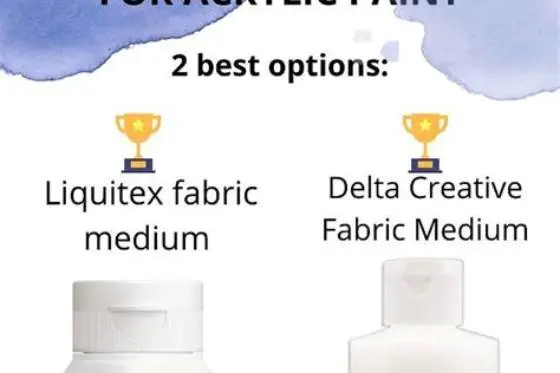
Fabric medium, also called textile medium, is a liquid you mix into acrylic paint before it touches fabric. Medium changes how the paint dries: the stiff plastic film that plain acrylic leaves behind turns into a flexible layer that bends with the fibres. Paint still looks like paint, and the colour stays bright, but the fabric keeps its drape and hand.
Plain acrylic paint dries like a shell on fabric. It sits on top of the fibres, feels hard against the skin, and cracks the first time the garment moves or folds. Wash it and the cracks widen, then flakes lift away. Fabric paint sold in craft shops is acrylic paint with textile medium already mixed in, which is why it feels softer and survives the wash.
Medium does not turn paint into dye, and it does not fix the wrong fabric. Colour still sits in the fibres rather than soaking through them the way dye does. Very dark fabric still needs extra coats for a pale colour to show. What medium does is narrower and more useful: it lets ordinary acrylic paint behave on fabric the way fabric paint does.
How much fabric medium to mix with acrylic paint: the ratio that works
A commonly suggested starting mix is one part medium to two parts paint, though some bottles call for equal parts instead. Follow the label on the bottle you hold, because the label is the rule for that bottle. Stir until the colour is even, then test the mix on a scrap before you paint the project. Before you commit to anything, it is worth looking at how long and hot to heat-set.
More medium means a softer finish and a paler colour. Less medium means a stiffer finish and a stronger colour. That trade is the whole skill: add medium until the paint brushes on smoothly and the scrap still feels like fabric when it dries. If the mix feels thick, add a few drops of water, but no more than that, because water thins the binder and weakens the bond. Stir the mix again after adding water, so the colour stays even.
Mix each colour on its own, in a small pot or a palette well. Write the ratio on the pot when you find one you like. Paint straight from the tube varies from colour to colour. A mix that works for a thin yellow may need more medium for a thick white.
Mixing and painting: the steps that keep fabric soft
Wash and dry the fabric before you paint it. New fabric carries sizing, a coating from the mill that stops paint soaking into the fibres. Paint laid over sizing lifts off in the first wash. One plain wash and dry removes it. Iron the fabric flat, then pin it or stretch it over a board so it cannot shift while you paint.
Thin layers are the difference between a soft shirt and a stiff board. Two or three light coats, each left to dry before the next, flex with the fabric. One thick coat dries hard, cracks at the fold lines, and feels rough against the skin. Load the brush lightly, paint with the grain of the weave, and stop when the colour looks even.
Let the finished design air-dry until it feels dry and cool, with no tack, all the way through. A full day is commonly enough indoors, but always test the surface for tack before you heat-set. Drying in a hurry with a hairdryer cures the surface while the inside stays wet. That trapped moisture weakens the bond heat-setting is meant to make. Dry it somewhere ventilated, away from direct heat.
- Pre-wash and dry the fabric, then iron it flat and pin it down.
- Squeeze paint and medium onto a palette and mix one colour at a time.
- Test the mix on a scrap of the same fabric and let it dry.
- Paint in thin, even layers, letting each coat dry before the next.
- Leave the finished design to air-dry until it feels fully dry, with no tack.
- Heat-set the dry design with an iron or in the dryer.
Acrylic paint dries stiff on fabric and cracks when you wear it. A bottle of fabric medium is the fix, and the ratio is simple.
Heat-setting acrylic paint on fabric: iron or dryer
Heat-setting is the step that makes most painted fabric washable. Heat bonds the paint into the fibres, and without it the design fades and flakes in the wash even when the medium is mixed right. Treat it as part of the painting, not an optional extra, unless the label says the medium cures as it dries. Some fabrics cannot take an iron at all, so check the care label before you press.
An iron suits most projects. Use a dry iron at the temperature the fabric can tolerate, and turn the steam off. Lay a thin pressing cloth or a plain piece of cotton over the design. Press firmly and move slowly, making several passes so every part gets the heat it needs. Pressing the reverse side works too, and it keeps the iron off the paint itself.
For a finished garment, the dryer does the same job when the medium allows it. Run the dry, painted piece through a moderate cycle. Test a scrap the same way, then wash it once, before you trust the garment. Wait until the paint has fully cured before the first wash, then wash cold and gentle, inside out, so the design lasts.
Which fabric takes acrylic paint best: cotton, blends and synthetics
Cotton takes acrylic paint best. Its fibres soak up the paint, hold the colour, and stay soft once the medium has done its work. Cotton blends behave nearly as well, and tightly woven cotton gives the cleanest colour because the paint sits evenly on the surface. Silk takes bright colour too, though it needs a light hand and thin paint.
Synthetic fabrics resist paint. Polyester fibres do not absorb the way cotton does, so the paint sits on top and wears away faster, even with medium and heat-setting. Blends vary with the mix: a mostly cotton blend paints well, while a mostly polyester blend needs testing first. Stretch fabrics add another problem, because paint that cannot stretch with the knit will crack at the seams. Paint knits relaxed, not pulled tight, so the paint dries in the shape the fabric keeps.
Sizing, softener and shop dust all sit between the paint and the fibre on any fabric, and each one weakens the bond. Dark fabric needs more coats than pale fabric for the same colour, because the paint has to cover the base colour first.
Buying fabric medium: what to check before you pay
Check first whether the bottle needs heat-setting. Some mediums turn permanent as they dry, while others need an iron or a dryer to lock in. The bottle says which kind it is. A no-heat-set medium suits a quick project or a fabric that cannot take an iron. A heat-setting medium suits clothing that will be washed often. Either kind works when you follow its own label.
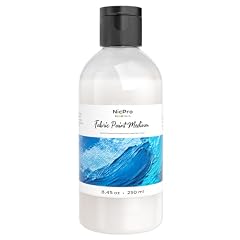
Buy the size that fits the job. Small bottles cover a tee or a tote bag, while larger ones suit repeated projects or a whole quilt. Check the mixing ratio before you buy. One that calls for equal parts goes twice as fast as one that mixes one to two. Oil-based mediums do not mix with acrylic paint, so keep to water-based fabric mediums.
Home recipes exist, and they are a weaker substitute. Crafters without medium sometimes thin acrylic paint with glycerin and water, or with fabric softener and water. These mixes dry softer than plain paint, but they wash out faster and the results vary from batch to batch. For anything you plan to wear and wash, a bottle of real fabric medium is the safer buy.
Still wondering?
Can I use acrylic paint on fabric without medium?
Yes, for decoration that never gets washed, such as a wall hanging. The paint dries stiff, cracks when the fabric moves, and fades in the wash. Medium is what makes acrylic paint wearable and washable, so skip it only when the piece will never be worn or laundered.
What ratio of fabric medium to acrylic paint?
The bottle you buy is the rule, so follow its mixing ratio and test the mix on a scrap first. More medium gives a softer finish and a paler colour, while less medium gives a stiffer finish and a stronger colour.
Do I have to heat-set acrylic paint on fabric?
For anything you plan to wash, yes, unless the bottle says no heat-setting is needed. Heat bonds the paint into the fibres so it survives the wash. A few mediums cure as they dry, so check the bottle before you decide.
How long before I can wash painted fabric?
Let the paint dry fully, with no tack; a full day is commonly enough indoors. Heat-set it if the label calls for it, then give it a full cure before the first wash. Wash cold and gentle, inside out, and skip the hot dryer.
Will acrylic paint wash out of fabric?
Without medium and heat-setting, it fades, cracks and flakes in the wash. With medium mixed in and a proper heat-set, the design holds through many washes. Thin layers, a full dry, and a cold gentle wash all help it last.