10 Easy Quilting Ideas for Beginners (Great First Quilt Projects)
The easiest quilting ideas for beginners are a charm-square patchwork quilt, a rail fence quilt and a jelly roll race quilt - all straight seams and no points to match. Start even smaller with mug rugs, a table runner or quilted placemats.
On this page (14 sections)
- The short version
- How to choose a first quilt
- 1. Charm Square Patchwork Quilt
- 2. Rail Fence Quilt
- 3. Jelly Roll Race Quilt
- 4. Quilted Table Runner
- 5. Mug Rugs and Coasters
- 6. Disappearing Nine Patch
- 7. Half-Square Triangle Throw
- 8. Quilt-As-You-Go Placemats
- 9. Simple Strip (Coin) Quilt
- 10. Quilted Pillow Cover
- Tools that make a first quilt easier
- Still wondering?
Part of our guide on sewing machine with quilting features
Key figures
- Charm pack
- 42 squares, 5 x 5 in
- Jelly roll
- 40 strips, 2.5 in x width
- Layer cake
- 42 squares, 10 x 10 in
- Fat quarter
- About 18 x 22 in
The short version
- Squares and strips first - points and triangles later
- Precuts (charm packs, jelly rolls) save hours of cutting
- A 1/4 in seam is the quilter's standard
- Quilt straight lines with a walking foot on any home machine
How to choose a first quilt
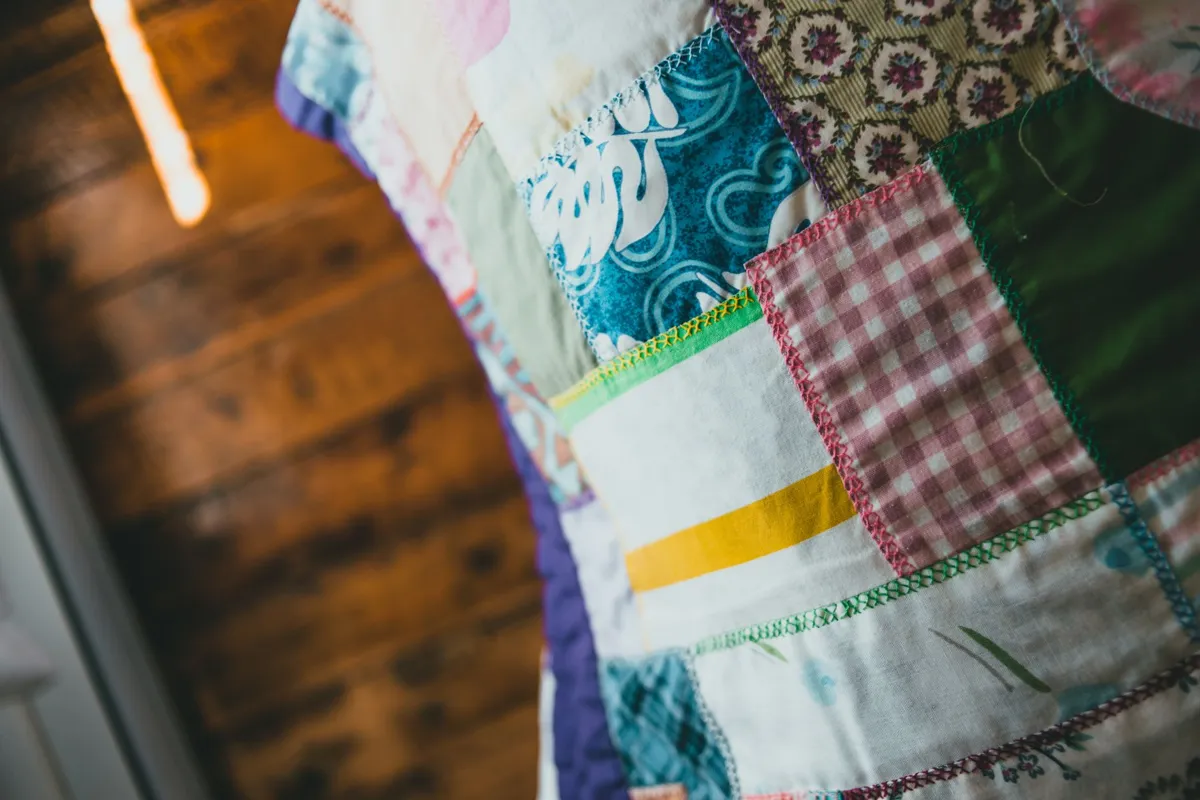
A good first quilt uses big pieces, straight seams and a size you can handle on a home sewing machine - baby or lap size (about 36 x 52 to 50 x 65 inches). Pick a pattern where seams don't have to meet at sharp points.
Precut fabric bundles are a beginner's best friend: the fabrics already coordinate and most of the cutting is done. The ideas below start with the simplest and build toward slightly trickier blocks.
1. Charm Square Patchwork Quilt
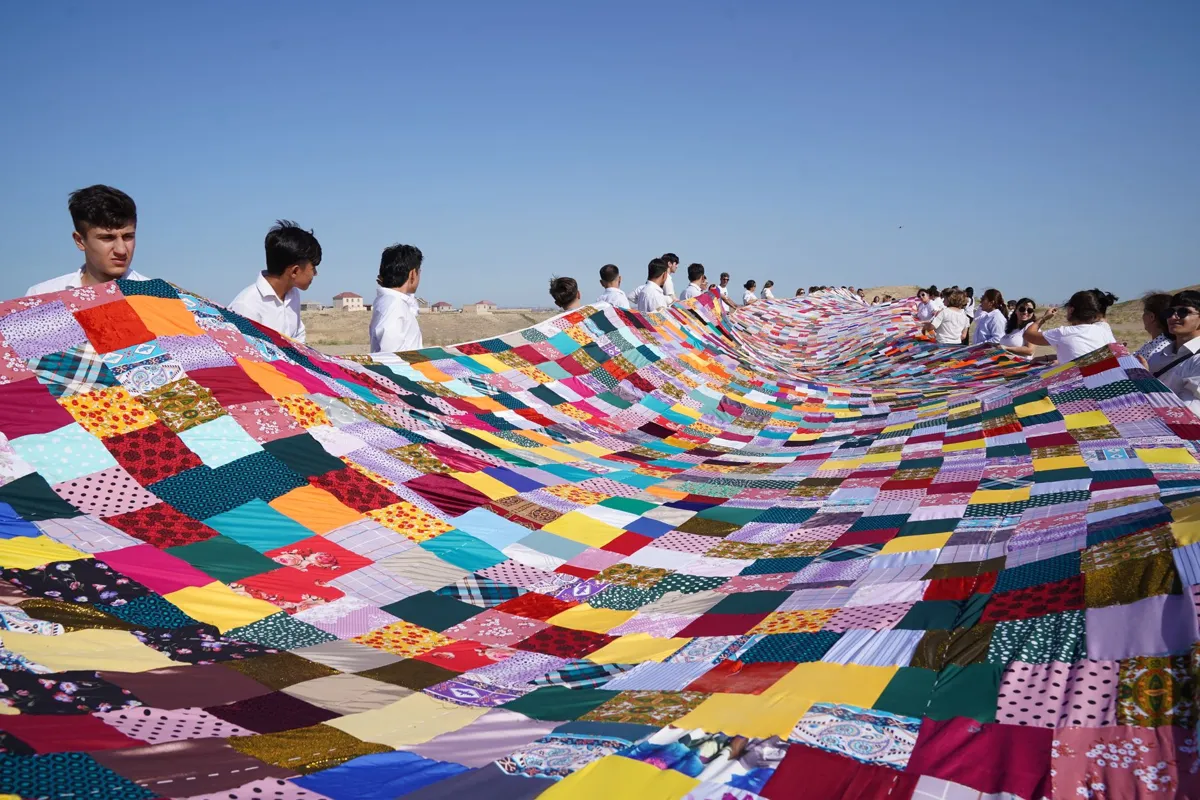
Sew 5-inch charm squares into rows, then sew the rows together. That's it - and it looks fantastic in a coordinated precut. Two charm packs (84 squares) make a cute baby quilt about 36 x 54 inches with a border.
- Skill: absolute beginner
- Buy: 2 charm packs + backing + batting
- You'll learn: the 1/4 in seam and pressing rows
2. Rail Fence Quilt
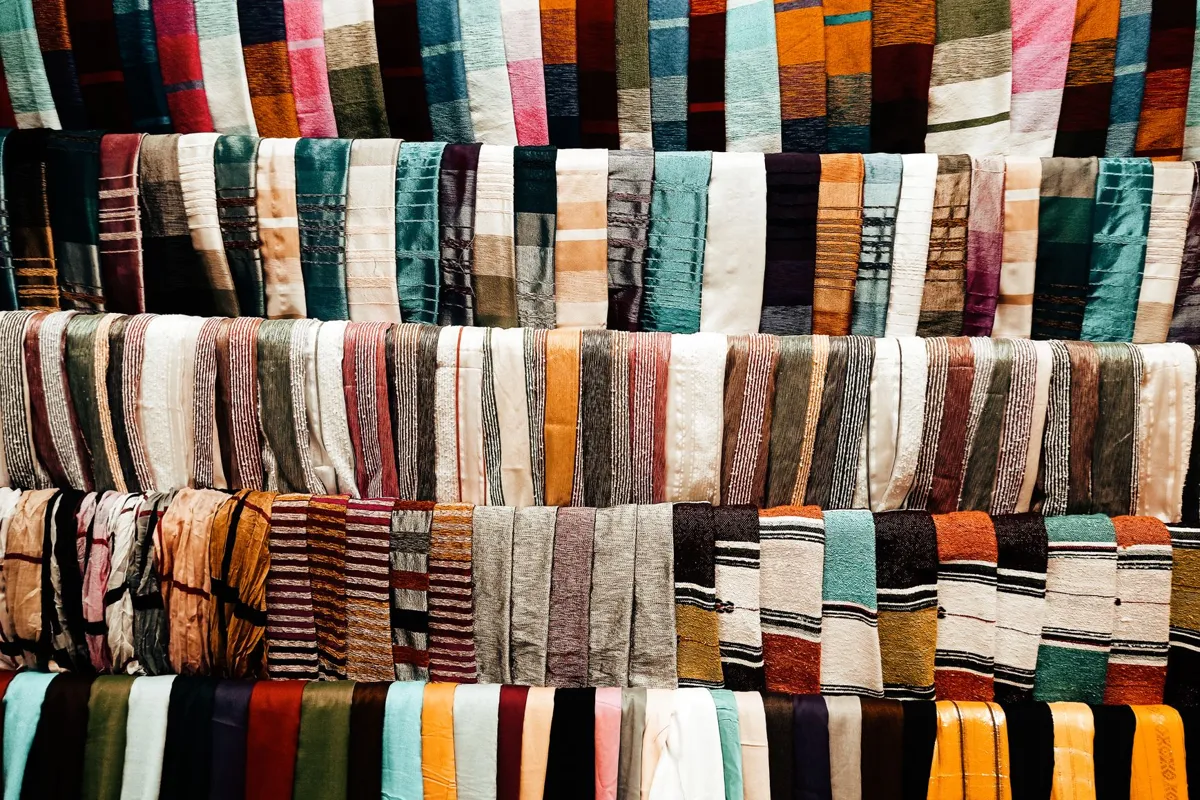
Sew three or four strips together, cut the strip set into squares and rotate every other block. Straight seams create a woven zigzag look that seems far harder than it is. Before you commit to anything, it is worth looking at quick Handmade Gifts and Decorations.
- Skill: beginner
- Buy: 1 jelly roll or 8-10 fat quarters
- You'll learn: strip piecing and block rotation
Your first quilt doesn't need a single triangle. Squares and strips sewn straight look modern and finish fast.
3. Jelly Roll Race Quilt
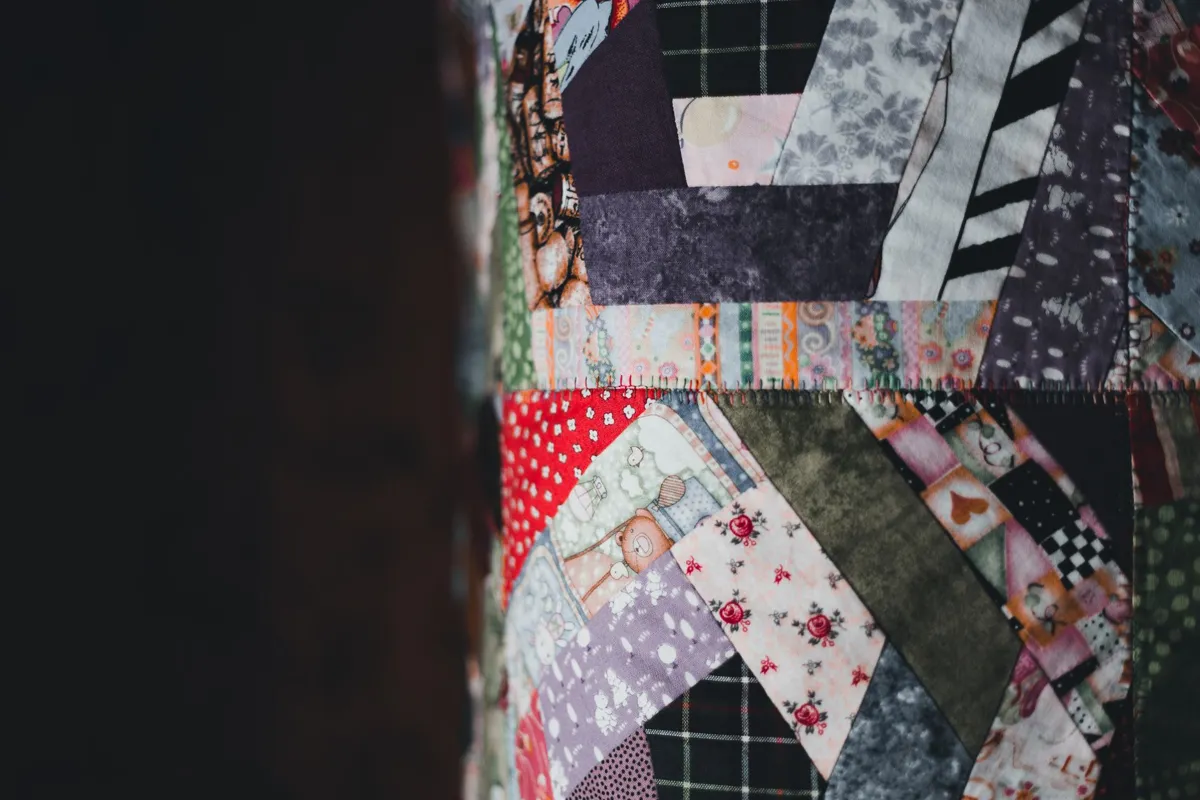
Sew all the strips of a jelly roll end to end into one long strip, then fold and sew it to itself again and again. One jelly roll makes a lap quilt top of roughly 50 x 64 inches in an afternoon.
- Skill: beginner
- Buy: 1 jelly roll (40 strips)
- You'll learn: chain piecing long seams
4. Quilted Table Runner
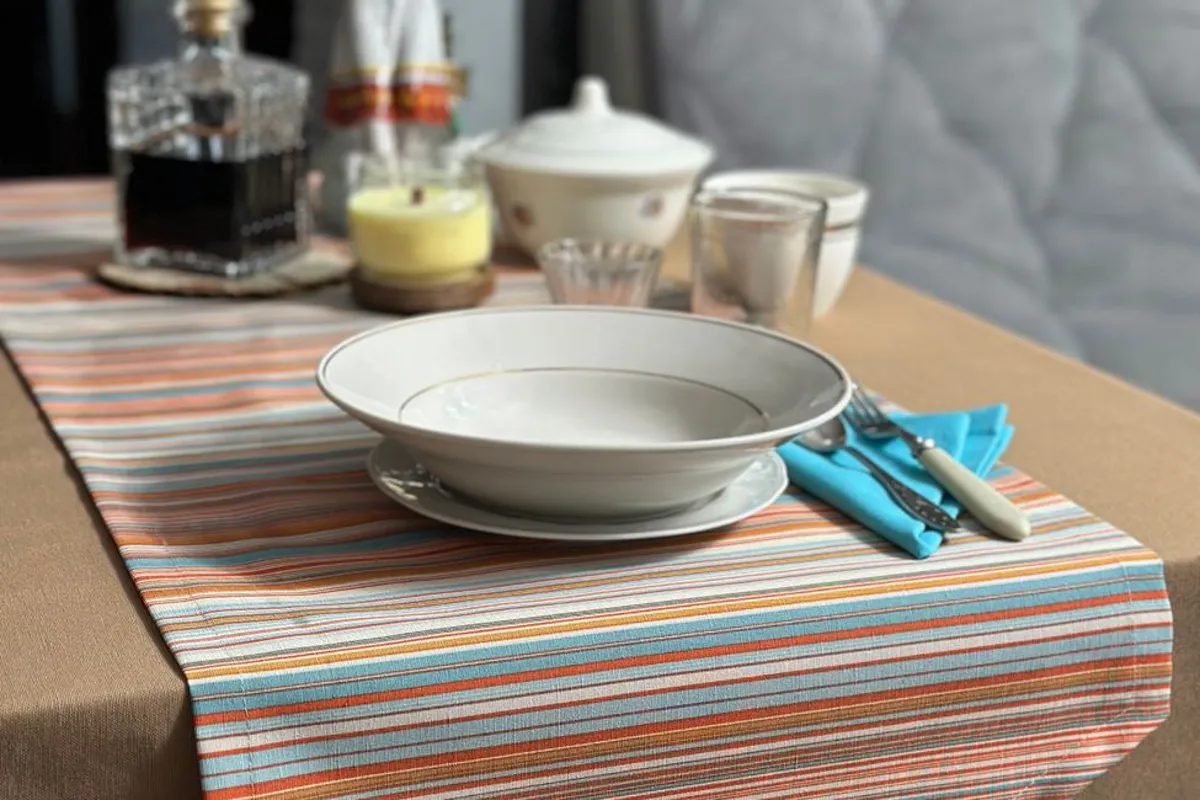
A runner is a small quilt you can finish in a day - piecing, layering, quilting and binding all in one manageable size. It's the best way to practice the whole process before a bed quilt.
- Skill: beginner
- Buy: 4-6 fat quarters + batting
- You'll learn: the full quilt sandwich and binding
5. Mug Rugs and Coasters
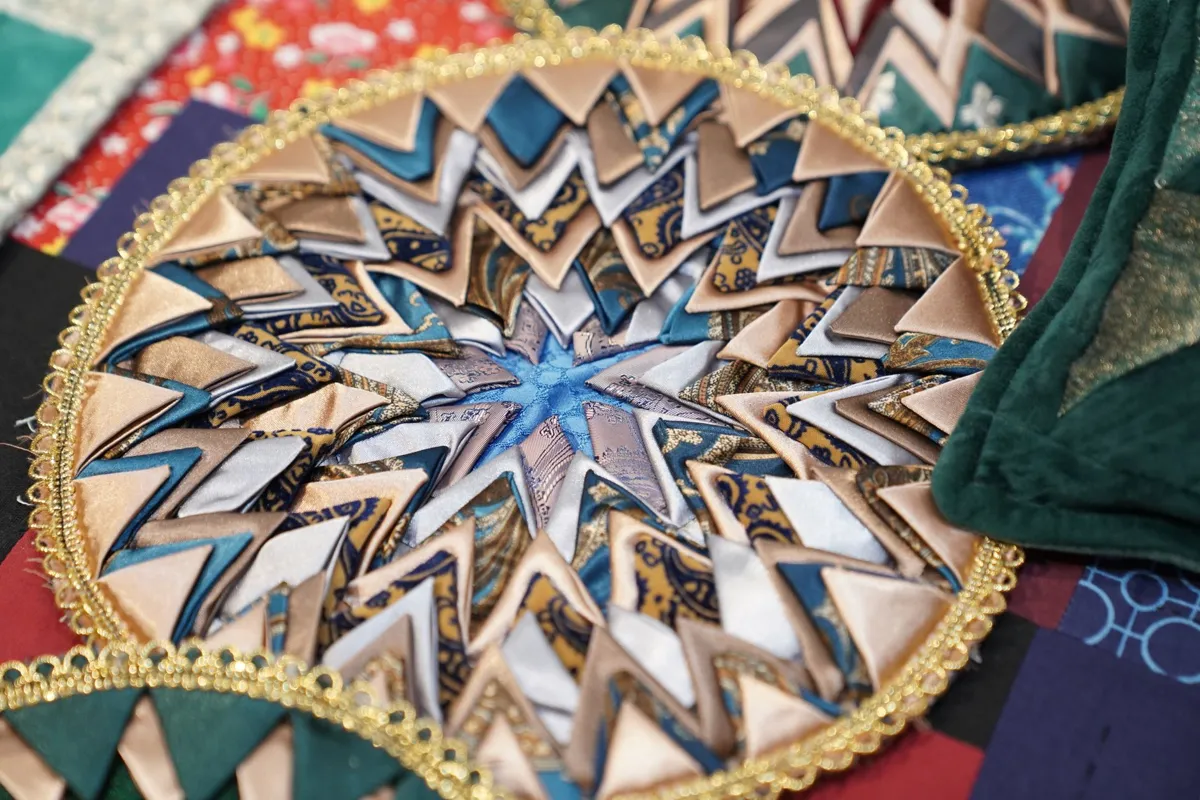
Tiny quilts about 6 x 9 inches use scraps and let you try free-motion or straight-line quilting without risking a big project.
- Skill: absolute beginner
- Buy: scraps + batting offcuts
- You'll learn: quilting stitches on a small piece
6. Disappearing Nine Patch
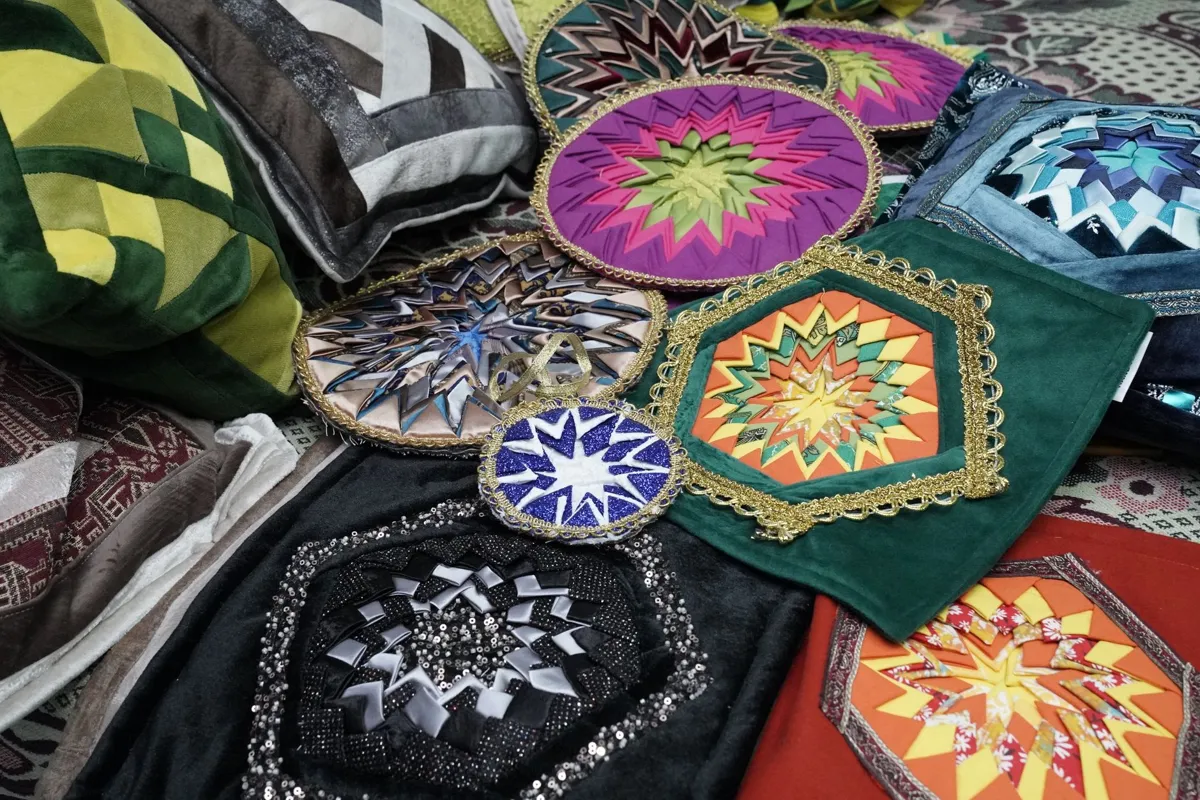
Sew a simple nine-patch block, cut it in half both ways and turn the pieces. The result looks complex, yet every seam is straight. Layer cakes (10-inch squares) work well.
- Skill: confident beginner
- Buy: 1 layer cake or charm packs
- You'll learn: cutting and rearranging blocks
7. Half-Square Triangle Throw
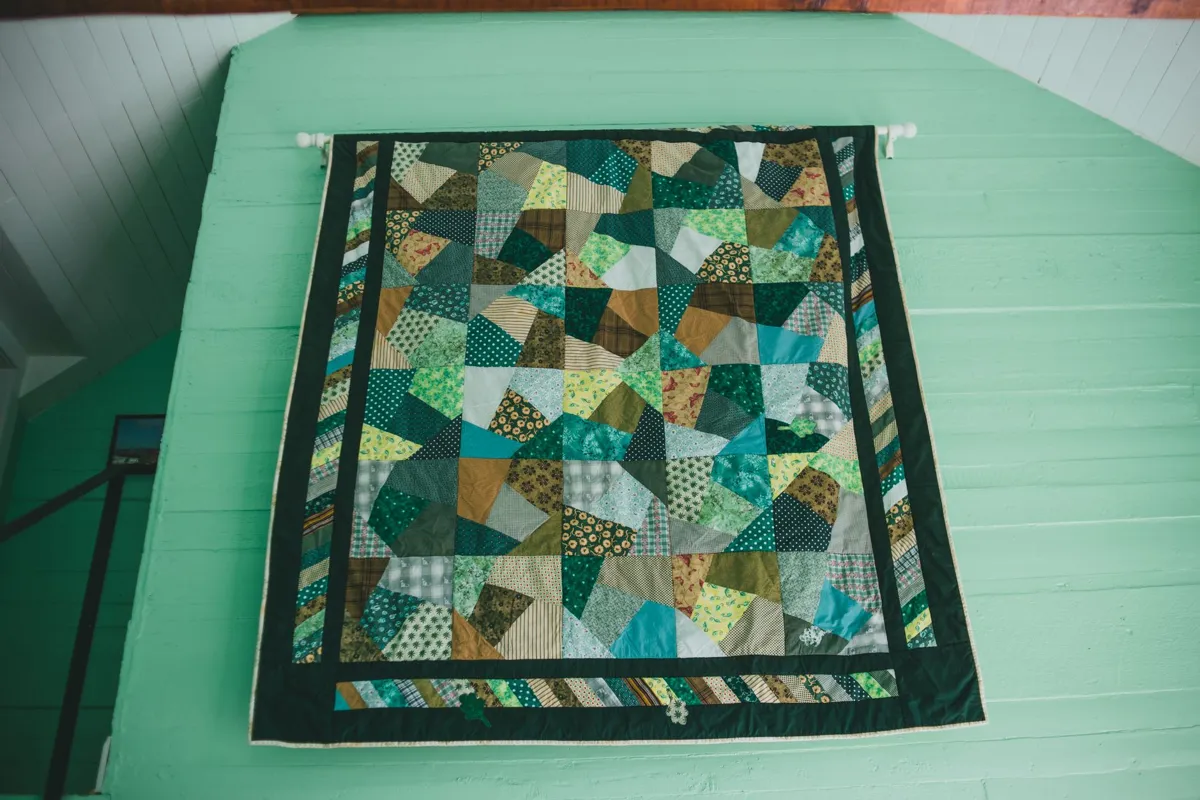
Half-square triangles (HSTs) are the next step after squares. Make two at a time by sewing 1/4 inch each side of a diagonal line and cutting between. Arrange them in zigzags, diamonds or chevrons.
- Skill: confident beginner
- Buy: layer cake or charm packs in two colors
- You'll learn: triangles and trimming to size
8. Quilt-As-You-Go Placemats
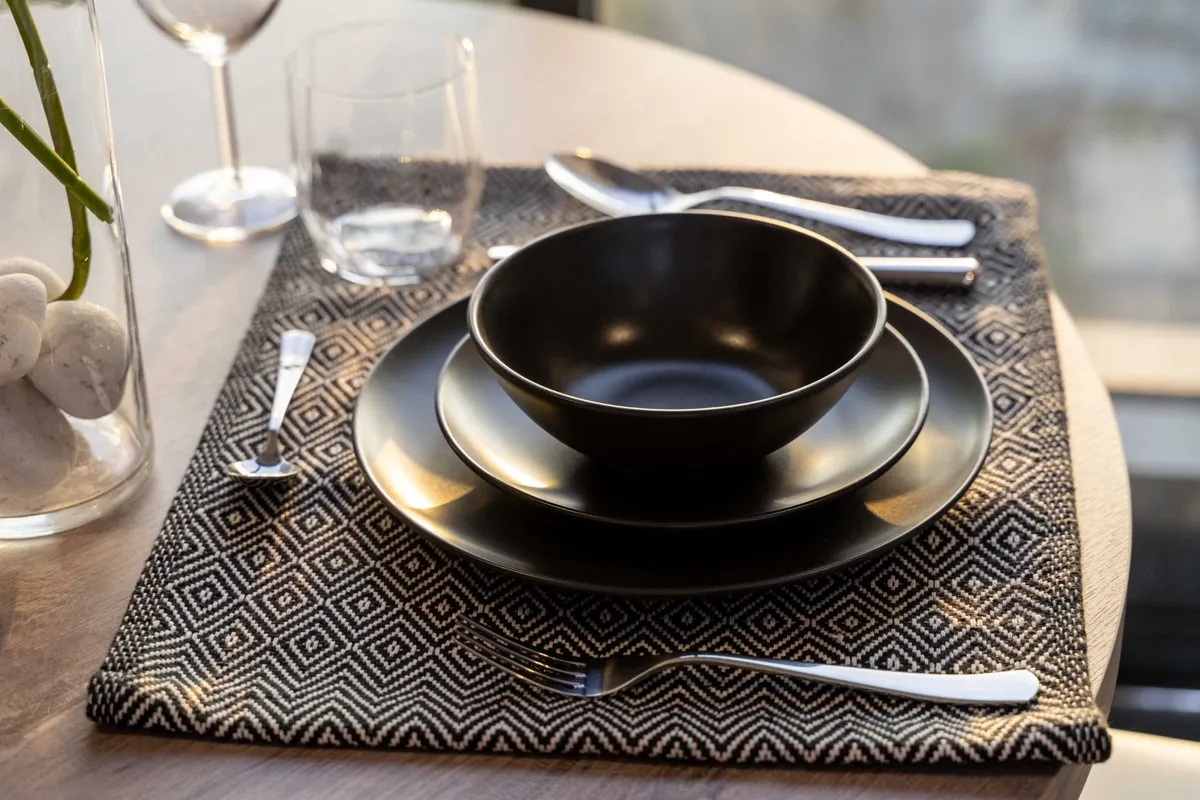
With quilt-as-you-go you sew strips straight onto batting and backing, so piecing and quilting happen together. A set of placemats is quick and a great intro to the method.
- Skill: beginner
- Buy: strips or scraps + batting
- You'll learn: quilt-as-you-go
9. Simple Strip (Coin) Quilt
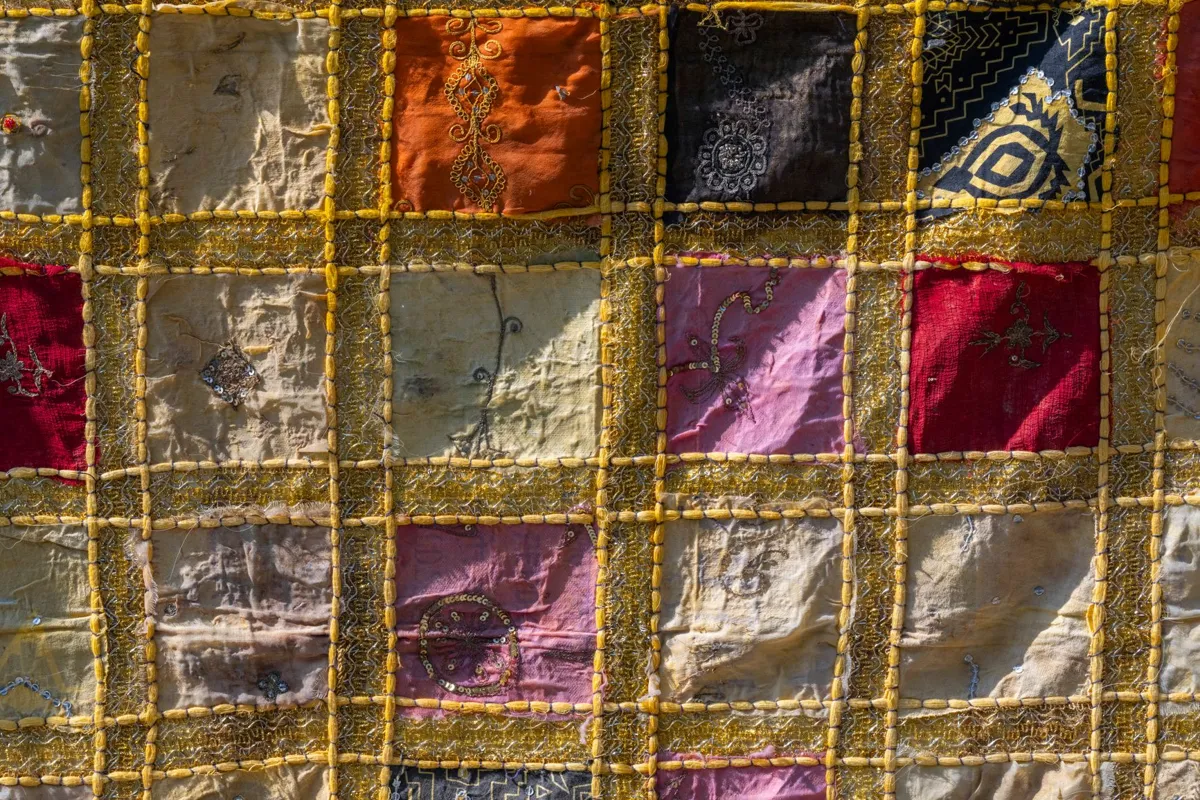
Stack rectangles of different fabrics into long columns separated by solid sashing. It's modern, uses scraps beautifully and has nothing to match.
- Skill: beginner
- Buy: scraps or fat quarters + 2 yd solid
- You'll learn: sashing
10. Quilted Pillow Cover
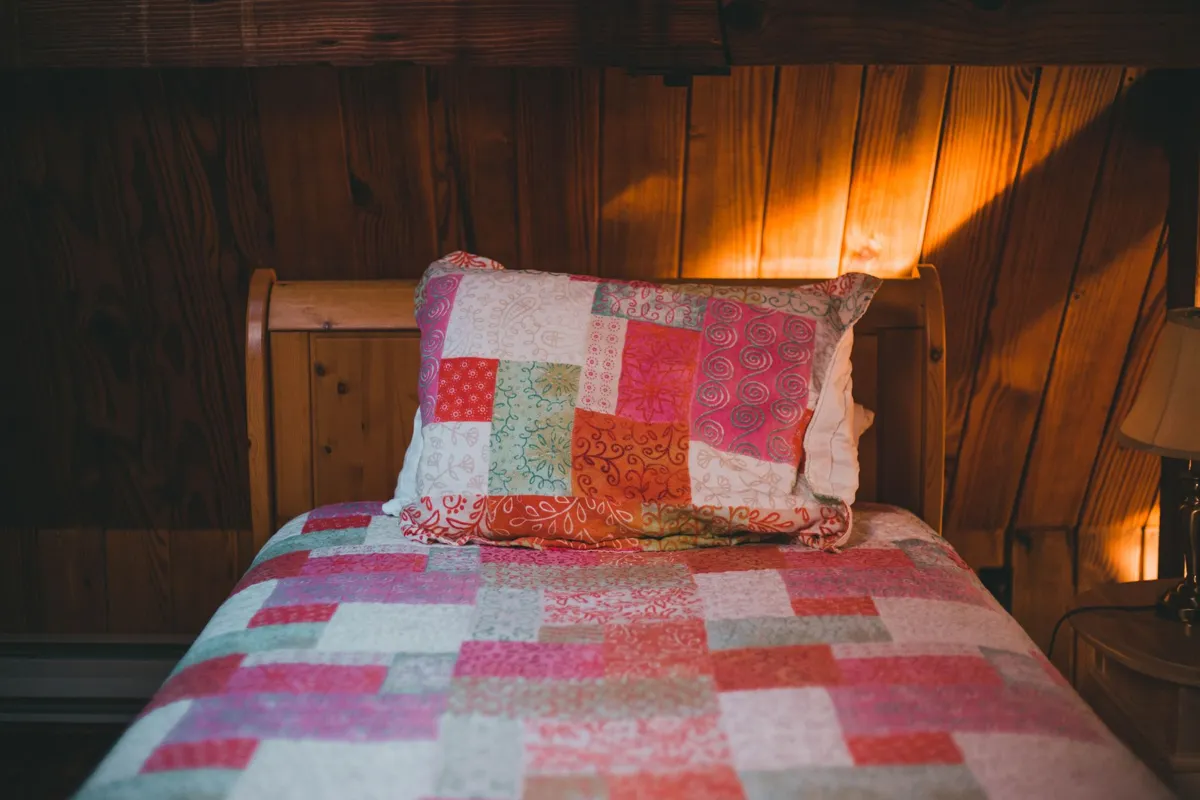
Make one quilt block - any from this list - quilt it and turn it into an envelope pillow cover. It's a satisfying way to test a block before committing to a full quilt.
- Skill: beginner
- Buy: 1 block's worth of fabric + 1/2 yd backing
- You'll learn: finishing a block into a project
Tools that make a first quilt easier
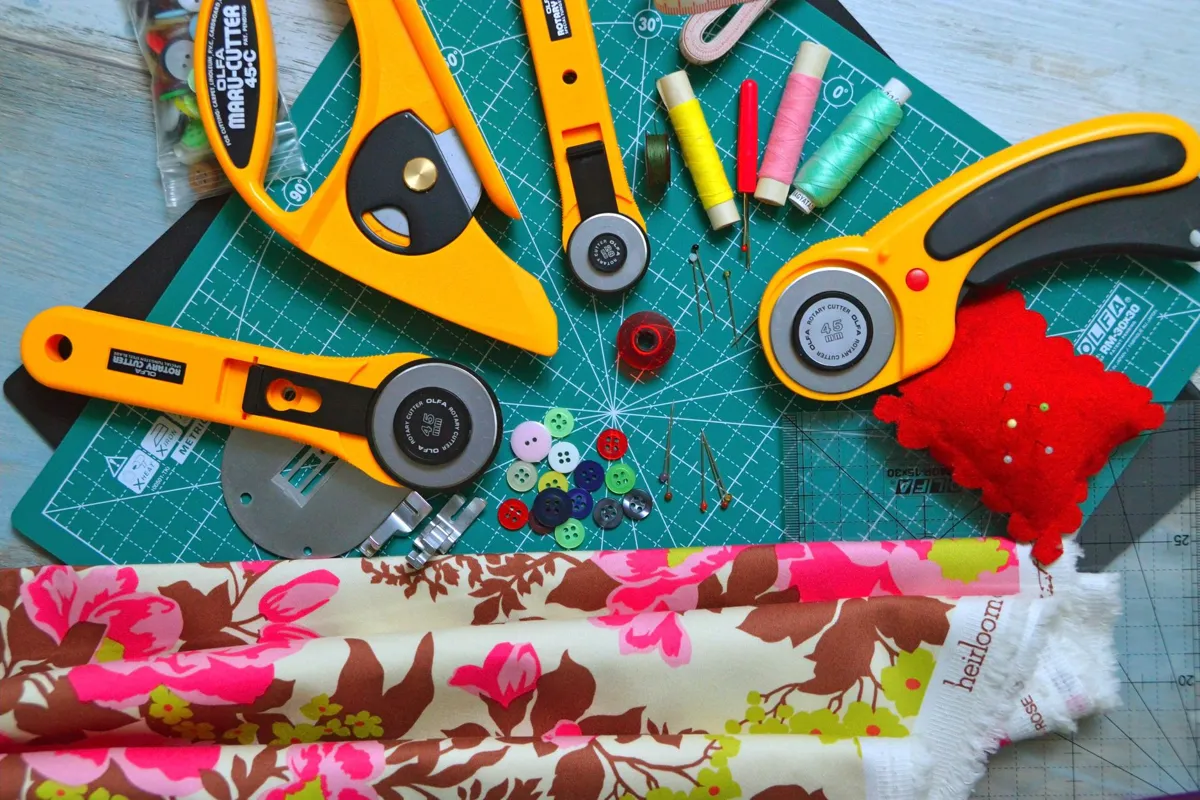
A 45 mm rotary cutter, a self-healing cutting mat (18 x 24 in or bigger), a 6 x 24 in ruler and a walking foot make the biggest difference. Add a 1/4 in presser foot if your machine has one - it keeps every seam the same width.
Press seams as you go, square up blocks before joining them and bind with 2.5-inch strips. Then pick your next idea from this list.
Still wondering?
What is the easiest quilt for a beginner?
A charm-square patchwork quilt: 5-inch squares sewn in rows with straight 1/4 in seams. A jelly roll race quilt is a close second.
Can I make a quilt with a regular sewing machine?
Yes. Baby and lap quilts are easy on a home machine; use a walking foot for straight-line quilting and roll the quilt to fit it through the throat.
How much fabric do I need for a first quilt?
A baby quilt needs about 1.5-2 yards of pieced fabric (or two charm packs), 1.5 yards of backing, batting and 1/3 yard for binding.
What is a fat quarter in quilting?
A fat quarter is a quarter yard cut wide - about 18 x 22 inches - which is more useful for patchwork than a long skinny quarter-yard strip.