What a home machine needs to free motion quilt without skipping
A home machine needs drop-feed capability, a free motion quilting foot, and properly balanced tension to quilt without skipping stitches. Testing your machine’s drop-feed and adjusting tension and bobbin setup prevents thread nests and skipped stitches during free motion quilting.
On this page (9 sections)
- The short version
- Feed dogs and free motion foot: check your machine
- Foot, needle and thread for free motion quilting start
- Tension and bobbin setup to avoid nests and loops
- Stitch length: hand speed and foot pedal speed
- How to start and secure free motion quilting
- Safety and control aids for beginners
- Practice progression and common mistakes
- Still wondering?
Part of our guide on sewing machine with quilting features
Key figures
- Needle size
- 80/12 EU/US
- Thread weight
- 50 wt
- Feed dog drop
- Must be full or partial
- Stitch length control
- Hand speed + foot pedal
- Practice motifs
- Two simple shapes
The short version
- Not all regular machines can drop feed dogs for free motion quilting.
- Use a darning or free motion foot, a sharp needle size 80/12, and 50 weight thread.
- Balanced top tension and correct bobbin winding are critical to avoid thread nests.
- Control stitch length by balancing hand speed with pedal speed during quilting.
- Practice on a test sandwich with simple motifs before quilting your project.
Feed dogs and free motion foot: check your machine
Many home sewing machines include a lever or switch to lower or drop feed dogs, but some basic or older models do not. The feed dogs are the metal teeth below the presser foot that move fabric forward during sewing. Dropping them allows you to move fabric freely for quilting.
To check your machine, turn it off and raise the needle and presser foot. Look at the needle plate or slowly turn the handwheel. When the lever or button is set to drop feed dogs, the teeth should sit below the plate and not touch the fabric. Consult your manual for the exact location and operation of the feed dog lever or switch.
If your machine cannot drop feed dogs, see if it has a supplied feed-dog cover plate or darning plate. This plate replaces the feed dogs and lets you quilt freely. If none is available, your machine may not support free motion quilting without skipped stitches. These features cannot be added aftermarket. Using the right free motion foot is also vital. Attach the foot after dropping feed dogs; it sits lower and clears the needle to allow fabric movement in all directions. A universal darning foot can work if brand-specific feet are unavailable.
| Machine type | Feed dog drop availability | Free motion foot usable |
|---|---|---|
| Modern home machines | Often yes, but check manual | Usually yes |
| Basic or older models | Sometimes no | Sometimes no |
| Heavy-duty machines | Usually yes | Usually yes |
Foot, needle and thread for free motion quilting start
Use a free motion quilting foot, often called a darning foot. It sits low and allows you to see your work while moving fabric in any direction. This foot is typically smaller and spring-loaded compared to regular presser feet. We go through quilting guide for beginners step by step elsewhere on the site.
Choose a quilting needle size 80/12 (EU/US), sharp enough for quilting cotton without causing skipped stitches. If you work with thicker batting or multiple layers, try a size 90/14 needle to prevent needle deflection and skipped stitches. Test needles on a scrap sandwich to find the best size for your materials.
Select 50 weight cotton or polyester thread for both top and bobbin. This weight balances strength and smooth flow, reducing thread nests. Match the bobbin thread to the top thread to maintain even tension.
Thread type also affects results. Polyester thread offers more strength and stretch, reducing breakage on dense quilting. Cotton thread has a matte finish but may break more if tension isn't balanced. Try both types on practice sandwiches to see what works best with your machine and fabric. We cover brother machine for queen quilts in its own article.
Check your machine manual for recommended needles and thread types. Some machines work best with brand-specific thread, but many users succeed with quality generic options. Testing on practice sandwiches avoids surprises during quilting.
| Item | Recommended type | Reason |
|---|---|---|
| Presser foot | Free motion/darning foot | Allows 360° fabric movement |
| Needle | 80/12 quilting needle | Sharp, fits quilting cotton |
| Thread | 50 weight cotton/polyester | Balanced strength and flow |

AMZTKDIY Metal Open Toe Free Motion Quilting Darning Presser Foot for Brother
Gives you clear open-toe visibility to follow designs while learning free-motion quilting, with spring-loaded control that fits most low-shank Singer, Brother, Janome and similar machines.
Tension and bobbin setup to avoid nests and loops
Balanced tension between the top thread and bobbin is key to avoid thread nests and loops under stitches. Start at your machine’s standard straight-stitch tension setting, usually marked Auto or 4 on many machines. Check your manual for the exact starting point.
Wind the bobbin firmly but not overly tight. Loose bobbins cause thread loops and nests. Use your machine’s bobbin winder or a separate one if available. Test bobbin tension by pulling the thread gently; it should unwind smoothly with slight resistance.
Test stitching on a fabric sandwich to check tension. If thread nests appear on top, increase the upper thread tension slightly. If loops appear on the bobbin side, decrease the upper thread tension or tighten the bobbin winding a bit. Always re-thread top and bobbin with the presser foot raised to release tension.
Insert the bobbin correctly so thread unwinds in the proper direction. Incorrect insertion causes uneven tension and thread bunching. Some machines have a bobbin case tension screw; if loops or loose stitches persist, adjust the screw slightly and test again on practice fabric.
Each time you adjust tension, re-thread your machine from scratch. Thread caught in tension discs or mis-threading can cause skipped stitches and nests. Lift the presser foot while threading to seat the thread correctly.
| Problem | Likely cause | Adjustment |
|---|---|---|
| Thread nests on top | Top tension too loose | Increase top tension slightly |
| Loops on underside | Top tension too tight or bobbin loose | Loosen top tension or tighten bobbin winding |
| Skipped stitches | Incorrect needle/thread or tension | Replace needle, re-thread, check tension |
Test your machine's drop-feed and tension setup step-by-step to free motion quilt without skipped stitches right from your first practice.
Stitch length: hand speed and foot pedal speed
Stitch length depends on how fast you move fabric under the needle (hand speed) and how fast the needle moves up and down (foot pedal speed). You control stitch length by balancing these speeds.
If you pedal slowly but move fabric quickly, stitches become long and loose, risking thread pulling or skipped stitches. If you pedal fast but move fabric slowly, stitches bunch up and make thick, stiff lines, which can pucker fabric.
Practice syncing your hand and foot speeds to create evenly spaced stitches. Beginners should test on scrap fabric sandwiches, adjusting speeds until stitches look even and secure. Stitch length varies with fabric, thread, and project, so adjust accordingly.
How to start and secure free motion quilting
Begin free motion quilting by bringing the bobbin thread tail to the top of the quilt sandwich with the needle down in the fabric. Hold both thread tails gently at the back.
Take two or three small locking stitches in place to secure threads before moving fabric. This prevents thread nests and loosening at the start.
Keep the needle down when stopping during quilting to anchor stitches. Lift the presser foot only when finished quilting to avoid shifting fabric layers.
Safety and control aids for beginners
Use quilting gloves to improve grip and control fabric movement. Gloves reduce finger fatigue and help steady hand speed.
If your machine allows, lower the presser-foot pressure to let fabric move more freely without fabric drag.
Reduce the machine speed slider or pedal pressure when starting free motion quilting. Slower speeds increase control and reduce mistakes.
Keep fingers safely away from the needle path. Use both hands to guide fabric gently but steadily. Avoid pushing or pulling fabric harshly to prevent needle breakage or uneven stitches.
Practice progression and common mistakes
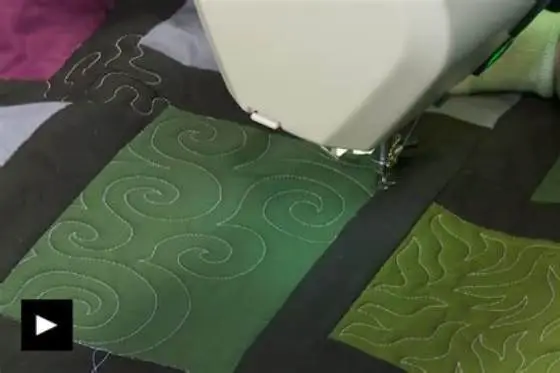
Start practicing on a quilt sandwich with simple motifs like continuous loops and small spirals. Spend 10-15 minutes per session focusing on smooth fabric movement and even stitch length.
Common mistakes include 'eyelashing': loops on the bobbin side caused by uneven tension or incorrect bobbin winding. Also watch for thread nests at the start caused by unsecured thread tails.
If stitches skip, check needle sharpness and size, thread quality, and tension settings. Re-thread the machine and adjust tension as needed before continuing.
Practice regularly to build muscle memory and confidence. Gradually increase motif complexity as your control improves. Taking breaks helps reduce frustration and fatigue.
Still wondering?
Can I free motion quilt without dropping the feed dogs?
Free motion quilting without dropped feed dogs is very difficult and usually causes skipped stitches or poor stitch quality. Feed dogs move fabric forward in steps, so you cannot guide fabric freely without dropping them or covering them with a darning plate.
What thread and needle cause skipped stitches during free motion quilting?
Skipped stitches often come from dull or wrong-sized needles and threads that don’t match fabric or machine. A size 80/12 quilting needle with 50 weight thread top and bobbin reduces skipping by piercing fabric cleanly and feeding thread smoothly.
How tight should my bobbin be wound for free motion quilting?
Wind the bobbin so thread unwinds smoothly with slight resistance. Too loose causes thread nests and loops under stitches; too tight can cause uneven tension and thread breakage.
How do I know if my machine tension is balanced for free motion quilting?
Balanced tension means stitches look even on top and bottom without loops or puckers. Test on a fabric sandwich; no visible loops on either side means tension is balanced. Adjust the top tension dial and re-thread until balanced.
What practice exercises help me learn free motion quilting control?
Continuous looping lines and small spirals are beginner-friendly motifs. They help you coordinate fabric movement with pedal speed and build hand control. Practice these on a quilt sandwich until stitches look even and smooth.