What hoop size a 3-letter monogram actually needs
A 3-letter monogram up to 3 in (76 mm) wide fits a 4x4 embroidery hoop, whose stitch field is about 3.9 in (100 mm) across. Wider monograms need a 5x7 or 6x10 hoop. Measure the design, add a margin, and pick the hoop that just clears it.
On this page (9 sections)
- The short version
- Hoop size for a 3-letter monogram: the answer in one table
- The arithmetic: letter height, width and the margin
- Why a bigger hoop can hurt: tension, sag and drift
- The stability margin: what it is and how much to leave
- Small, medium and large: which hoop for each monogram
- Machine or hand: two different answers
- Rehooping: when a smaller hoop wins
- Still wondering?
Part of our guide on finding the right size hoop
Key figures
- 4x4 stitch field
- about 3.9 x 3.9 in
- 5x7 stitch field
- about 5.1 x 7.1 in
- 6x10 stitch field
- about 6.3 x 10.2 in
- Stability margin
- 1/4 in each side
- Hand hoop, monogram
- 6 in round
- Smallest hoop wins
- tighter fabric, cleaner stitch
The short version
- Measure the finished design, not the letter height: width decides the hoop.
- A 4x4 hoop stitches about 3.9 in (100 mm), so a design must be smaller than 4 in.
- Leave 1/4 in (6 mm) clear between the design edge and the stitch-field edge.
- Pick the hoop that just clears the design: a bigger hoop loosens the fabric and invites puckering.
- A 5x7 hoop covers most towel and shirt monograms; split anything wider than 5.75 in (146 mm).
Hoop size for a 3-letter monogram: the answer in one table
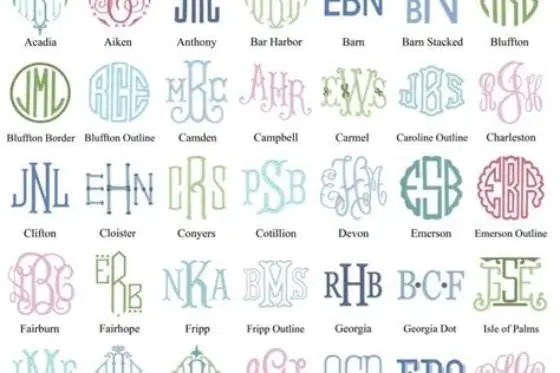
You want a 3-letter monogram on a shirt or a towel, and you want to know which embroidery hoop to reach for. The answer is not the size printed on the hoop. Hoop names are size classes, and the needle can only reach the stitch field inside the frame. The 4x4 hoop stitches about 3.9 in (100 mm) across, so a design that measures exactly 4 in (102 mm) will not fit. Measure your finished monogram, add a margin, and see which row of the table your total lands in. The table below does that match for the widths most monograms land in.
Widths in the table are the finished design, letters and all, as your software reports it. Two fonts at the same letter height can land in different rows of this table. Letters crowd together in some fonts and stand apart in others. Check the number on screen before you hoop anything. When in doubt, size the design down a fraction rather than forcing it into a hoop it barely fits. Font sellers size their monogram files by the finished design, not by the letter height.
| Finished monogram width | Smallest hoop | Stitch field you get |
|---|---|---|
| Up to 3 in (76 mm) | 4x4 | about 3.9 x 3.9 in (100 x 100 mm) |
| 3 to 4.5 in (76 to 114 mm) | 5x7 | about 5.1 x 7.1 in (130 x 180 mm) |
| 4.5 to 5.75 in (114 to 146 mm) | 6x10 | about 6.3 x 10.2 in (160 x 260 mm) |
| Over 5.75 in (146 mm) | Two hoopings | No common single home hoop covers it |
The arithmetic: letter height, width and the margin
Start with the number your software gives you. Open the merged monogram, the three letters placed as they will stitch, and read the width and height of the whole design. That finished width is the number that decides the hoop. Letter height alone will not do it, because fonts differ. Script letters at 2 in (51 mm) tall usually run about 3 in (76 mm) wide. Block letters at the same height run closer to 4 in (102 mm) wide, since each letter keeps its own space.
Then add the margin. Leave at least 1/4 in (6 mm) of clear fabric between the design edge and the stitch-field edge, on every side. That gap keeps the stabilizer gripped under the hoop and keeps the needle well away from the frame. Any design that fills the field to the last millimeter has no room for the fabric to shift, and it will shift. Work the sums with the margin included, and the hoop you land on will be the right one. There is more on hat embroidery machine in a separate guide.
Hoop fields are not the same as hoop names. A 4x4 hoop typically stitches about 100 x 100 mm, and a 5x7 about 130 x 180 mm. Your machine's hoop list on screen shows the field it will actually stitch, so check that number before you trust any chart. If your machine came with one hoop and it is the wrong size, a matching hoop set gives you the next size up.
- Open the monogram in your software and read its finished width and height.
- Add 1/2 in (13 mm) to the width, for 1/4 in (6 mm) of margin on each side.
- Add 1/2 in (13 mm) to the height the same way.
- Compare both totals with the hoop's stitch field, not its name.
- Pick the hoop whose field just clears both totals.

New brothread Embroidery Machine Hoop 3 in 1 Set
Gives you the 4 x 4 in hoop that fits a three-letter monogram, plus a small 1 x 2.5 in and a 4 x 6.75 in for smaller or longer names.
Why a bigger hoop can hurt: tension, sag and drift
An oversized hoop looks harmless. It is not. The hoop grips the fabric at its edge, and the needle works in the middle. The wider the gap between the two, the more the fabric can move between stitches. On a towel or a knit, that movement shows up as puckering around the letters. Edges go wavy, and the middle letter can land a fraction off line.
The second problem is tension. Big hoops spread the pull over a wide area, so the fabric near the design feels looser than it does in a small hoop. Drum-tight means the fabric pings softly when you tap it, and a big hoop makes that hard to judge. Loose fabric also lets the stabilizer flex, and a flexing stabilizer lets dense satin stitches pull the fabric in. That is how a neat monogram ends up with a dented outline and a center that sits proud. People in this spot often ask about best embroidery machines for monogramming as well.
There is a practical cost too. Large hoops are clumsy on a small garment. It catches on cuffs, it will not sit flat on a baby onesie, and it bumps the machine arm on some models. Use the hoop that just clears the design, and save the big hoop for the designs that truly need it.
Hoop names lie a little: a 4x4 hoop never stitches 4 in, and that missing fraction decides whether your monogram fits.
The stability margin: what it is and how much to leave
Your margin is the quiet part of the arithmetic. It is the strip of fabric and stabilizer between the last stitch and the edge of the field, and it does two jobs. It gives the hoop something to grip beyond the design, so the fabric cannot creep while the needle works. And it gives the needle room to stop and turn without crowding the frame. Keep a quarter of an inch (6 mm) on each side as the minimum that holds on most fabrics.
Stabilizer is what makes the margin work. Cut-away stabilizer stays behind the stitches for the life of the garment. Use it for knits and for dense satin letters. Tear-away suits stable wovens such as quilting cotton and linen. On towels, add a water-soluble topper over the loops so the stitches sit on top instead of sinking. Hoop the stabilizer with the fabric, smooth and flat, and tighten the screw until the fabric is taut and smooth. We go through embroidering logos and full fronts step by step elsewhere on the site.
Test the margin before the real garment. Stitch the monogram once on a scrap of the same fabric, hooped the same way, with the same stabilizer. Look at the edges of the letters. If they wave or the fabric ripples between them, the hoop is too big or the fabric was not tight enough. When the test comes out clean, the margin and the hoop are right.
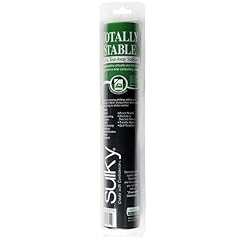
Totally Stable 12" x 12yd Roll
The 12 in wide roll irons onto your fabric so the monogram does not shift or pucker while stitching, and tears away clean afterwards.
Small, medium and large: which hoop for each monogram
Most monograms fall into three sizes, and each has a natural hoop. Small monograms live on cuffs, collars and baby clothes, where the letters stand 1 to 1.5 in (25 to 38 mm) tall. The finished design runs about 2 in (51 mm) wide, and a 4x4 hoop clears it with room to spare. If your machine came with a small detail hoop, it grips a cuff better than a 4x4 does.
Medium monograms are the everyday ones: shirt chests, napkins and hand towels, with letters 2 to 3 in (51 to 76 mm) tall. The design runs 3 to 4.5 in (76 to 114 mm) wide. The small end of that range fits a 4x4 hoop, and a 5x7 hoop takes the rest. If you own one hoop beyond the one that came with the machine, make it the 5x7. One hoop covers the widest band of monogram sizes and still holds a towel flat.
Large monograms belong on bath towels, pillows and jacket backs. Letters run 3 to 4 in (76 to 102 mm) tall. The design runs 4.5 to 5.75 in (114 to 146 mm) wide. The 5x7 hoop handles most of them, and a 6x10 hoop takes the widest. Past that width, no single hoop on a home machine will do, and a second hooping is the honest answer.
Machine or hand: two different answers
Machine hoops and hand hoops answer different questions. A machine hoop is a rectangle, and its size is the stitch field the needle can reach. A hand hoop is a round frame, and its size is its diameter. The machine cares about the field. The hand cares about grip. That is why the numbers look nothing alike, and why advice for one does not transfer to the other.
For hand stitching, pick a round hoop 1 to 2 in (2.5 to 5 cm) wider than the design on every side. That keeps the fabric gripped all round the letters. The 6 in (15 cm) round hoop suits most 3-letter hand monograms. The 6 in hoop holds a design up to about 4 in (102 mm) across, with fabric to spare. The hoop can stay on the finished piece as a frame, which is a bonus a machine hoop never offers. Wooden hoops grip best when the screw is snug and the fabric is smooth. Plastic hoops with a lip hold slippery fabric well, and spring hoops suit small pieces you hold in one hand.
Rehooping: when a smaller hoop wins
When the monogram is wider than your largest hoop, stitch it in two hoopings instead of buying a bigger machine. Split the design between the second and third letters, or between the first and second, and stitch the first part. Then rehoop the fabric, line the second part up on a printed template, and stitch it. The join hides in the gap between letters, where the eye expects space.
Alignment is the whole job. Print the full design, mark the center lines, and pin the print to the fabric before the first hooping. After rehooping, lay the print over the stitched letters and move the hoop until the rest lines up.
Still wondering?
Can a 3-letter monogram fit in a 4x4 hoop?
Yes, when the finished design is no wider than about 3 in (76 mm). Most monograms with letters 2 in (51 mm) tall fit easily. Measure the merged design, add the margin, and check the total against the 3.9 in (100 mm) field.
Why does my monogram pucker even though it fits the hoop?
Fitting is not the same as holding. When the hoop is much larger than the design, the fabric shifts between stitches and loose fabric puckers. Hoop the fabric drum-tight with the right stabilizer, and use the hoop that just clears the design.
What size hoop do I need for a monogram on a towel?
A bath-towel monogram is often set 4 to 5 in (102 to 127 mm) wide to sit well on the towel. Measure your own layout before choosing the hoop. Add a water-soluble topper over the loops so the stitches sit proud. If the design passes 5.75 in (146 mm), use two hoopings rather than forcing it into a 6x10 hoop.
Can I stitch a monogram too big for my largest hoop?
Yes, by splitting it. Divide the design between letters, stitch the first part, then rehoop and align the rest with a printed template. The join hides in the space between letters. Multi-position hoops do the same job without rehooping the fabric, if your machine supports one.
Is a magnetic hoop better for monograms?
Magnetic hoops hold thick or bulky fabric without a screw, which helps on towels and quilts. The stitch field stays the same, so the size arithmetic stays the same. Check that the magnetic hoop matches your machine's bracket before buying, since brackets differ between brands.