Can a regular sewing machine handle all steps to make a quilt?
A regular sewing machine can perform most quilting steps including piecing, layering, and basic quilting. However, quilting thick layers and free-motion quilting can challenge it, often requiring specialized machines for easier handling and better results.
On this page (8 sections)
- The short version
- Which quilting steps a regular sewing machine can do
- Limitations of regular machines for quilting
- Tips to improve quilting results with regular machines
- When a specialized quilting machine is needed
- Can you make a quilt with a regular sewing machine
- Tips to improve quilting results with regular machines
- Still wondering?
Part of our guide on sewing machine with quilting features
Key figures
- Max fabric layers
- 4-6 layers
- Needle size
- 90/14 or 100/16
- Stitch type
- straight, zigzag
- Feed mechanism
- standard feed dogs
- Free-motion quilting
- may need drop feed
- Quilt thickness limit
- depends on presser foot clearance
The short version
- Regular machines can do piecing, layering, and straight-line quilting.
- Thick quilt sandwich layers may strain regular machines.
- Free-motion quilting often needs a machine with a drop feed feature.
- Using the right needle and thread improves quilting quality.
- Specialized quilting machines help with heavy fabric and free-motion work.
Which quilting steps a regular sewing machine can do
A regular sewing machine can accomplish the main quilting steps: piecing fabric blocks, layering the quilt sandwich, quilting the layers together, and attaching the binding. It excels at piecing because most models offer straight and zigzag stitches that hold patchwork securely.
For layering, you join the quilt top, batting, and backing fabric. A regular machine’s presser foot and throat size usually accommodate this step well unless the quilt is exceptionally large or thick.
Basic quilting, such as straight-line or simple zigzag patterns, is also achievable. The machine feed dogs move fabric steadily, which helps keep lines even without extra skill.
Binding installation is straightforward on most machines. Standard stitches combined with walking feet or even a zipper foot ease turning edges and sewing over quilt thickness at corners. If that sounds like your situation, read up on budget quilting machine next.
- Piecing: straight and zigzag stitches keep patchwork secure
- Layering: handles typical quilt sandwich thickness
- Quilting: straight-line and basic patterns manageable
- Binding: standard stitches and feet can complete this
Limitations of regular machines for quilting
Regular machines face challenges when quilting thick fabrics or many layers. The typical presser foot clearance is around 1/4 to 1/2 inch (6-12 mm), which limits the thickness it can smoothly feed. Excess thickness can cause skipped stitches or needle breakage.
Free-motion quilting requires the fabric to move freely in any direction under the needle. Regular machines with fixed feed dogs push fabric forward only, making free-motion stitching difficult or impossible without modifications.
Regular machines often lack the motor power and sturdiness needed for continuous quilting over heavy batting or dense fabrics. This can lead to uneven stitch quality and frustration. It helps to understand managing quilting needs on a budget before going further.
Quilting large projects may overwhelm the machine’s needle plate size and throat space, restricting easy fabric handling and increasing handling time.
- Presser foot clearance limits max quilt thickness
- Fixed feed dogs block free-motion quilting
- Motor power may be insufficient for dense layers
- Limited throat space restricts large quilt handling

HONEYSEW Open Toe Walking Foot W/Guide for Brother Sewing Machine Quilting
Keeps your quilt sandwich from shifting on a regular low-shank machine, with an open-toe walking foot built to feed multiple thick layers evenly for quilting.
Tips to improve quilting results with regular machines
Use a size 90/14 or 100/16 quilting needle designed for thicker layers to reduce skipped stitches and needle breaks. Regular needles can dull quickly on batting and dense fabrics.
Switch to polyester or cotton 50 wt thread that balances strength and smooth feeding with your machine. We go through managing weight and essential features step by step elsewhere on the site.
Attach a walking foot to evenly feed all quilt layers and prevent shifting. This foot moves the fabric sandwich along from both top and bottom.
Lower the presser foot pressure if your machine allows. This adjustment helps fabric layers feed smoothly without bunching.
Practice on quilt sandwich scraps to adjust stitch length, tension, and speed. Correct settings reduce thread nests and puckering.
Consider using a stitch-in-the-ditch foot to sew precisely on seams for quilting lines.
- Use heavy-duty quilting needles
- Select smooth, strong thread
- Install a walking foot for even feeding
- Adjust presser foot pressure to reduce fabric drag
- Test settings on fabric scraps before quilting

80 Pcs Sewing Machine Needles Size 110/18
Punches through thick quilt layers on your regular home machine without skipping or breaking, with heavy-duty 90/14 and 100/16 quilting needles.
This guide specifies exactly which quilting steps a regular machine can handle and when you must upgrade for smooth, professional results.
When a specialized quilting machine is needed
A specialized quilting machine is recommended if you plan frequent quilting or large projects with thick batting. These machines feature larger throat space, stronger motors, and a drop feed mechanism that allows free-motion quilting.
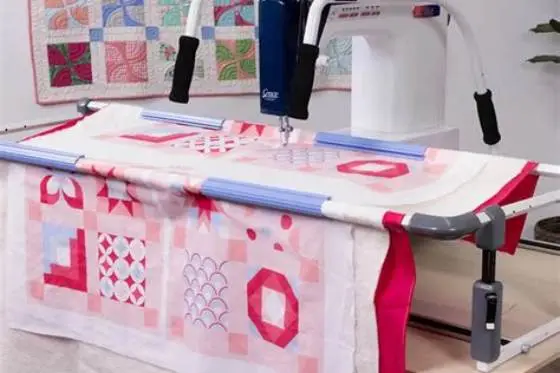
Longarm quilting machines provide extensive fabric handling space and multiple stitch options. They help sew large quilts faster and with better control over complex designs.
Mid-arm or sit-down quilting machines offer a balance for home sewists needing more space and power without the footprint of a longarm.
If free-motion quilting or dense, heavy quilting is your goal, specialized machines save time, improve stitch quality, and reduce physical strain on your machine and yourself.
- Larger throat space handles bulky quilts easily
- Stronger motors sew through dense layers consistently
- Drop feed enables free-motion quilting capability
- Specialized feet and accessories improve quilting precision
| Aspect | Regular Sewing Machine | Specialized Quilting Machine |
|---|---|---|
| Throat space | 5-7 inches | 10-18 inches |
| Motor power | Standard home use | Heavy-duty quilting |
| Free-motion quilting | Limited or requires modification | Built-in drop feed feature |
| Fabric thickness | Up to 4-6 layers | More than 6 layers comfortably |
| Price range | Entry to mid-level | Mid to professional-level |
Can you make a quilt with a regular sewing machine
Yes, you can make a quilt using a regular sewing machine. It can handle piecing, layering, quilting in straight lines, and attaching binding.
Start by piecing your quilt blocks using straight or zigzag stitches. Then layer your quilt sandwich (top, batting, and backing) and baste the layers.
For quilting, stick to straight-line or simple patterns if your machine lacks a drop feed. Use a walking foot to help feed layers evenly.
Attach binding with standard stitches after trimming excess batting and backing. This process completes your quilt using only a regular machine.
However, expect limits with very thick quilts or free-motion quilting. In those cases, consider a machine upgrade or specialized quilting tools.
- Piece quilt blocks with straight or zigzag stitches.
- Layer quilt top, batting, and backing; baste layers together.
- Quilt layers using straight lines and walking foot.
- Trim quilt edges and attach binding by machine.
- Finish binding edges and press the quilt.
Tips to improve quilting results with regular machines
Make sure to clean your machine regularly from lint to avoid skipped stitches. Re-thread the machine with the presser foot up to ensure proper tension.
Choose bobbins that fit your machine perfectly and wind them evenly to prevent thread bunching.
Slow your sewing speed when quilting thick layers to maintain stitch consistency and avoid needle breaks.
Experiment with stitch length: longer stitches reduce puckering but may catch less securely, so balance this based on fabric and batting.
If your machine allows, lower the feed dog or use a free-motion quilting foot to look at more design options.
- Clean lint often to prevent skipped stitches
- Use correct bobbins wound evenly
- Sew slower on thick quilt sandwiches
- Adjust stitch length to balance security and puckering
- Lower feed dogs or use quilting foot if available
Regular sewing machines can complete most quilting steps but struggle with thick layers and free-motion work without upgrades.
Still wondering?
Can a regular sewing machine quilt thick batting without problems?
Regular machines can quilt up to about 4-6 layers comfortably, depending on presser foot clearance. Thicker batting risks skipped stitches and needle breakage unless your machine has strong motor power and adjustable presser foot height.
Is free-motion quilting possible on a regular sewing machine?
Free-motion quilting usually requires dropping or lowering the feed dogs. Many regular machines don’t have this feature, so you may need an accessory or a machine upgrade to do free-motion quilting properly.
What needle and thread work best for quilting on a regular machine?
Use a quilting needle size 90/14 or 100/16 and a 50-weight polyester or cotton thread for smooth feeding and strong stitches through multiple layers.
Do I need a walking foot for quilting with a regular machine?
A walking foot is highly recommended when quilting multiple layers to feed the quilt sandwich evenly and prevent shifting or puckering.
Can I quilt large quilts on a regular sewing machine?
Large quilts can be challenging due to limited throat space, making handling bulky fabric harder. Rotating the quilt frequently helps, but specialized machines with larger space handle large quilts more easily.
How to prevent thread nests when quilting on a regular machine?
Re-thread the machine with the presser foot up, check bobbin winding, and adjust thread tension. Cleaning lint from the bobbin area also reduces thread nests.