What fabric actually holds tie-dye color after washing
Best fabric for tie dye is 100% cotton, rayon or linen. These cellulose fibers bond with fiber-reactive dye using soda ash at room temperature, so color stays after washing. As a rule of thumb, blends below about 80% cellulose usually wash to pastel with fiber-reactive dye at room temperature. Results vary by dye concentration, cure time, water hardness, and finish: follow your dye maker’s guidance.
On this page (9 sections)
- Fit check
- The short version
- Best fabric for tie dye: 100% cellulose that bonds at room temperature
- Fiber content: which fibers take fiber-reactive dye and which fade
- Why synthetics resist: what wash-out really looks like
- Labels: how to read the content tag before you buy
- Prep: pre-wash and soda ash that makes dye bond
- Weight and weave: how thickness and knit change brightness
- Still wondering?
Part of our guide on best fabric paint markers

Amazon Essentials Men's Slim Fit Crewneck Undershirts
100% cotton fabric ensures cellulose content is 100%, well above 80%, for bright, lasting tie-dye colors.
Check it on Amazon
60" Wide Rayon Spandex Jersey Knit Fabric by The Yard
95% rayon fiber content means cellulose content is 95%, suitable for deep jewel tones with good dye bonding.
See this alternative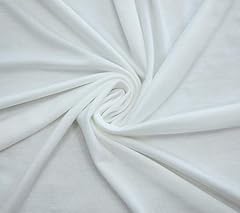
Rayon Spandex Jersey Knit Fabric 60“ Width 4-Way Stretch Medium
95% rayon fiber content published
See this alternative| Product | cellulose content (%) | Verdict | |
|---|---|---|---|
| Amazon Essentials Men's Slim Fit Crewneck Undershirts Amazon Essentials | 100% cotton fiber content published | Meets it | View on Amazon |
| 60" Wide Rayon Spandex Jersey Knit Fabric by The Yard Stylish FABRIC | 95% rayon fiber content published | Meets it | View on Amazon |
| Rayon Spandex Jersey Knit Fabric 60“ Width 4-Way Stretch Medium UNOMEGA | 95% rayon fiber content published | Meets it | View on Amazon |
| Simpli-Magic Flour Sack Kitchen Towels 24"x24" (12 Pack) SIMPLI-MAGIC | 100% cotton fiber content published | Meets it | View on Amazon |
Key figures
- Best fibers
- 100% cotton, rayon, linen
- Minimum cellulose
- About 80% for bright color, varies by dye brand
- Dye type
- fiber-reactive dye
- Soda ash soak
- Use ratio and time per dye maker’s instructions, often around 1 cup per gallon and 20 minutes
- Cure before rinse
- Typically 12-24 hours at room temp per dye maker
- Avoid
- 100% polyester, acrylic, nylon
The short version
- Choose 80-100% cellulose for fiber-reactive dye; 50/50 blends and polyester will not hold bright color.
- Check the content label for cotton, rayon, linen or viscose; avoid anything marked 100% polyester, acrylic or nylon.
- Pre-wash hot without softener and soak in soda ash per dye maker directions before dyeing to lock color.
- Light to mid-weight woven or knit cotton gives the most even, vivid dye uptake.
Best fabric for tie dye: 100% cellulose that bonds at room temperature
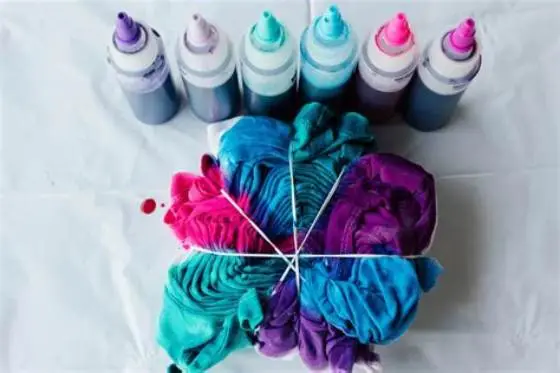
100% cotton soaked in soda ash at room temperature retains most fiber-reactive dye after warm washes. A 50/50 cotton-polyester blend generally fades to pale heather instead. You often see the difference on the first rinse, when blends tint the water more. Cellulose fibers like cotton, rayon, linen, Tencel, viscose, hemp and ramie bond with fiber-reactive dye in an alkaline bath.
The best fabric for tie dye for many home sewists is plain 100% cotton jersey or quilting cotton with no finish. These fabrics are easy to find and affordable to test. They take bright color without heat. Rayon typically dyes deeper than cotton at the same dye concentration because its fiber swells more, exposing more bonding sites. Linen and hemp bond well too but show a slightly heathered, slubby texture. For your first project, choose 100% cotton tees or yardage and reserve rayon for when you want softer drape and more jewel-toned color.
Weight and finish matter as much as fiber content. Light to mid-weight cotton with a soft hand dyes more evenly than a tight, glazed sateen or a water-repellent finish. Color retention also depends on dye brand and concentration, water hardness, cure time and temperature, and any factory finish left on the fabric. If the label does not indicate about 80% cellulose or more, expect noticeable fade. Checking this saves a whole batch.
- holds bright color after washing
- works at room temperature with soda ash
- widely available as blanks and yardage
- needs pre-wash and soda ash step
- rayon shrinks more than cotton
Fiber content: which fibers take fiber-reactive dye and which fade
100% rayon, 100% cotton and 100% linen hold fiber-reactive dye well when pre-washed and soda-ash soaked. Rayon tends to show the deepest color at the same dye amount because its fiber swells more, allowing more dye bonding. Linen has a natural slub and hemp and ramie behave similarly. Regenerated cellulose fibers like viscose and Tencel or lyocell act like rayon for dyeing. For the detail, see our notes on reviving faded black cotton.
Blends under about 80% cellulose usually produce a heathered pastel look even with extra dye. The synthetic portion has no bonding sites, so that share of dye rinses out. Tri-blends with rayon, cotton and polyester do a bit better than 50/50 blends but still wash pale. Fabrics labeled 100% polyester, acrylic, nylon or spandex do not bond well with fiber-reactive dye at room temperature. These need disperse dye with high heat, following dye maker instructions.
Check the bolt end or online listing for exact fiber percentages. Sellers sometimes use terms like cotton-feel or cotton-like for mostly polyester fabrics; these are not cotton. For yardage, use a fabric calculator to convert your pieces and width into yards before ordering. This helps you buy enough from a single dye lot.
| Fabric | Fiber group | Color after 3 washes |
|---|---|---|
| 100% cotton | cellulose | bright, even |
| 100% rayon / viscose / Tencel | cellulose | very bright, deepest uptake |
| 100% linen / hemp / ramie | cellulose | bright with slub texture |
| About 80-100% cellulose blend | mixed cellulose | bright, slight variation |
| 50/50 cotton-polyester | half cellulose | pale heather |
| 100% polyester / nylon / acrylic | synthetic | very pale, most dye rinses out |
- 100% cellulose gives saturated wash-fast color
- About 80%+ cellulose still very good
- 50/50 and below washes to pastel
- synthetics need different dye and heat
Amazon Essentials Men's Slim Fit Crewneck Undershirts
100% cotton fabric ensures cellulose content is 100%, well above 80%, for bright, lasting tie-dye colors.
- Size Large
Why synthetics resist: what wash-out really looks like
Polyester is a smooth plastic filament with almost no sites for fiber-reactive dye to bond. At room temperature most dye rinses out as colored water. The shirt looks tie-dyed when wet, then dries to a faint tint. Nylon and acrylic behave the same with this dye type. Coatings make it worse, since wrinkle-free or stain-repellent finishes coat cellulose and block bonding even on cotton. There is more on dye for wool in a separate guide.
Tight weaves and high-twist yarns also resist dye uptake. A dense percale with a glazed finish takes dye slower than an open-weave muslin at the same weight. You may see white lines where folds were tight and dye did not penetrate. Pre-washing strips some finishing treatments and softener, so dye can reach the fiber. Without it you get spotting and light patches that do not improve with more dye.
Stretch blends with a small share of spandex can still dye if the rest is cotton or rayon, but the spandex itself stays undyed and can create tiny white flecks. That usually does not affect tee shirts. For quilting cotton that must remain crisp, pick a plain weave without stretch or finish.
60" Wide Rayon Spandex Jersey Knit Fabric by The Yard
95% rayon fiber content means cellulose content is 95%, suitable for deep jewel tones with good dye bonding.
- Weight 11 oz
- Size 1 YARD
- Height 0.1 inches
Cotton bonds fiber-reactive dye at room temperature while polyester does not, so one stays vivid and the other rinses to pastel.
Labels: how to read the content tag before you buy
The content label lists fibers by percent in descending order, usually near the side seam or on the bolt end. Look for a line showing about 80-100% cotton, rayon, viscose, lyocell or linen. Such fabric will hold fiber-reactive dye when soaked with soda ash. If the tag says 50% cotton 50% polyester or 60% cotton 40% polyester, expect a light, vintage look regardless of dye amount. If it says 100% polyester or 100% acrylic, skip it for tie-dye.
Watch for tricky wording. Words like cotton-feel, cotton-like, or cotton-blend without a percent often mean mostly polyester. Modal and Tencel are cellulose and dye well, but bamboo can be rayon or bast fiber depending on maker. Check the percent. Also check for finishes listed as wrinkle free, stain resistant, or water repellent. Those finishes block dye. A tag stating pre-shrunk or combed cotton is fine after one hot wash.
When shopping online, open the details or specifications tab and copy the fiber line. If missing, ask the seller or skip. For blanks like tees and towels, the title often says 100% cotton but the variant you clicked may be a heather blend. Click your size and color and re-check the fiber line. That single click decides if the color stays.
If you lack a label or it says cotton-feel, test fabric by burn test or ask the seller for fiber content. Cotton smells like burning paper, shrinks quickly in hot water, and leaves soft ash; polyester smells like burning plastic and melts.
- Good label: about 80-100% cotton, rayon, linen, viscose, lyocell
- Good enough: blends near 80% cellulose
- Fades to pastel: 50/50 cotton-polyester, 60/40 blends, tri-blends under 80% cellulose
- Skip for fiber-reactive dye: 100% polyester, 100% nylon, 100% acrylic, cotton-feel polyester
Rayon Spandex Jersey Knit Fabric 60“ Width 4-Way Stretch Medium Weight
95% rayon fiber content published
- Weight 10 oz
- Size 58 Inches
- Height 0.03 inches
Prep: pre-wash and soda ash that makes dye bond
Wash fabric hot according to the care label with plain detergent and no softener to remove oils and finishes that block dye. Use detergent without fabric softener or optical brightener, as recommended by dye makers. Dry without a dryer sheet. After washing, test by placing a few drops of water on fabric. If water soaks in within a few seconds without beading, the finish is removed. If it beads or sits, wash again.
Soda ash raises pH to alkaline levels needed for fiber-reactive dye to bond permanently with cellulose. Follow your dye kit or soda ash product label for mixing ratio and soak time. Ratios often approximate 1 cup per gallon of warm water, with soak times around 20 minutes. Soak damp fabric, then wring until damp but not dripping. Keep away from wood, aluminum, and skin. Wear gloves and eye protection, and ensure good airflow.
Soda ash can irritate eyes and skin. Store it dry in a sealed container away from children and pets. Dispose of leftover soak by diluting and pouring down the drain per local rules or product instructions. After dyeing, cure the wrapped bundle at room temperature per your dye maker’s instructions: often 12 to 24 hours. Cooler rooms need longer. Rinse cold to warm to hot until water runs clear. Then wash hot with detergent. Cotton and especially rayon may shrink on the first hot wash, so pre-wash and check fabric specs before cutting.
Fabric weight influences how much dye is needed for even color. Keep the bundle damp during cure to allow the dye reaction to continue; if it dries out, the reaction stops and color will stay pale.
- Wash fabric hot per care label with plain detergent, no softener or dryer sheet, then dry and test that water soaks in quickly.
- Mix soda ash soak per product label or dye maker instructions, often about 1 cup per gallon warm water, stir until clear.
- Soak fabric about 20 minutes or as directed, wring to damp, then fold, twist and band as planned.
- Mix fiber-reactive dye per maker directions and apply to damp fabric with a fine-tip squeeze bottle using firm pressure to push dye into folds.
- Bag the bundle and cure at room temperature per maker instructions, often 12-24 hours, without moving it.
- Rinse cold to warm to hot until clear, then wash hot with detergent and dry.

Simpli-Magic Flour Sack Kitchen Towels 24"x24" (12 Pack)
100% cotton flour sack towels provide 100% cellulose content, ideal for practice tie-dye with good dye retention.
- Size 24"x24"
- Height 0.2 Inches
- Length 28.0 inches
Weight and weave: how thickness and knit change brightness
Light to mid-weight cotton gives the most even tie-dye for shirts and yardage. Lightweight voile dyes quickly but shows every fold line and may tear if banded tight. Heavy canvas needs more dye per square inch and can stay white in folds unless you loosen bands and use a fine-tip squeeze bottle with firm pressure to push dye inside.
Knit versus woven affects the look. Jersey knit stretches, so dye spreads and blends softly at edges creating softer rings. Plain-weave quilting cotton holds crisp lines where dye stops. Rayon jersey swells more, grabbing dye quickly and sometimes appearing blotchy if you pour too fast. Slow your hand and let the fiber absorb dye.
For quilting, choose plain-weave cotton with a matte finish for crisp lines. Wash tie-dyed fabric until rinse water runs clear before sewing. Test a scrap first. If color rubs off on a white cloth, wash again. Bright fabric is great, but a clean rinse keeps your machine and thread clean. Results vary with dye brand, water type and cure conditions, so test a swatch from your lot.
| Fabric type | Typical weight range | Dye uptake |
|---|---|---|
| Cotton jersey tee | Light to mid-weight, check product listing | even, soft edges, very good |
| Quilting cotton plain weave | Light to mid-weight, check product listing | crisp lines, even |
| Rayon jersey | Mid-weight, check product listing | very deep, fast, can blotch |
| Linen plain weave | Mid-weight, check product listing | bright, textured, slubby |
| Canvas / twill | Heavy weight, check product listing | needs more dye, resist in folds |

Jacquard Soda Ash Powder
Soda ash powder raises pH to alkaline levels needed for permanent dye bonding on cellulose fibers.
For wash-fast tie-dye, pick fabrics with about 80-100% cellulose, pre-wash hot, soak in soda ash per dye maker directions, and cure overnight. Blends and polyester will fade when dyed with fiber-reactive dye.
Still wondering?
Can I tie-dye 50/50 cotton-polyester and get bright color?
No. You get a pale, heathered pastel because only the cotton portion bonds with fiber-reactive dye. Much dye rinses out. For bright color, pick fabrics with about 80-100% cellulose and follow your dye maker’s directions.
Does 100% polyester work with craft store tie-dye kits?
No. Fiber-reactive dye stays very light on polyester at room temperature. Polyester requires disperse dye and high heat, per dye maker instructions. Craft kits usually contain fiber-reactive dyes that don’t dye polyester.
Do I have to use soda ash?
Yes, if you use fiber-reactive dye on cellulose. Soda ash raises pH to alkaline levels necessary for permanent bonding. Follow your dye maker’s ratio and soak time. Without it, most dye rinses out even if you cure overnight.
How do I know if a finish will block dye?
Check the label for wrinkle-free, stain-resistant or water-repellent finishes. After pre-washing with plain detergent and no softener, do a drop test. If water soaks in within seconds, the finish is removed. If it beads, wash again following your dye maker’s preparation guidance.
Which white fabric is brightest for tie-dye?
100% rayon often shows the brightest color at the same dye amount, followed by 100% cotton, then linen. Rayon typically shrinks more and drapes softer, so pre-wash hot per care label and buy extra yardage. Results depend on dye brand, concentration, and cure conditions.